Sounds like this dog's been a victim of fowl play.

Peter
Here's an interview from a Japanese doctor who is an expert on healthy eating.
Q: Doctor, I've heard that cardiovascular exercise can prolong life. Is this true?
A: Heart only good for so many beats, and that it... Don't waste on exercise. Everything wear out eventually. Speeding up heart not make you live longer; it like saying you extend life of car by driving faster. Want to live longer? Take nap.
Q: Should I reduce my alcohol intake?
A: Oh no. Wine made from fruit. Fruit very good. Brandy distilled wine, that mean they take water out of fruity bit so you get even more of goodness that way. Beer also made of grain. Grain good too. Bottom up!
Q: What are some of the advantages of participating in a regular exercise program?
A: Can't think of one, sorry. My philosophy: No pain... good!
Q: Aren't fried foods bad for you?
A: YOU NOT LISTENING! Food fried in vegetable oil. How getting more vegetable be bad?
Q: Is chocolate bad for me?
A: You crazy?!? HEL-LO-O!! Cocoa bean! Another vegetable! It best feel-good food around!
Q: Is swimming good for your figure?
A: If swimming good for figure, explain whale to me.
Q: Is getting in shape important for my lifestyle?
A: Hey! 'Round' is shape!

Over Ukraine, I cannot recall any issue in my lifetime when the leaders of the West have got it so hopelessly wrong. We are treated to babyish comparisons of President Putin to Hitler or Stalin; we are also told that this crisis has only been brought about by Russia’s “expansionism”. But there was only one real trigger for this crisis – the urge of the EU continually to advance its borders and to expand its own empire, right into the heartland of Russian national identity: a “Europe” stretching, as David Cameron once hubristically put it, “from the Atlantic to the Urals”.
The “expansionism” that was the trouble was not Putin’s desire to welcome the Russians of Crimea back into the country to which they had formerly belonged; or to assist the Russians of eastern Ukraine in their determination not to be dragged by the corrupt government in Kiev they despised into the EU and Nato. It was that of an organisation founded on the naive belief that it could somehow abolish nationalism, but which finally ran up against an ineradicable sense of nationalism that could not simply be streamrollered out of existence. We poked the bear and it responded accordingly.
As I’ve written previously, the West, especially the US, was instrumental in toppling the democratically elected president of Ukraine back in February 2014. US officials were caught on tape plotting the coup, and then immediately supported the hastily installed and extremist officials that now occupy the Kiev leadership positions.
In short, the crisis in Ukraine was not the result of Russia’s actions, but the West’s. Had the prior president, Yanukovych, not been overthrown, it’s highly unlikely that Ukraine would be embroiled in a nasty civil war. Relations between Russia and the West would be in far better repair.
Russia, quite predictably and understandably, became alarmed at the rise of fascism and Nazi-sympathetic powers on its border. Remember the repeated statements by Kiev officials recommending extermination of the Russian speakers who make up the majority living in eastern Ukraine? Were a parallel situation happening in Canada, for example, I would fully expect the US to be similarly and seriously interested and involved in the outcome.
The only people seemingly surprised by this predictable Russian reaction toward protecting its people and border interests are the neocons at the US State Department who instigated the conflict in the first place. In my experience, these are dangerous people principally because they seem to lack perspective and humility.

The ice sculpture was discovered in the visitor's parking lot at Vidant Medical Center Tuesday afternoon.
. . .
Terry Costakis said he believes that the Jeep owner left their vehicle running, warming up the engine. The imprint was then left after they backed out of the parking space. The ice was attached to the curb.
An historian has unearthed the first unseen Sherlock Holmes story in more than 80 years that Sir Arthur Conan Doyle wrote to help save a town bridge.
Walter Elliot, 80, found the 1,300-word tale starring the famous detective in a collection of short stories written for a local bazaar.
The wooden bridge in the Scottish town of Selkirk was destroyed by the great flood of 1902 and locals organised a three-day event to raise funds for a new one in 1904.
As part of the event, organisers sold a collection of short stories by locals called The Book o' the Brig.
The famed author, who loved visiting Selkirk and the surrounding area, contributed a tale before opening the final day.
Mr Elliot has now unearthed a copy of the book and spotted his story "Sherlock Holmes: Discovering the Border Burghs and, by deduction, the Brig Bazaar".
'We've had enough of old romancists and the men of travel,' said the Editor, as he blue-pencilled his copy, and made arrangements for the great Saturday edition of the Bazaar Book. 'We want something up-to-date. Why not have a word from "Sherlock Holmes"?'
Editors have only to speak and it is done, at least, they think so. 'Sherlock Holmes!' As well talk of interviewing the Man in the Moon. But it does not do to tell Editors all that you think. I had no objections whatever, I assured the Editor, to buttonhole 'Sherlock Holmes,' but to do so I should have to go to London.
'London!' scornfully sniffed the Great Man. 'And you profess to be a journalist? Have you never heard of the telegraph, the telephone, or the phonograh? Go to London! And are you not aware that all journalists are supposed to be qualified members of the Institute of Fiction, and to be qualified to make use of the Faculty of Imagination? By the use of the latter men have been interviewed, who were hundreds of miles away; some have been "interviewed" without either knowledge or consent. See that you have a topical article ready for the press for Saturday. Good day'.'
I was dismissed and had to find copy by hook or by crook. Well, the Faculty of Imagination might be worth a trial.
The familiar house in Sloan Street met my bewildered gaze. The door was shut, the blinds drawn. I entered; doors are no barrier to one who uses the Faculty of Imagination. The soft light from an electric bulb flooded the room. 'Sherlock Holmes' sits by the side of the table; Dr Watson is on his feet about to leave for the night. Sherlock Holmes, as has lately been shown by a prominent journal, is a pronounced Free Trader. Dr Watson is a mild Protectionist, who would take his gruelling behind a Martello tower, as Lord Goschen wittily put it, but not 'lying down!' The twain had just finished a stiff argument on Fiscal policy. Holmes loq,-
'And when shall I see you again, Watson? The inquiry into the "Mysteries of the Secret Cabinet" will be continued in Edinburgh on Saturday. Do you mind a run down to Scotland? You would get some capital data which you might turn to good account later.'
'I am very sorry,' replied Dr Watson, 'I should have liked to have gone with you, but a prior engagement prevents me. I will, however, have the pleasure of being in kindly Scottish company that day. I, also, am going to Scotland.'
'Ah! Then you are going to the Border country at that time?'
'How do you know that?'
'My dear Watson, it's all a matter of deduction.'
'Will you explain?'
'Well, when a man becomes absorbed in a certain theme, the murder will out some day. In many discussions you and I have on the fiscal question from time to time I have not failed to notice that you have taken up an attitude antagonistic to a certain school of thought, and on several occasions you have commented on the passing of "so-called' reforms, as you describe them, which you say were not the result of a spontaneous movement from or by the people, but solely due to the pressure of the Manchester School of politicians appealing to the mob. One of these allusions you made a peculiar reference to "Huz an' Mainchester" who had "turned the world upside down." The word "Huz" stuck to me, but after consulting many authors without learning anything as to the source of the word, I one day in reading a provincial paper noticed the same expression, which the writer said was descriptive of the way Hawick people looked at the progress of Reform. "Huz an' Mainchester' led the way. So, thought I, Watson has a knowledge of Hawick. I was still further confirmed in this idea by hearing you in several absent moments crooning a weird song of the Norwegian God Thor. Again I made enquires, and writing to a friend in the South country I procured a copy of "Teribus." So, I reasoned, so - there's something in the air! What attraction has Hawick for Watson?'
'Wonderful,' Watson said, 'and -- '
'Yes, and when you characterised the action of the German Government in seeking to hamper Canadian trade by raising her tariff wall against her, as a case of "Sour Plums," and again in a drawing room asked a mutual lady friend to sing you that fine old song, "Braw, braw lads," I was curious enough to look up the old ballad, and finding it had reference to a small town near to Hawick, I began to see a ray of daylight. Hawick had a place in your mind; likewise so had Galashiels - so much was apparent. The question to be decided was why?'
'So far so good. And -- '
'Later still the plot deepened. Why, when I was retailing to you the steps that led up to the arrest of the Norwood builder by the impression of his thumb, I found a very great surprise that you were not listening at all to my reasoning, but were lilting a very sweet - a very sweet tune, Watson - "The Flowers of the Forest;" then I in turn consulted an authority on the subject, and found that that lovely if tragic song had a special reference to Selkirk. And you remember, Watson, how very enthusiastic you grew all of a sudden on the subject of Common-Ridings, and how much you studied the history of James IV., with special reference to Flodden Field. All these things speak, Watson, to the orderly brain of a thinker. Hawick, Galashiels, and Selkirk. What did the combination mean? I felt I must solve the problem, Watson; so that night when you left me, after we had discussed the "Tragedy of a Divided House," I ordered in a ton of tobacco, wrapped my cloak about me, and spent the night in thought. When you came round in the morning the problem was solved. I could not on the accumulative evidence but come to the conclusion that you contemplated another Parliamentary contest. Watson, you have the Border Burghs in your eye!'
'In my heart, Holmes,' said Watson.
'And where do you travel to on Saturday, Watson?'
'I am going to Selkirk; I have an engagement there to open a Bazaar.'
'Is it in aide of a Bridge, Watson?'
'Yes,' replied Watson in surprise; 'but how do you know? I have never mentioned the matter to you.'
'By word, no; but by your action you have revealed the bent of your mind.'
'Impossible!'
'Let me explain. A week ago you came round to my rooms and asked for a look at "Macaulay's Lays of Ancient Rome." (You know I admire Macaulay's works, and have a full set.) That volume, after a casual look at, you took with you. When you returned it a day or two later I noticed it was marked with a slip of paper at the "Lay of Horatius," and I detected a faint pencil mark on the slip noting that the closing stanza was very appropriate. As you know, Watson, the lay is all descriptive of the keeping of a bridge. Let me remind you how nicely you would perorate -
When the goodman mends his armour
And trims his helmet's plume,
When the goodwife's shuttle merrily
Goes flashing through the loom,
With weeping and with laughter.
Still the story told -
How well Horatius kept the bridge,
In the brave days of old.
Could I, being mortal, help thinking you were bent on some such exploit yourself?'
'Very true!'
'Well, goodbye, Watson; shall be glad of your company after Saturday. Remember Horatius' words when you go to Border Burghs :- "How can man die better than facing fearful odds." But there, these words are only illustrations. Safe journey, and success to the Brig!'
Michael Julian, who was appointed deputy commissioner of training in November, lasted just two months on the job before his ridiculed proposals got him transferred out, the sources said.
. . .
Julian explained to skeptical cops that officers should pop [breath] mints in their mouth when they feel the need to curse, police sources said.
It was a follow-up to his demands when he took the job that officers need to stop using foul language.
He insisted the mints would help them quit cursing the way a smoker kicks the habit — by giving them a few seconds to focus on something else when they feel the urge, according to police sources.
The mints were never handed out, and a week later, he was reassigned as deputy chief of personnel, the sources said.
Another of Julian’s mocked suggestions came the day a grand jury decided not to indict Garner “chokehold” cop Daniel Pantaleo.
Julian suggested that officers spray unruly protesters who link arms with baby oil to help get them apart, the sources said.
. . .
He said the cops could wear rubber gloves so they would still be able to grip the slippery suspects.
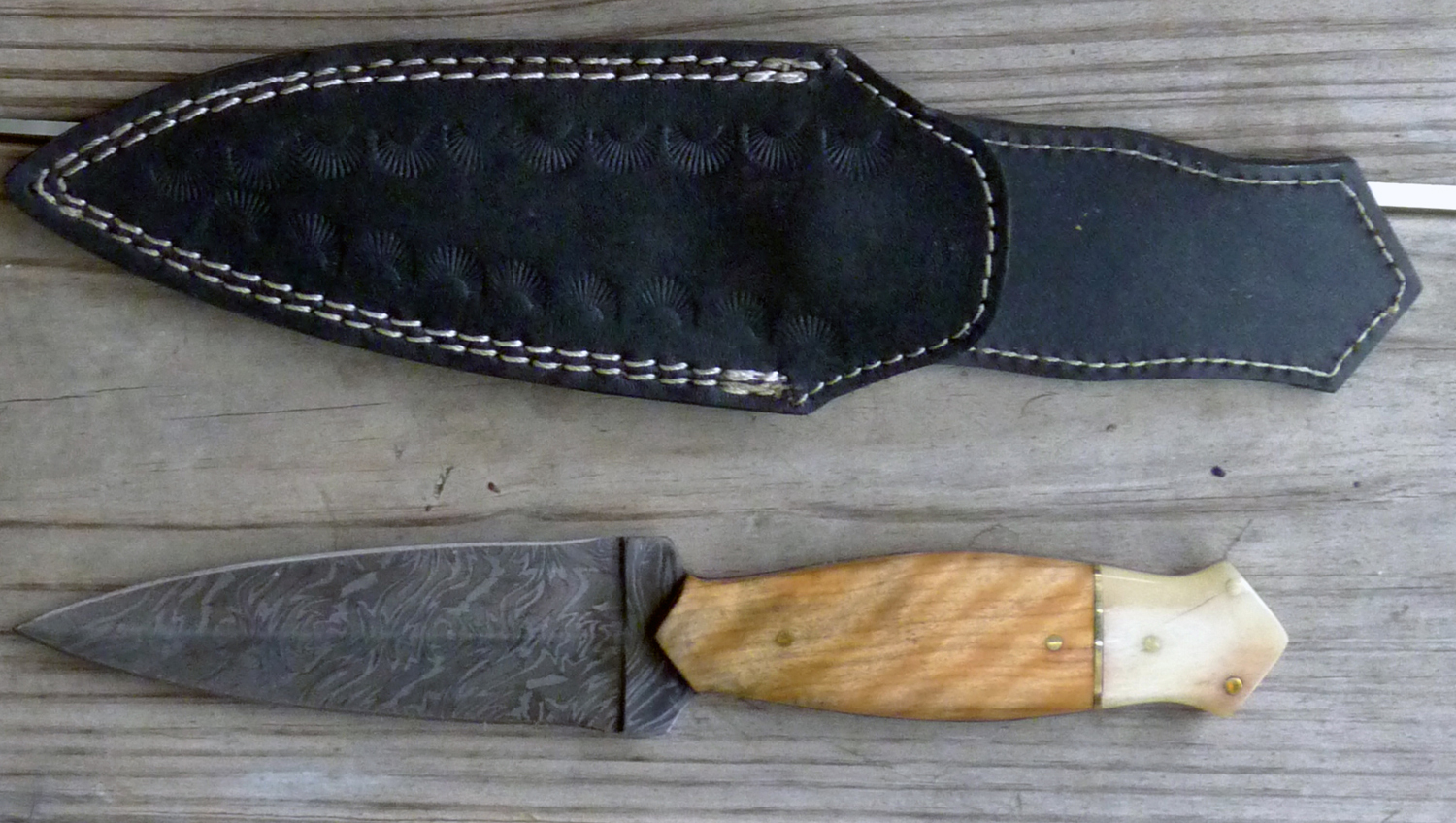
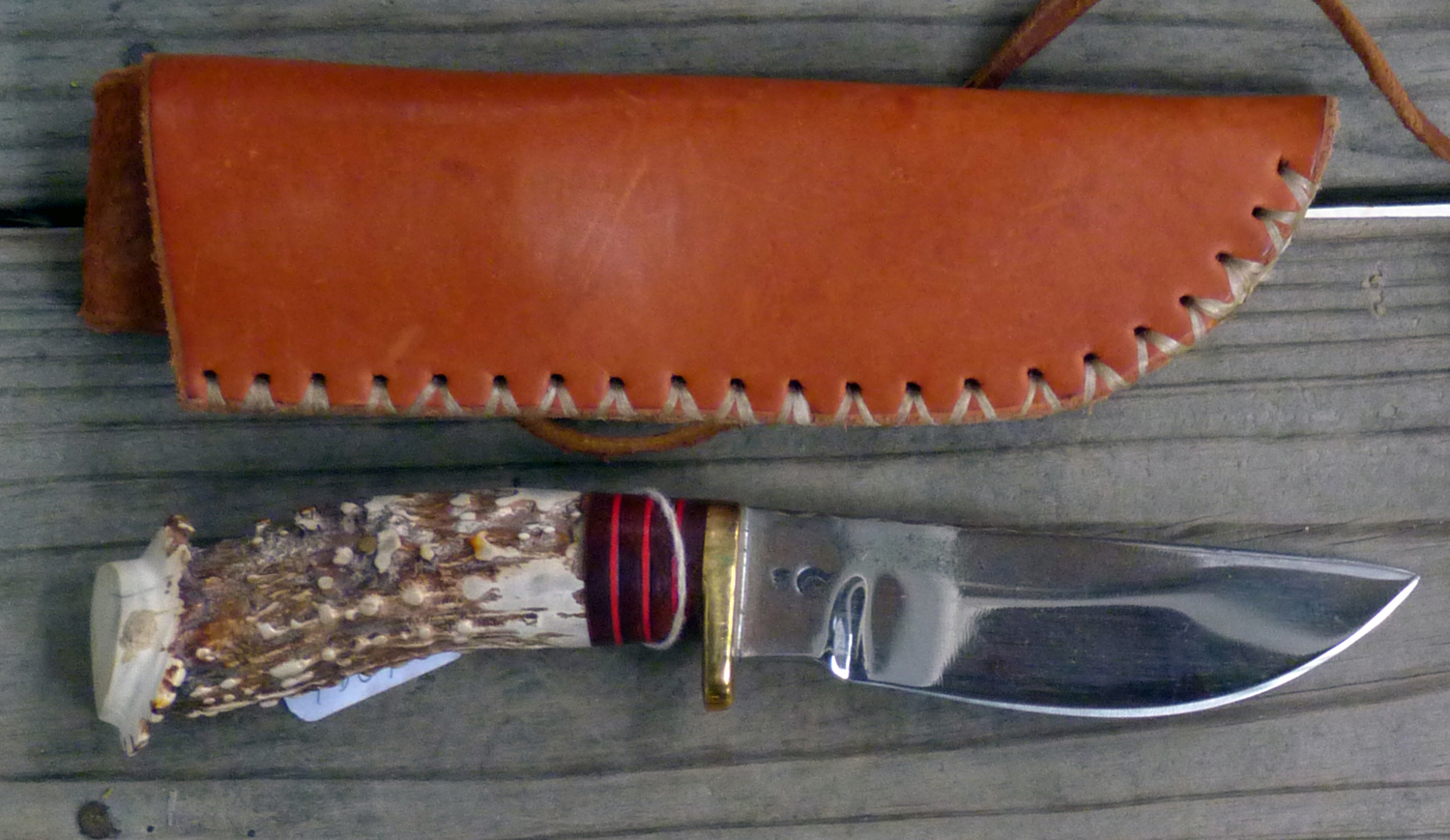
My hobbies are much what I do for a living and a few other things: reading, writing, historical re-enactments, forging blades, throwing myself out of aircraft, hiking, Karate, Kung Fu, shooting, archery, fine liquors, fine food, traveling and ranting at the political, social and moral state of the world.


Paralegals are not airborne lawyers.
The Ho Chi Minh Trail was not a Vietconga line.
A well hung jury is not composed of male gigolos.
There isn't a series about NSA called 'Game of Phones'.
As a legal immigrant who came here with a Visa, I want to know why illegals are getting American Express.
"Dad, they taught us in school that Che Guevara was a freedom fighter. Is that true?"
"Yes, he fought against freedom at every opportunity."
I support permissive laws to restrictive ones. Therefore, instead of a ban on texting while driving, I support a law allowing the injured party to shove your iPhone up your ass.
The Israeli martial art is Krav Maga, not Jew Jitsu. Nor is there a form for Japanese schoolgirls called Krav Manga.
The Israel Defense Force's battle cry is not "Torah! Torah! Torah!"
Police said a home intruder died at the Mount Carmel West after he was shot and killed by a homeowner.
Authorities said it happened on North Guilford Avenue in the Franklinton neighborhood.
Sgt. Dave Sicilian said the unidentified man broke into a back door, was chased by a person inside then jumped out of a second floor window, before crawling across the street and breaking into a second home.
. . .
The woman's son said he bought her a handgun last week for self-defense.

Of all tyrannies, a tyranny sincerely exercised for the good of its victims may be the most oppressive. It would be better to live under robber barons than under omnipotent moral busybodies. The robber baron's cruelty may sometimes sleep, his cupidity may at some point be satiated; but those who torment us for our own good will torment us without end for they do so with the approval of their own conscience. They may be more likely to go to Heaven yet at the same time likelier to make a Hell of earth. This very kindness stings with intolerable insult. To be "cured" against one's will and cured of states which we may not regard as disease is to be put on a level of those who have not yet reached the age of reason or those who never will; to be classed with infants, imbeciles, and domestic animals.
There are reasons why Sunni nations like Turkey and Saudi Arabia and the Gulf states have not committed more openly and decisively to the war on ISIS, and instead prod the Americans to send their troops to eradicate the Islamic State.
To many Sunni nations, Assad and the Shia Crescent of Tehran, Baghdad, Damascus and Beirut are the greater threat. Indeed, until recently, as Joe Biden pointed out last October, the Turks, Saudis and United Arab Emirates were providing clandestine aid to ISIS.
. . .
Critics argue that after making his commitment to “degrade and defeat” the Islamic State, President Obama has provided neither a war strategy nor the military resources to carry it out. And they are right.
But this is just another case of the president drawing a red line he should never have drawn. While U.S. air power can hold back the advance of ISIS and “degrade,” i.e., contain, ISIS, the destruction of ISIS is going to require scores of thousands of troops.
Though the Iraqi army, Shia militias and Kurds may be able to provide those troops to retake Mosul, neither the Turks nor any other Arab nation has volunteered the troops to defeat ISIS in Syria.
And if the Turks and Sunni Arabs are unwilling to put boots on the ground in Syria, why should we? Why should America, half a world away, have to provide those troops rather than nations that are more immediately threatened and have armies near at hand?
Why is defeating 30,000 ISIS jihadists our job, and not theirs?
North of Syria, along 500 miles of border, sits a Turkish army of half a million with 3,000 tanks that could cross over and annihilate ISIS in a month. Former Secretary of State James Baker suggests that the U.S. offer air, logistics and intelligence support, if the Turks will go in and snuff out ISIS.
But not only have the Turks not done so, for a time they looked the other way as jihadists crossed their border to join ISIS.
If the Islamic State, as Ankara’s inaction testifies, is not viewed as a threat to Turkey’s vital interests, how can it be a threat to ours?
. . .
Everyone in the Middle East, it appears, wants the United States to fight their wars for them. But as they look out for their interests first, it is time we started looking out for ours first.
Foremost among those interests would be to avoid another $1 trillion war, with thousands of U.S. dead and tens of thousands of wounded, and a situation, after a decade of fighting, as exists today in Afghanistan and Iraq, where those we leave behind in power cannot hold their own against the enemies we defeated for them.
. . .
The Islamic State has plugged into the most powerful currents of the Middle East. It is anti-American, anti-Zionist, anti-West, Islamic and militantly Islamist. It promises to overthrow the old order of Sykes-Picot, to tear up the artificial borders the West imposed on the Arabs, and to produce a new unity, a new dispensation where the Quran is law and Allah rules and all Sunnis are united in one home whence all infidels—Jews, Shia, Christians—have been driven out. Hateful as it is, ISIS has a vision.
Hezbollah, Iran, Assad, the Houthi rebels, all Shiites, understand this.
They know they are in a fight to the death. And they fight.
But it is the Sunni Arabs, the royals on the Arabian Peninsula and the sheiks on the Gulf, to whom this should be a fire bell in the night.
For ISIS is out to dethrone these perceived royal puppets of a detested America and to reclaim rightful custody of Mecca and Medina.
I think the central bank-driven global boom of the last two decades is over. Perhaps it started in 1994 when the Greenspan Fed lost its nerve in the face of that little bond market hiccup and over on the other side of the Pacific, Mr. Deng said, you know, “To be rich is glorious,” and the great China construction and debt boom got underway.
We are now through that, we’re done with that. We’re in the crackup phase. And I think there are four big characteristics of that, which are going to basically shape the way the economy and the markets unfold as we go forward. I think you’re going to see increasing desperation and extreme central bank financial repression because they have gotten themselves painted so deep into the corner that they are lost, they are desperate. And so one, you know, almost week by week, we have another central bank – this week, it was Sweden – lowering their money market rates into negative territory. You know, obviously, the Swiss Bank is already there, Denmark’s Bank is there, the EC is there on the deposit rate, the Bank of Japan’s there. All of the central banks of the world now are desperately driving interest rates into negative territory. And I believe that they’re lost. They are in a race to the bottom whether they acknowledge it or not. You know, the central bank of China can’t sit still much longer when the RMB has appreciated something like 30% against the Japanese yet because of the massive bubble – or monetary expansion – that’s being created there.
So that’s the first thing going on. Central banks out of control in a race to the bottom, sliding by the seat of their pants, making up really incoherent theories as they go. Everybody’s talking about deflation and 2% inflation targets as being some magic elixir. There isn’t a shred of proof anywhere that economies grow better over time at 2% than .8%. It is just made up. So I think that’s the first thing.
The second thing is increasing market disorder and volatility. In the last three months, the stock market has behaved like a drunken sailor but it’s really just a bunch of robots and day traders that are trading chart points until somebody can figure out what is happening directionally in the world. They just keep trading it back to 2090, it bounces off, it takes a dive, they trade it back-up. It has nothing to do with information or incoming data about the real world. We have today the 10-year German bond trading at 29.5 basis points. Well, the German economy’s been reasonably strong, fueled by the Chinese boom. But that export boom is over. The Chinese economy is faltering. Germany is going to soon have its own problems. But clearly, 29 basis points on a 10-year is irrational, even in the case of Germany, to say nothing of the 160 available today on the 10-year for Spain and Italy. Both of those countries are in deep, deep fiscal decline. There is no obvious way for them to dig out of the debt trap that they’re in. It’s going to get worse over time. There’s huge risk in those bonds, especially because there’s no guarantee that the EU will remain intact or the euro will survive. Why in the world would anybody in their right mind be owning Italian debt at 160 other than the fact that they’re front running the massive purchases that Draghi has promised and now the Germans have acquiesced to over the next year or two.
But that only kicks the can down the road. One of these days, the central banks are going to falter and the market is going to reset violently to prices that reflect the true risk on all this sovereign debt and the pretty cloudy outlook that’s ahead for the world market.
We now have something like four trillion worth of sovereign debt spread over Japanese issues, the major European countries that are trading at negative yields. Obviously, that is one, irrational, and second, completely unsustainable. And yet, it’s another characteristic of what I call these disorderly markets.
Thirdly, mal-investment is now coming home to roost. It will be driving a huge deflation of commodity and industrial prices worldwide. You can see that in iron ore, now barely holding $60 from a peak of $200. Obviously, it’s the whole oil patch that we talked about. Look at the Baltic Dry Index. That is a measure, one, of faltering demand for shipments and two, massive overbuilding of bulk carrier capacity as a result of this central bank driven boom that we’ve had in the last 10 to 20 years.
So that is going to be ripping through the financial system, the global economy, in ways that we’ve never before experienced. And so therefore, in ways that are hard to predict what all the ramifications and cascading effects will be. But clearly, it’s something that we haven’t seen in modern times or ever before—the degree of over investment, excess capacity, and everything from iron ore mines to dry bulk carriers, aluminum plants, steel mills, and on down the line.
And then, finally, clearly, demand has run smack up against peak debt, and I think that’s the right word for it. We had a tremendous study come out in the last week or so from McKinsey, who do a pretty good job of trying to calculate and track and tote up the amount of credit outstanding, public and private, in the world. We’re now at the 200 trillion threshold. That’s up from only about 140 trillion at the time of the crisis. So we’ve had a 60 trillion expansion worldwide of debt just since 2008. During that same period, though, the GDP of the world saw a little more than 15 trillion from 55 or mid-50s, roughly, to 70 trillion.
So we’ve generated, because of central bank money printing and all of this unprecedented monetary stimulus, we’ve generated something like 60 trillion of new debt in the world and have barely gotten 15, 17 billion of new GDP for all of that effort. And I think that is a measure of why the fundamental era is changing. That the boom is over and the crackup is under way when you see that kind of minimal yield from the vast amount of new debt that has been generated.
Now I’d only wrap this up by calling attention to the fact that within that global total of 200 trillion, the numbers from China are even more startling. At the time of the crisis, let’s go back to 2000, China had two trillion of credit outstanding. It’s now 28 trillion. So we’ve had just massive 14X growth in 14 years. There’s nothing like that in recorded history nor is there any plausible reason to believe that an economy, which is basically under a command and control system that is run from the top down through the party cadres, could possibly create 26 trillion in new debt in that period of time without massive inefficiencies in waste and mistakes everywhere within the system, especially since they have no markets. They have no feedback mechanisms. It all comes cascading down from the top and everybody lies to the next party above them. And I think the system is irrationally out of control.
In any event, my point was that at the time of the 2008 crisis, China had allegedly – if you believe their numbers, which no one really should – but as reported, they had five trillion worth of GDP; it’s now ten trillion. So they’ve gained five of GDP. Their debt at the time of the crisis was seven trillion, now it’s 28. So the debt is up more than 20 trillion and the GDP is up five. These are extreme, unsustainable deformations, if I can use that word, that just scream out, “Danger ahead. Mayhem has happened.” And the unwinding of this and the resolution of this is not going to be pretty.
It is freezing, smelly, and you may be gone some time. Applicants to run the world’s most southerly post office have been warned about the harsh realities of the life they would endure in the Antarctic.
The successful candidates will spend five months on Goudier, an island “the size of a football pitch” just off the Antarctic peninsula, sorting the mail at Port Lockroy, a former British scientific base.
Port Lockroy base in 1962 (image courtesy of Wikipedia)
Jane Cooper, 37, from Gloucestershire, worked as postmistress the season before last and said it was the “opportunity of a lifetime”.
But there were downsides. “If you slice spam really thinly, fry it and close your eyes, you can just about convince yourself it is bacon,” she said. “There is a lot of wishful thinking involved.”
Port Lockroy, Base ‘A’, is a British historic base situated on the tiny Goudier Island off the Antarctic Peninsula. It was established in 1944 and operated as a British Research station until it closed in 1962. The abandoned base was designated a Historic Site and Monument under the Antarctic Treaty and in 1996 restored as a ‘living’ museum. It is visited each Austral summer by approximately 18,000 ship-borne visitors amounting to one to two ship visits per day. During the short summer period approximately 70,000 items of mail are cancelled by hand before input into the British postal system. Goudier Island is also home to 2,000 Gentoo penguins that nest all around the building and staff continue to monitor the colony’s breeding success.
. . .
Do you possess the following attributes?
As well as being passionate about the Antarctic. You need to be:
- Adaptability to different situations – Are you happy not to shower for up to a month, live in close proximity to three people and 2,000 smelly penguins for five months?
- Personable – do you value getting on with others? Can you live and work with just three others for five months and be friendly and cooperative throughout?
- Positive – can you enthuse to visitors when it is -5C° and blowing a blizzard as well as cook supper cheerfully after a long cold day and very little sleep?


