Tuesday, October 5, 2021

A reader offers useful input on home heating and other matters


Following yesterday's article about choosing and buying alternative-fuel heaters for our home, reader Kevin e-mailed me about his and his wife's experiences heating their home in Massachusetts (a far colder state than Texas during much of the winter).  He generously gave me permission to share his e-mail with you, including the image below.


I am writing to you pursuant to your current article on your blog regarding shopping for an auxiliary source of heat for your home when weather and lack of electricity conspire to cause life to take on a certain sporting quality that one would prefer not having to address in the first place.  We had a small house built on 3 acres of land in the western part of the People’s Democratic Republic of Massachusetts in 1984.  The primary heat was suppose to be a coal stove in the basement and one in the living room with electric baseboard as a backup source.  After one season of burning the coal stoves we arrived at the conclusion that they were a profound mistake and switched to regular wood burning stoves as our primary heating source.  We spent approximately 23 years burning regular wood and realized that employment of that medium was not going to be particularly realistic as we became older regarding having to cut and split the timber required to heat the house.

After sufficient due diligence we bought a wood pellet stove as the main heating source in the upstairs portion of the house and a propane heater for the basement.  When the propane heater finally reached the end of its life span we bought a small stand alone [electric] heater that was filled with oil in order to heat the basement so that the temperature would remain around 55 degrees or so.  [From the photograph Kevin provided, it was similar to this current model.]

The basement is relatively small and this genre of heater has worked out well for us over the course of the last 5 years or so.

When we were both working my wife would come home at lunch and try to kindle a fire in the regular wood stove as well as attend to the needs of the horse, dog and cat who were breathlessly awaiting her arrival and the delivery of their lunch.  This became a sort of zero sum undertaking after a while and was one of the factors that prompted us to research the viability of the pellet stove as the primary heat source.  The convenience factor of the stove’s burn time combined with being able to essentially just turn it on as one would a regular home heating system has proven to be the best solution for us here in the back of beyond.

We learned very early on in our residence here that the electrical grid was in rather tenuous condition and loss of electrical power became a normal state of affair during the course of each year regardless of what the season was.  We purchased a small gas generator that could be used to power the pellet stove and the well and a few lights but its output was really too small to provide adequate electrical coverage for the house and horse barn.  After more research we decide to upgrade the generator and transfer box so that it could provide sufficient electricity for the house and barn when we lost power and needed heat and the well to work.

As luck would have it we upgraded a week before the famous October 2011 surprise storm to a new generator and transfer box which we had an electrician install for us on a Saturday.  If my memory is vaguely correct the total cost for parts and installation came to around $2,000 at that time.   We have a Generac XG-6500 generator which has held up well for us.  We ran it continuously for 8 days during that storm power outage and had heat, water and lights while the neighbors were reduced to hauling water from local streams to try to flush their toilets.

The pellet stove and well require electricity so lack thereof is more than just an inconvenience to us especially during the colder months here in New England.  I believe that you can purchase whole house generators that turn on automatically when the power goes out but I suspect the cost is quite a bit more than our set up cost us. 

The combination of the pellet stove, generator and oil filled heater have combined to provide us with the ability to provide heat, water and basic electricity as long as we are able to purchase sufficient gasoline to fill  the generator’s 9 gallon tank.  Our water heater runs off a 100 gallon propane tank so when the power is out we have warmth, water and electricity because we took a proactive approach to addressing the reality of our living conditions.  Out here one is pretty much expected to provide their own solutions to the realities and challenges that arise on a regular basis and this partial atmosphere of personal independence is rather refreshing to see and experience at first hand especially in view of the ongoing prevailing societal attitude that it is always someone else’s responsibility to solve one’s difficulties.


Kevin offered a few trenchant thoughts on our current economic mess in a follow-up e-mail.


Our income is predicated upon social security, a small university pension and a small investment portfolio.  We never leveraged our income by over extending our debt exposure in some inane effort to compete with the neighbors or anyone else for that matter.  We always lived well within our means and if we could not afford something we made due with what we had at hand.  Essentially we tailored our expectations  and dreams to the fiduciary reality that we had to work with ... I fully expect She Who Must Be Obeyed to live well into her 90s and am trying to lay the foundation for her financial security with  the expectation that she will be well and truly on her own due to the world class incompetence that is demonstrated on a daily basis by the politicians in Washington.

I have tried to impress upon younger acquaintances the thought that being financially conservative is a necessary behavioral  defense in view of the nonsensical behavior we see every day from the fools in Congress.  I fully expect another market correction a la 2008 in our very near future and this time thanks to the over all economic malaise exacerbated by actions of the Chinese Communist Party on the world stage and the complete demonstrative incompetence of Mr. Biden and his band of renown.  I believe that this correction is going to be of greater magnitude and pain than was the last one.  I suspect that the majority of today’s generation would not be able to survive an economic collapse bearing tones of the Great Depression of the 1930s and will be in for a rather rude awakening that spares neither the politically correct nor the incorrect in the thoroughness of its devastation.  The basic lesson to maintain at the forefront of one’s mind is that is life can be unfailingly difficult and the rending of garments and gnashing of teeth will not necessarily provide a workable solution to meeting the challenges such a situation will present without fear or favoritism to the citizens of this country.

The late Col. Jeff Cooper once said that his approach to bringing up his children was to teach them to ride, shoot straight and tell the truth.   We would be better served as a society if more individuals subscribed to that philosophy but regrettably that hope appears to have gone the way of $1.25 a gallon gasoline.


Amen to that!

Thanks for writing, Kevin, and for your permission to republish your e-mails here.  We can all learn from the life lessons you've experienced.

Peter


Monday, October 4, 2021

It's visibly crooked all the way - and the insiders don't care that it shows


Two news reports last week demonstrated how "insider trading" can assist one to make very profitable stock trades.  It's defined by Investopedia as follows:


The first report details how members of the Federal Reserve have made a killing in the stock market by very (suspiciously) auspiciously-timed trades.


... Fed hawks [are] suddenly dropping like flies following the resignations of Boston and Dallas Fed presidents, Rosengren and Kaplan, amid a public outcry over their recently-revealed daytrading activities which benefited them as a direct result of monetary policy decisions they were explicitly and directly involved in ...

. . .

... the government ethics office published forms which showed that none other than the (centrist) Fed Vice Chair Richard Clarida may be the next to "retire" (perhaps he too is on a kidney transplant list) following the revelation that he was trading in and out of millions in securities on February 27, 2020 just one day before Fed Chair Powell issued an (extremely bullish) emergency statement hinting at possible policy action as the pandemic worsened ... Powell's clearly market-moving statement served to spike the market by over 100 points in minutes.

. . .

When contacted by Bloomberg, a Fed spokesman for the vice chair said that “Vice Chair Clarida’s financial disclosure for 2020 shows transactions that represent a pre-planned rebalancing to his accounts,” adding that “The transactions were executed prior to his involvement in deliberations on Federal Reserve actions to respond to the emergence of the coronavirus and not during a blackout period. The selected funds were chosen with the prior approval of the Board’s ethics official.”

Of course they were... just like the Dallas Fed was perfectly fine with Kaplan's "tens of millions" in stock trades in a year when the Fed's policies injected trillions to the balance sheet until he was busted and an epic scandal followed... just like "daytrader" Rosengren suddenly deciding to retire for "health reasons."

. . .

What makes Clarida's trading transgressions even worse, is that the Fed can't punt them on the flawed policy book of some regional Fed - these come from the Marriner Eccles building itself. The Fed spells out clear guidelines for trading activity by policy makers. Its Voluntary Guide to Conduct for Senior Officials says “they should carefully avoid engaging in any financial transaction the timing of which could create the appearance of acting on inside information concerning Federal Reserve deliberations and actions.” It also says that they should avoid dealings that might “convey even an appearance of conflict between their personal interests, the interests of the system, and the public interest.”

And yet, casting even more doubt on the Fed's integrity, ethics and especially capacity to think clearly, even the Vice Chair failed to realize that buying millions in stock ahead of a greatly market moving decision had all the "appearance" of massive insider trading.


There's more at the link.

The second report examines the trading records of the "best" investors in the stock market, and correlates them to the information to which they have access as "insiders".


Of the 496 trades [Jimmy Filler]’s made since 2014 ... 372 of them, or 75%, have shown a profit three months later. That’s the kind of run the world’s best stockpickers dream of, the financial equivalent of making the final table of the World Series of Poker main event in consecutive years.

Filler is the most successful corporate insider in the U.S., according to TipRanks, a data company that rates executives by how good they are at timing trades. As a result of this status, every time Filler buys a share in ServisFirst or Century, 2,699 TipRanks subscribers get an alert. Some of them, assuming Filler’s past performance will continue, follow suit and buy some stock for themselves.

. . .

TipRanks uses an algorithm to sort through the torrent of SEC filings, filter out what it calls “uninformed” transactions—that is, those that don’t seem to have predictive value—and come up with a rolling list of the top 25 insiders. As well as looking at win rate, the service factors in how much, as a percentage, insiders are making per trade. Those with long track records, such as Filler, also score better. “Someone might pick heads five times in a row, but to do it 20 times or 50 times is really hard,” Gruenbaum says.


Again, more at the link.

Even more interesting is how some of our leading politicians are getting rich through stock market trades.  If anyone has inside information about how legislative developments are going to affect companies, it's them.  The Atlantic points out:


Congress is perpetually rife with conflicts of interest, with dozens and dozens of stock trades every year raising the specter of public corruption. It also means that scandals emanate from the country’s legislative body again and again and again, year after year: Former Representative Tom Price bet on health-industry companies; former Representative Chris Collins told friends and family to dump biopharmaceutical shares, which led to his pleading guilty on insider-trading charges. (In that case, he had nonpublic information from sitting on a corporate board while in office.)

What is more, there is clear evidence that members of Congress profit from their position through equity trading—a problem that was more acute before the passage of the 2012 STOCK Act, which tightened insider-transaction rules for public officials. Several studies have shown that politicians’ portfolios consistently outperform the market. This should be an enormous, high-flying red flag. One analysis of 61,998 stock trades made from 2004 to 2010, for instance, showed that politicians outperformed the market by 20 percent.


More at the link.

The Speaker of the House, Nancy Pelosi, appears to be the most egregious offender in that chamber.  A Twitter account called "Nancy Pelosi Portfolio Tracker" follows her and her husband's stock market trades, and notes some very interesting comparisons.  Click each graphic to go to the original tweet.


Makes you think, doesn't it?

(That's why I think small investors who don't have the time or resources to do their own research in depth should steer clear of the stock market.  We don't have anything like as much information as big investors, and they basically use their inside information to strip us bare.)

Peter


The trials and tribulations of heater shopping


As part of preparing for the coming winter, and also dealing with the current supply chain problems that are (sometimes severely) restricting the availability of things we need, I've been considering our emergency heating requirements.

Last winter Texas suffered a major power outage, lasting weeks in some places, and there were several incidents of shorter outages (up to a day or two).  Even though we didn't lose power during that long cold spell, our house grew steadily colder, because our geothermal heating unit simply couldn't compensate for our poorly insulated walls (Texas houses not being built, generally speaking, to withstand prolonged freezing-level temperatures).  By the time the cold snap broke, our home's internal temperature had dropped into the 50's, far below the temperature at which we prefer to keep it.

I wanted to have two contingency backup plans in place.  First, I wanted a couple of small indoor-safe heaters that could warm up our studies (where Miss D. and I write, blog, etc.), and our bedroom at night, in case of a short-term power outage.  Second, I wanted an indoor-safe heater powerful enough to warm the whole house a few degrees in very cold weather, so that our geothermal unit could be supported and wouldn't have to carry the entire load itself in very cold weather.  (Of course, during a power outage, it'll help keep the whole house at a livable temperature.)  We already have a couple of camping stoves that can be used to prepare food during a power outage, so that need was covered.

I chose the Buddy indoor-safe propane unit from Mr. Heater for the first requirement.  They're rated to warm a room up to 225 square feet in size, and are fueled by the well-known 1lb. Coleman propane tanks, which are widely available.  (A larger model takes two of the Coleman tanks, and can warm up to 450 square feet.)


For the second requirement, I selected the Dyna-Glo indoor-safe kerosene convection heater, which is rated to warm up to 1,000 square feet.  (Yes, I also bought extra carbon monoxide alarms, to put in rooms where the heaters are in use;  and we'll crack a window in those rooms, to prevent difficulties.)


However, when it came time to actually buy them, I got quite a surprise.  Supply is very "iffy":  despite lots of stores listing them as available, they weren't, or were "delayed in shipment".  I guess many of them are sitting in containers at sea, waiting to get through the cargo handling backlog to land in the USA.  Also, prices were all over the place.  At the time of writing, the Dyna-Glo unit is $234.77 at Amazon, but only $148.00 at Walmart;  the Mr. Heater unit is $90.92 versus $77.00 at the same stores;  and the Coleman propane tanks are a mind-boggling $17.49 per single unit at Amazon, versus only $3.97 at Walmart!  (They're cheaper in bulk quantities, of course.)  I'm sure you can guess where I bought ours!  Other stores showed similar price variations, and they varied almost by the day - sometimes showing changes more than once a day.  Clearly, there's high demand for these units, but very limited supply.

I bought what we needed, after shopping around to find the best price for available stock, but the weird price variations (particularly on Coleman tanks) made me reconsider our fuel needs.  Instead of buying more Coleman tanks (we already have several), I bought two screw-on adapters that allow them to be refilled from regular 20lb. or 30lb. propane tanks.  The adapters are only about $7 apiece, and regular propane tanks can be refilled at present for about a dollar per pound of gas, or about $4 per gallon (there are 4 gallons in a 20lb. tank filled to 80% capacity, or 16lb., which is the norm).  It'll be much cheaper to refill our small Coleman tanks as we use them, rather than pay three times that much or more for new, filled tanks.  Mr. Heater claims a 3-hour run time at maximum heat setting, which translates to a fuel cost of about $0.34 per hour if we refill our small cylinders (less at lower heat settings, of course).

As for fuel for the Dyna-Glo unit, one can buy heater-grade kerosene in 1-, 2½- and 5-gallon containers from various places.  Again, prices vary widely, so shop around.  Since our need for the big heater is likely to be infrequent, I've bought enough to see us through a winter twice as bad as the last one, just in case.  If we don't use it all, that doesn't matter:  kerosene keeps indefinitely, so there's no problem with leftover fuel going bad, as there would be with gasoline.  Those in colder climes, or with a less reliable electricity supply, will need more fuel, of course.  (All our kerosene and propane will be stored outside our home, in a garden shed, for obvious fire-hazard reasons.)

One word of warning concerning both heaters:  there appear to be different model numbers assigned to identical units, for sale in different stores, so that each can claim that their model is "exclusive to [store name]".  Technically, they're right, thanks to the different number;  but it makes it very difficult to look up parts (e.g. wicks for the Dyna-Glo heater) online, when the model number a store is using is different to the generic one listed by the manufacturer of the wick.  It took me a couple of days to figure out the problem and find a spare wick that will fit our heater.  When you get your heater, look up the exact model number listed on its box or in the owner's manual, then search for wicks and other parts using that number, to avoid confusion.

With the way the economy's being driven into the ground by the Biden administration, and the supply chain problems that are crippling commerce and industry, I think we may face more power interruptions than usual this winter.  Power stations will find it difficult to get spare parts at short notice to repair breakdowns, and repair crews dealing with the aftermath of snow and ice storms will face the same problem.  I suggest it's no more than prudent forethought to prepare for such outages as best we can, while there are still indoor-safe alternative-fuel heaters to be had.

(Speaking of prudent forethought, I snagged the last two bottles of anti-freeze windshield washing fluid in our local Walmart during my shopping.  The manager of the auto section didn't know if and/or when they're getting more in.  Anti-freeze radiator fluid was also in short supply.  Might be a good idea to stock up on those, too, and related items for cold weather travel like snow and ice scrapers, etc.)

Peter


Memes that made me laugh 78


The fruit of online perambulations over the past week.  Click any picture for a larger view.


More next week.

Peter


Sunday, October 3, 2021

Sunday morning music


I don't like everything Roberta Flack's recorded, but some of her love songs have been truly iconic, and have given me real listening pleasure over the years.  (It's really hard to believe she's now 84 years old!)  Here's a brief selection of the best-known among them.

First, possibly my favorite of her songs:  "The First Time Ever I Saw Your Face".


Here's "Let It Be Me".


Another classic, and my second-favorite of her songs:  "Killing Me Softly".


And finally, a duet with Peabo Bryson:  "Tonight I Celebrate My Love".


Sometimes a song expresses emotion and feeling to perfection.  Roberta Flack does that very well.

Peter


Saturday, October 2, 2021

Saturday Snippet: Escaping from Thailand's toughest prison


David McMillan is a self-confessed drug smuggler, convict and rogue, now retired (?) from a life of crime.  He's written a book, "Unforgiving Destiny: The Relentless Pursuit of a Black-Marketeer", about his life and experiences.


It's a very interesting read for those interested in the underbelly of our society.  He's quite unrepentant about his activities, apparently regarding them as fulfilling the needs of people in a very similar way to legitimate business - just dishonestly.  You'll learn a lot about "how the other half lives".  I recognized many of his characters from my time as a prison chaplain.  They're everywhere, and I've dealt with them many times before.

Here's how he escaped from Klong Prem prison in Bangkok, one of the toughest of its kind in the world.  For reasons of space, I've had to leave out the details of how he prepared for it, taking well over a year to put everything in place he needed to get away.  Here's how it went down on the night.


Just before midnight, I stepped into the shower and split the wood frame cover holding the hacksaws.  Freeing them made some noise.  American Calvin was now awake and Jet, peering from under his blanket.  I bent to Sten.

“The others will be fine,” I told Sten.  “But that Miraj needs watching.”

Although I’d muffled the sound of splintering wood with a towel, almost everything seemed noisy.  I moved the low table I’d built beneath the window and unfolded its interlocking parts to form the stairs needed to reach the window.  Although I’d accounted for some sound, I’d underestimated how much keeping quiet would slow me down.  Although it was not yet 1:00am as I removed the insect screens from the window, I felt I was, already, working against the clock.

Calvin sat watching with fear and some resignation, certainly imagining the consequences come daylight of an escape attempt by a foreigner.

Jet looked on but did not speak.  As I unclipped the frame stays from my low bed and began unthreading my escape rope and winding it around my arm, my little head butler looked at the fittings around the cell.  He saw, before any other, that everything had a concealed purpose.  The shower fittings, heavy wall hooks, bookcase and cupboards all unfolded into specific tools.

I stepped up to the window and began cutting low on the first bar with a hacksaw blade.  Given free reign, it might have been cut in ten minutes.  Yet a full pressure draw yielded a shrill vibration that seemed, in the night, to carry throughout the building.  I wet a towel, wrapped it around the bar.  Then, wiping the blade with oil, I made slow strokes.  Sten and I took turns, as I glued my face to the cell door watching for any disturbance to the accommodation building night guard who was sleeping in an open room less than a hundred feet away.  Forty-five minutes later, the first cut succeeded.  On the last stroke of the blade, the bar – under massive tension from the decades-slow drift of the building’s brickwork – sprang away from its cut base with a loud ‘sprong!’  We all froze for long seconds, ears straining to listen for any outside reaction.  Miraj, the Indian prisoner with sixteen years still to serve, moaned softly.  Sten and I quietened and calmed the others.

As Sten went to work on the second cut of, still, just the first bar I knew I’d not have time to play around further in the cell if I was to have a hope of getting away before dawn.  By 2:45am only half of the second, top cut, of the first bar was made.

“Dave,” Sten said, “maybe leave it for tonight.  Get going again tomorrow night?”

From beneath Sten’s feet, propped on the artificial stairway, Miraj moaned loudly.  To ensure his silence, I crouched low to his ear.

“Miraj,” I whispered, “I know you can’t wait to call out to the guards.  I don’t want to upset the others in the room but have no doubt I’ll kill you if you make another sound.” That seemed to work.

I stepped up and looked closely at the cut bar. “No, Sten,” I said.  “I’ll go tonight.  You think you can bend that fucker inward?” I tapped the bar.

Sten, who was big when he came in and bigger now from working out, looked doubtful but determined.  He clamped both hands around the towel that held the bar and heaved.  It moved a few inches and then sprang back.

“Good enough,” I said to his surprise.  I got ready.

I pushed through a pigeon-hole cupboard mounted on one wall.  I’d fitted fake rear panels made from balsa wood.  Through the hole, I removed a few tools I’d need this night.  As Sten strained on bending the bar – supported by Calvin from below in case he fell from his perch – I noticed something different about Jet.

Jet was standing on his sleeping mat in the gloom.  He was wearing his best clothes.  In the top pocket, he’d jammed a plastic bag with what I knew were his family photos and a few letters. At four-foot-six he looked like a child ready for Sunday School.  He wanted to go with me.

I gently persuaded him not to go. Jet had only four years remaining of his sentence.  My arrangements were for one, I said. I gave him four thousand baht and my good watch.  He sat down with sadness.  Sten had earlier promised to take care of him, and I’d left money in preparation.

“Can you get through a six-inch gap?” Sten asked as I turned off the overhead fan.  It might have struck the escape plank if spinning.

“I’ll have to,” I said.

Stripping down to briefs, I put my clothes into a soft shoulder bag.  Sten helped me take down the cell’s eight-foot bookshelf.  It was a builder’s plank we’d carefully stolen months earlier.  By the cell door sat a wooden footstool.  It was made like a Chinese puzzle box: with a few twists, it turned into a strange, angled contraption like a giant key.  This had a purpose.  It would jam in the still-intact part of the cell window bars to hold firm the bookshelf plank.  We slowly pushed the plank out through the bars, keeping its flat side at a ninety-degree angle.  The footstool key held the short end tight within the bars.  The plank now poked out into the night air, turned sideways, with only a couple of inches remaining in the cell.

“You sure this’ll hold?” Sten asked.  “You’ll be dangling off the far end.”

“Sure,” I said.  “It worked on paper.”

Sten knew I’d have to clear the masonry awnings that were between each storey of the cell blocks’ outer walls.

It was 3:15am according to the cheap but rugged digital watch I’d strapped on.  With a few curt goodbyes, I oiled my torso, and took a last look for guards.  None.

Stepping up beside Sten, he gripped the cut end of the troublesome bar.  For him to get a better purchase, I shouldered him high to the ceiling of the cell, at which height Sten could brace both feet against the edge of the window’s base.  If the bar snapped, Sten would fall back.

Sten strained and grunted to lever and hold the bar a few inches, allowing me to angle my head through the small gap now between his fists and the outside world.

“Take your time,” Sten sarcastically rasped through held breath.

I’d draped a towel over the cut stud of the bar that remained fast in the concrete to spare my exposed back as I wriggled through.  I’d squirmed through backwards, face to the heavens, grabbing the outside top section of window bars to lift myself out.  Once my groin and knees were through, I told Sten to relax.  He was ready for that.  The bar eased back to its previous two-inch gap.  Considering the force Sten had used, I’d easily imagined Sten crashing back into the cell with the entire window bar assembly falling with him.  I would have thundered down fifty feet through two tile awnings followed by a plank.  That did not happen.

With my shoulder bag over one arm, I clung, half-naked, to the outside of the cellblock.  I was out, give or take seven inner walls and a moat or two.  Yet the sensation was odd.  Whatever happened next that night, my life in Klong Prem prison as I’d known it was over.  Looking through to bars to which I clung, back to the gloom and the moving shapes inside, I knew those people were gone to me now, come death or success.  My feeble comforts, water bearers, cooks and carpenters must fend for themselves now.  My elaborate office and its web of complex services essential to survival in this prison-city of decay, effectively destroyed.  I quickly shook off this dangerous reverie and got moving.

Dangling with one hand from the tip of the upturned plank, with the other I groped in my shoulder bag for the 100 meters of army-boot webbing that was my rope.  My hands were full of splinters after sliding hand over hand to the end of the plank.  I’d not wanted it to wobble through any swinging.

Still one-handed, I found the mid-point of the rope and looped it over the plank, looking down to see it clear the awnings.  Those angled roofs were cracked and crumbling.  Earlier tests had shown that even a thrown pebble would dislodge a broken tile that would noisily fall to earth.

My idea had been to slide down the rope to a series of tied-loop footholds.  Abseiling was out because I couldn’t trust just one strand of the webbing for strength. Anyway, I’d need the rope for the walls ahead and had to avoid knots.  My foot-loop plan failed immediately.  As soon as I slid down to the first set, one foot held, the other flailed while I had to grip hard on the overhead loop to keep from sliding to the ground.  That would have been okay, I suppose, had I not found myself wildly swinging in a figure-of-eight pattern facing the trusties’ cell beneath.  Their overhead fluorescent light was on, of course, and they appeared to be sleeping, mostly.  My rope below my feet was caressing the broken tiles of the second awning.  I had to hold fast until my swinging ceased.

When still, I loosened my grip, knowing the slide would not be kind to my hands.  It wasn’t but at least the skin that was stripped from my fingers and palms removed the wood splinters.  I padded softly to ground and rolled back, rope still gripped, to clear those damned awnings.  I flipped the rope clear of the plank.  As the rope spaghettied into my arms, I saw Sten’s arms draw the plank back into the dark cell above.

I scrabbled flat against the cellblock wall to the prepared gap in the factory complex fence that allowed a hidden path to my office.  By the light of my digital watch I opened the cupboards as quietly as I could.  It was 3:45am and I’d just been through the easy part, although I’d not have wanted to know that then.

Peering through the open sides of the factory hut, I saw one of the guards.  He was sleeping in his hammock, about forty feet away, shoes off, still in brown trousers and his fat gut stretching a dirty vest.

In slow moves to keep quiet, I took from a cupboard seven heavy rectangular picture frames.  Each 18 x 24 inches.  Sten had made them while pretending an interest in oil painting.  They would form the struts of my ladders.  I packed them into a second bag, and put on a pair of black trousers I’d had hidden.  Long pants are forbidden in Thai prisons.  Prisoners must wear shorts to distinguish them from guards.

I carefully stepped my way out and over to another factory, worrying about walking on the noise-making shell fragments that littered the factory floor.  Arriving at the Chinese-funeral-box factory, I found the hole in the mesh blocked.  It had been repaired the day before with a large plywood panel secured by nails.  Fretting always about time – and being visible then in one of the Building #6 internal streets – I took a pair of pincer pliers from my kit and began extracting a nail.  It squealed against the plywood so I had to soak the nail in machine oil to quench the sound.  More time lost.

Inside the factory, it was completely dark.  My tiny penlight torch gave little light but my tasks were simple. I had to make two ladders from the fourteen-foot long bamboo poles that were set on racks in the factory to dry coloured paper used to fold little gold gift boxes used as cheap offerings at Chinese funerals.  I lifted four poles of the tapering two-inch thick bamboo to the floor, laying them in two double rows.  After positioning the picture frames lengthwise between, I took black duct tape from my bag and secured the frames to make solid rungs.

This gave me two good but heavy ladders and the problem of getting them out of the factory unheard and unseen.  I couldn’t go back the way I’d come to the internal street so lifted them to the rear of the factory which I knew abutted the auto-repair shop.  There was a mesh vent at the top, so I used one ladder to climb up, tore a flap of mesh with pliers away from the supports, and lifted the second ladder up and out to the auto shop.  All this, and I was still not free of even Building #6.  It was after 4:30am just over an hour before dawn.  I would have to speed things up. Later, I would wonder at movies that seemed to show the time taken for cutting and climbing in escapes taking place in minutes.  The real time is always much slower.

I saved a few minutes by pushing my ladders under the far gate of the auto shop and then climbing over.  Just as I moved beyond the coffee shop to the laundry-drying lines where I planned to scale the first inner wall, a fresh problem arose.  Guards walking around.  I spotted fat-guts padding towards the open, ground-level water tanks sixty feet away.

I should say that over the last two years at Klong Prem prison, two (highly doubtful) opportunities had arisen with offers of a working gun and ammunition.  I felt sure then that I would have been informed upon had I taken either offer.  As the guard neared the water trough, I hugged low against a factory pillar and carefully took out a device I had in my bag.  I attached the fat silencer to one end and switched on the red laser pointer.  Tranquil in his safety, the guard splashed his face, shook his head, and then staggered back around the corner, presumably to where he’d been sleeping.

I’d spent months thinking about the value of a weapon before realizing a real gun would be no asset.  If, on the night, I saw a guard at a distance, I need only hide.  If I rounded a corner to meet, unexpected, a guard within a few feet, a weapon would be slow to take in hand and pointless.  Face-to-face, I could – however unpleasantly – silence him by hand.  The only useful purpose for a gun would be in the range of fifteen to fifty feet when what he sees is immediately capable of keeping him quiet. Yet to fire a real weapon at night would risk a scream from a wound, a miss or misfire, and the sounds would surely bring others.  My fake gun was made from carved wood pieces, tubing and a shampoo bottle.  Painted black it appeared big, fearsome and more impressive than anything I could have smuggled in.  The red laser sight was merely a laser pen pointer glued to the top.  I was sure the sight of a red dot over the heart along with a command to halt and kneel would be enough to close the gap and tie up any guard.  I’d packed cable ties and extra tape for such an event.  Luckily, I saw most guards in advance.  This would not be the last time over the next years when guns would prove useless.

A four-meter concrete wall topped by rolls of barbed wire marked the perimeter of Building #6.  A quick inspection of the bolts that secured the barbed wire told me there’d be no time for fussing around with them.

I’d brought an extra bamboo pole.  This allowed me to grab the wire with an s-hook taped to the pole and simply pull the wire clear of the top so I could set the first ladder in place and haul up the second.  Once sitting atop the wall, I brought up the ascent ladder and carried it down.  I was then out of Building #6.  I knew there were five or more inner walls to go before reaching the massive outer wall.  I crouched in the mud below behind some weedy plants and looked at my watch.  I’d never make it before sun-up.

Ten minutes later, any pre-dawn observer would have caught an unusual sight.  A man in black with his head poking through an absurdly long and floppy ladder as he ran while trying to keep both ends of the thirty-six-foot-long ladder off the ground.  I’d taped my two ladders together as one.  It was heavy and awkward, smashing both shoulders with every step.  Each time I approached a new inner wall, I’d tilt the front end high, catching the wall’s top.  Then, I’d run back to where the ladder touched the ground, heave it high until its midpoint (where I’d taped the two together) reached the wall’s top of curve and barbed wire.  I’d scramble up the long ladder and scramble down the other side, my weight lifting the far side.  Once over, I’d drag the ladder down to ground level before hoisting it again over my shoulders and making for the next wall.

This was exhausting.  Several times I had to re-tape the joins along the poles as barbed wire tore at the duct tape.  Michael Sullivan had been a pole-vaulter and had explained the trick of carrying an oversized flexible rod.  “Lope,” he’d said.  So, I loped.

I used this see-saw action to move through buildings #7, #8, #9 and #10.  I got lost twice until I recognized the smell of the old hospital – now used as a hospice for hundreds dying from AIDS.  Passing the open windows their waxy faces looked at me but they were beyond speaking.

After running blindly into another inner wall of twenty rows of stretched barbed wire, I dug underneath taking the ladder with me.  After a difficult crossing of the seven-foot inner moat, I was finally at the outer wall.  It was over twelve-meters high and topped with an electric fence – the limit of my double ladder.

I climbed to the top to see dawn’s first lights.

I cleaned myself up with a bottle of water from my bag.  Then hastily dried and put on a fresh shirt and trousers the colour of the guard’s uniform.  I left my phoney gun floating in shit creek, the inner moat.  Its effect would be comic in daylight, however menacing it seemed at night.  The acrobatics over the electric wire were tingling – I hadn’t dried myself well.  I used my last length of rope to slide to outside ground.  Outside, yet not safe.  A twenty-five-meter moat ran on all sides of the prison.  On those sides beyond, except for the front gate, were guards’ houses and their kind.  It was just before 6:00am, suddenly morning.  The dayshift would be arriving at the front gate.  Along the outer wall, spaced two-hundred feet apart, rose watchtowers.  The armed guards within, now alert after a night’s half-sleep, were rising and curious.  With no more darkness as cover, a moat-crossing would fail.  The sky held a tropical grey of clouds giving a few specks of rain.

I reached for the last trick in my bag: a black, pop-up umbrella I’d taken from one of the factories.  Under its shade, I walked along the wall path towards the front gate.  There, a wide bridge crossed the moat.  Beyond, shop stalls were opening opening for the morning trade of coffee and breakfast rolls.  Peeping from under my umbrella, I saw guards look down from the tower.  I hoped they’d see me as a late-arriving fellow officer creeping to work.

As I crossed the bridge, I recognised the shoes and stride of some of the guards from Building #6.  There, soon, trusties would be unlocking the cell doors.  My cellmate Miraj would quickly tell of my escape.  As I walked the long two-hundred meters of parkland in front of the prison to the six-lane highway beyond, I thought of my crazy home-made ladder propped against the wall.  Surely, some guard was looking at it now – or do we only see things when accompanied by a moving human?

At the highway, I collapsed the umbrella, and ducked through traffic and climbed the divider to cross the road.  As soon as I reached the far side, I knew I was safe.  Safe from the prison, perhaps, but not safe from Thailand.  Images of the shattered limbs of the two Israeli escapers who were caught prompted me to move.  Yet I couldn’t resist climbing the stairs of the nearby pedestrian overhead crossing to take a last look at Klong Prem prison, still packed with its eight thousand suffering inmates.  Why did they remain? Within the mind of the creature that I’d become, this hated prison-city was no more threatening than a postcard, and already a memory.

Two taxis took me to a nearby suburb.  A large complex of flats whose address I’d memorized.  Just after seven, I stood before the door of flat 187.  From my bag hung a decorative wood and lacquer tag.  I twisted it to shatter its shell, revealing the front-door key to the flat.  It had been so hidden in case I was caught and tortured – otherwise my questioners would want to know what the key was for.  Inside the flat, I’d been told, was a small bathroom. Behind a wall-mounted mirror, I’d been assured, an envelope held a British passport.  The passport had been sold to Malaysians in Jakarta a month earlier; my photograph had been substituted and a visa stamped in.  I let myself in, went to the bathroom, and found the envelope behind the mirror.  Within, to my profound relief, the passport was all as promised.  And all that from someone I’d met in the Thai prison.  He was a Chinese crook, and certainly, the Chinese are the most reliable among crooks, but I wondered then if I’d ever achieve the wisdom to know on sight and at first meeting those who will do as they say and those who would find reasons to fail.

At the airport by ten, only forty-five minutes ahead of a posse of guards from the jail who were guessing a foreigner would head for the Bangkok airport.

A friend had left an overnight bag for me at the airport’s long-term luggage storage depot.  I pulled the receipt from my shirt collar, then moved to a bank of ATM machines. I had two bank cards.  One failed while the other paid $500 – enough for the one-hour flight to Singapore.  Even if I had money for the long-haul, I didn’t want to be trapped on board a plane eight hours after police and embassy officials had been scanning flight records.

On board the airliner, I assessed damage.  I looked at my hands.  The skin from the palms would grow back quickly.  Fingerprints never forget.  I was thirsty, and that was about all.  I could continue my journey interrupted two years earlier.

I landed at Singapore’s Changi Airport, took a cab to the town centre, then another to a mid-level hotel on the fringes.  After checking-in, I went straight to the rooftop swimming pool and dived in, swimming below water end to end.  I lifted myself out to stand in the warm breeze as the water drained from my body, and with it the handprints of death that had held me for two years.  I took a deep breath and jumped back in.


A free man again, Mr. McMillan continued his life of crime in various countries before 'retiring' and settling in the First World once again.  His book will be a revelation to those who've never dealt with the reality of international crime and smuggling.

Peter


Friday, October 1, 2021

An inside view of a hurricane at sea


GCaptain reports:


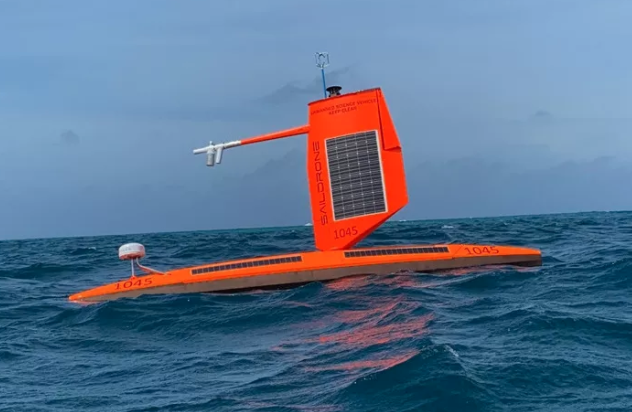
Saildrone Inc. and NOAA have released what they claim is the world’s first video footage captured by an uncrewed surface vehicle (USV) from inside a major hurricane barreling across the Atlantic Ocean.

NOAA and Saildrone are working together on collecting scientific data from inside Hurricane Sam, currently located some 645 miles south-southeast of Bermuda with sustained winds of 145 mph. For the project, one of Saildrone’s drones, known as the Explorer SD 1045, was directed into the storm where it battled 50 foot waves and winds of over 120 mph to collect critical scientific data and, in the process, give us a completely new view of one of earth’s most destructive forces.


There's more at the link.

The USV is 23 feet long, and can sail unattended for up to a year, gathering data and sending it back via satellite to its home base.


Here's what it looks like inside Hurricane Sam, from the drone's point of view.  Remember, it's no longer than a small yacht, and rather smaller in hull size.


I'm beginning to feel seasick just looking at that . . . and I'm very glad to have my feet on dry ground, thank you very much!


Peter


Doofus Of The Day #1,084


Today's award goes to the Kunsten Museum of Modern Art at Aalborg in Denmark, which apparently has rather too much trust and rather too little common sense when it comes to paying for exhibits.


A Danish museum wants an artist to return around 534,000 kroner ($83,000) he had been given in cash to recreate old artworks using banknotes, after he produced blank canvasses with the title "Take the Money and Run".

Jens Haaning, a Danish artist, was commissioned by the Kunsten Museum.

He was asked to reproduce two of his works representing the annual salary in Denmark and Austria.

But the artist pocketed the cash and produced the blank canvasses.

. . .

Mr Haaning, 56, has vowed to keep the cash.

"The work is that I have taken their money," he told dr.dk.

"I encourage other people who have just as miserable working conditions as me to do the same," he said, adding that recreating his past works would have put him 25,000 kroner out of pocket.


There's more at the link.

Quite apart from the artist's (lack of) ethics and morals, I have to admit, titling the blank canvases "Take the Money and Run" was side-splitting!  One hopes that next time, the museum won't pay out the money unless and until it's received the artwork and found it satisfactory.

Peter


Supply chain disruptions: the ripple effect, and what we can do about it


We've spoken several times about the current supply chain disruptions being experienced across the world's economies.  They're now so widespread that they're creating ripple effects, where shortages in one area are directly and immediately impacting seemingly unrelated areas.  A couple of examples:

  • Some time ago, China's power generators cut back on ordering coal to fuel older-technology power stations, due to government edicts concerning air pollution.  However, this means less power has been generated;  so industries such as aluminum production, heavily reliant on electrical power, have been impacted.  More modern power stations are fueled by liquid natural gas;  but the world supply of this fuel is limited, and the suddenly increased demand from China, among other factors, has driven LNG prices up around the globe.  That's meant that the Chinese government has had to guarantee fuel prices at a level the power stations can afford (effectively subsidizing the fuel market) - but this comes at a time when the government is also trying to stabilize China's financial system, rocked by scandals and bankruptcies in the property market.  Does China have enough money to do everything that's needed?  That remains to be seen.  Meanwhile, some of the older power stations have been ordered to increase power generation - but the coal they need is in short supply, thanks to China boycotting Australian coal, so coal prices are also skyrocketing.  Wheels within wheels . . .
  • Britain is also experiencing the consequences of soaring fuel prices.  Liquid natural gas is used as a feedstock to produce many other industrial raw materials, such as carbon dioxide.  LNG has become so expensive that a number of factories producing carbon dioxide and other materials simply shut down, because the increased cost of their raw materials and price controls on their production meant they could not charge an economically viable price for their output.  Now, the shortage of carbon dioxide threatens the production of all sorts of foodstuffs - meat, fizzy drinks, etc.  The British government is in urgent talks to solve the problem, which will likely involve some degree of subsidy of LNG prices.  Meanwhile, because British industry is buying carbon dioxide from across Europe in a bid to stay afloat, the shortage of that gas is now spreading across that continent, and affecting food production there too.

Those are just a couple of examples on the international level to illustrate how widespread and how severe supply chain problems are becoming.  That's just as true here in the USA.  I've already described enough of our local problems that I won't repeat it here.

I've accordingly decided to update our planning for emergencies to incorporate supply chain problems, and how they may affect our family.  We're "small fry", without much extra cash, or storage space, or opportunity to "plan big";  but there are very practical measures we can take to minimize the impact we're already feeling from supply chain shortages.

Amongst other measures, I'm doing the following:

  • Increasing the quantity and variety of essential motor vehicle parts and spares we keep on hand.  I've always had enough lubricant and filters for an oil change on each of them.  Now, I'm doubling that, and adding essential spares that are likely to be needed (e.g. air filters, etc.)  I'm also getting a spare serpentine belt for each vehicle, because they're a critical component - no belt, engine no run, period!  To my surprise, serpentine belts are already in short supply for many vehicles, both locally manufactured and imported, because the belts are overwhelmingly made overseas and have been hit by the same supply chain problems as everything else.
  • We've always aimed to have up to three months' essential food supplies, enough to eat reasonably well in an emergency, plus another three months' longer-term supplies such as rice, beans, etc. - not necessarily very appetizing, but enough to keep body and soul together until things improve.  I'm now extending our essential food supplies, and storing at least 30 days' food off-site in a conveniently accessible location.  That's for two reasons.  First, if shortages become crippling, I fully expect there to be propaganda pressure on "preppers", describing them as "hoarders".  In more statist or authoritarian jurisdictions, this may even extend to door-to-door visits from the authorities, demanding to inspect one's supplies, complete with pressure to "donate" one's "excess" to the community - if not outright confiscation.  (Think I'm joking?  I'm not.  I've seen it happen elsewhere.)  Second, we don't have enough storage space in our smallish house for large-scale supplies, but we can mitigate that by using a small climate-controlled storage unit.  They're not cheap to rent, but we can share the cost with trusted friends and all benefit from having a remote storage location.
  • I'm noting the effect of supply chain shortages on power generation overseas, and wondering how that might play out in the USA if things get worse.  Therefore, I'm increasing our stock of foods that are simple and easy to prepare, and if necessary can be eaten cold out of a can, without any preparation at all.  I don't really think we'll go without power for months on end, but a few days - or even weeks - here and there?  We had that earlier this year, thanks to Mother Nature.  If that may become a more frequent pattern, for whatever reason, I'd like us to be able to eat as well as possible.  I've also provided two portable gas stoves and a couple of rocket stoves, so that easily-gathered twigs and wood offcuts can fuel our cooking if needed.  (Hint:  don't use your high-quality pots and pans on camping stoves.  Rather buy a few cheap spares from your local thrift store, and reserve them for emergency use.  That way, if they get blackened or scorched, you won't mind very much.)
  • I've always stored enough gasoline in jerrycans (not inside our house!) to fill our vehicles' tanks in an emergency, plus a bit more to fuel our lawnmower.  I now want enough gas on hand, properly stored using a stabilizer, to fill each of our vehicles' tanks twice.  If worse comes to worst, we can fill up, then head out with enough gas to fill up again en route to wherever we're going;  and if we stay put, but local gasoline supplies are scarce, we'll have a bit of leeway in our transport needs.  (For those who think this is an unnecessary precaution, consider what happens when a hurricane shuts down refineries.  The fuel pipelines from them to other states shut down too, as we saw earlier this year.  Hackers can do the same thing by taking out the computers controlling the pipelines, as we also saw earlier in 2021.  If you're on the other end of those pipelines during extended outages, you may not enjoy the experience.)
  • Finally, I'm thinking of alternate ways to heat our home.  Winter's on its way, and if we lose power, we lose heat.  I'd like to have alternatives.  We have a fireplace, but it's small, and would only heat our living-room by a few degrees, thanks to the design of our home.  I'll take a long, hard look at alternative fuels, bearing in mind the risks of fire, suffocation, etc.  (Yes, additional carbon dioxide and carbon monoxide alarms are included in my planning!)  I'll also consider getting additional warm clothing, blankets, etc.
Those are just a few of the ways in which the supply chain shortage is altering our preparations for emergencies.  What are you doing to prepare for it?  Please share your ideas with us in Comments, so we can all benefit from other people's experience and circumstances.

Peter