Wednesday, January 18, 2023

Water wars in Arizona and California


I note that Arizona is cracking down hard on new residential and commercial construction, requiring any new development to have long-term water supplies in place before building permits will be issued.  CNBC reports:


Water sources are dwindling across the Western United States and mounting restrictions on the Colorado River are affecting all sectors of the economy, including homebuilding. But amid a nationwide housing shortage, developers are bombarding Arizona with plans to build homes even as water shortages worsen.

. . .

Developers in the Phoenix area are required to get state certificates proving that they have 100 years’ worth of water supplies in the ground over which they’re building before they’re approved to construct any properties. 

The megadrought has generated the driest two decades in the West in at least 1,200 years, and human-caused climate change has helped to fuel the conditions. Arizona has experienced cuts to its Colorado River water allocation and now must curb 21% of its water usage from the river, or roughly 592,000 acre-feet each year, an amount that would supply more than 2 million Arizona households annually.


There's more at the link.

At least one Arizona city is shutting off water to areas beyond its municipal boundaries due to the shortfall in supply.  CNBC again:


An Arizona suburb has filed a lawsuit against the city of Scottsdale after the city cut off the community from its municipal water supply amid extreme drought conditions and declining water levels in the Colorado River.

In the lawsuit, filed Thursday in Maricopa County Superior Court, residents in the unincorporated community of Rio Verde Foothills are seeking an injunction against Scottsdale to force the city to resume water services.

. . .

Scottsdale warned Rio Verde Foothills more than a year ago that the town’s water supply would be cut off as it faced projections of a historic drought and dwindling reservoir levels in the western U.S. Scottsdale said it must focus on water conservation for its own residents and would not continue to sell water to the roughly 500 homes in Rio Verde Foothills.

Earlier this month, hundreds of homes outside of Scottsdale could no longer access water from the city, leaving residents with no reliable source of water.

. . .

Scottsdale has said it would not work with any external companies to provide Rio Verde Foothills residents with water, arguing that it’s not legally obligated to continue providing water service to Rio Verde Foothills since the town lies beyond Scottsdale’s municipal boundaries.


Again, more at the link.

One wonders how many property purchasers in Rio Verde Foothills were informed of the water situation there before putting down their money?  If they weren't, I foresee lawsuits ahead as they try to recover their now-suddenly-devalued investment.

California's in an even worse situation, but it's the state's own fault.  For decades, no new major dams or water storage and treatment facilities have been built in the state.  The result is that most of the water that fell in such over-abundance on that state over the past couple of weeks has been lost.  The New York Times reports:


After a series of downpours over the past week dumped up to nine inches of rain on the San Gabriel Mountains, some 8.4 billion gallons were impounded behind 14 large dams, easing floods and building up valuable stores of water for the drier summer months ahead.

But in a state that is weathering a crippling, multiyear drought, much larger streams of water — estimated at tens of billions of gallons — have been rushing in recent days straight into the Pacific Ocean, a devastating conundrum for a state whose future depends on holding on to any drop it can.

. . .

The drought of the last few years has left reservoirs depleted across the state, burned forests, fallowed farm fields, brown urban lawns, barren ski slopes and disappearing lakes. The crisis on the Colorado River adds to the worries.

After years of deadly drought, images of floodwaters rushing into the ocean as people watch helplessly has been a cruel irony ... Capturing water in extreme events like those this year is a colossal engineering, environmental and financial challenge, experts say. Even with the planned improvements, water supplies are going to get tighter for major users: the environment, the public and agriculture.

“Everybody is going to lose something,” said Jay Lund, director of the Center for Watershed Sciences at the University of California, Davis, and a member of the National Academy of Engineering. Mr. Lund estimates that up to 25 percent of agricultural land could go out of production.


More at the link.

Other western states are faced with the same problem.  Las Vegas tried for more than three decades to take water from northern Nevada and southern Utah to feed its residents and tourist trade - which might have left a wasteland in those places as they lost the water they need to the demands of the big city.  Only after intense, hard-fought opposition was the plan defeated.  Meanwhile, the city has implemented some of the most stringent water restrictions in the nation, but it still needs more water, and is still looking to get it anywhere it can - even, if necessary, at the expense of other areas.

Many predict that water will be the proximate cause of open war in many parts of the world in future.  See, for example, this BBC overview of the water situation around the world.  It's going to be yet another point of conflict in our internal dissension and unrest in the USA.  "Woke" cities are likely to demand more water to help provide for their residents, and in the process minimize dissatisfaction that might turn violent.  The rural communities around them are likely to resist that, because they need their water for themselves, particularly for farming and food processing - without which cities will be in even more trouble.

Who's going to win?  Your guess is as good as mine, right now.  I can only suggest that if you live in a city or region where water is scarce, or likely to become a source of conflict, take that into account in your planning for the future.  If you don't, still take it into account, because you don't want to move to such an area unless you have to.

Peter


Tuesday, January 17, 2023

Yes, that's insane - but what a rush!


I'm obliged to reader R. D. for sending me the link to this video clip of Austrian freestyle skier Markus Eder letting it all hang out (literally and figuratively) in the mountains above Zermatt, Switzerland.


I've never skied in my life, and I probably never will, so I can't appreciate that from an insider's perspective:  but it's breathtaking to watch.  I'm not surprised to learn that it took almost three months to film it all.  I'm surprised Mr. Eder wasn't injured or killed in the process!

Peter


What makes Russia what it is?


In a lengthy article by a Finnish intelligence officer who spent much time in the former Soviet Union and Russia, we find that there are many layers in the latter country, and many answers to that question.  It's a fascinating look at a nation that Winston Churchill once described as "a riddle, wrapped in a mystery, inside an enigma".  Here's an excerpt.


We kind of have many layers of Russia. Different historical layers still influence the thinking of the Russians about how the Russians work today. If we start from that very first movement, that is, Slavic Russia. Language and entity and Russianness were born there. Also the belief that all Slavic people, as it were, are one was created there. And the Russian people, the largest of the Slavic peoples, have the duty of keeping them all in check and protecting them.

When we go further in history. With the fall of Constantinople, the traditions of Eastern Rome were transferred to Moscow. Moscow uses the term “Third and Eternal Rome” for itself. The Russians are, as it were, followers of the Eastern Roman tradition. Religion, conservatism, and the relationship to authority came from there. It means that one does not challenge authority. Authority is obtained from God. He who leads us has received authority from God to lead us. He is infallible. Authority will not be challenged under any circumstances. This idea comes from Byzantine Russia.

The third era that influenced Russian thought in a great manner is Mongol Russia. In the 1200s, the Mongols conquered Russia. They held Russia for years. That time was cruel. There are a lot of words in Russian, related to torture, taxation, and corruption that come from the Mongol language. Dominance under personal authority was rooted in the administrative culture of the Mongols. That is, there is only one khan that leads. It is he who leads, no one else. Others are passive followers. That one guy leads and takes responsibility and the initiative. When the belief of divine legitimacy to lead is attached to this, the leader will appear fairly tough in their worldview.

The corruption and cruelty also come from the Mongol era. During Mongol rule, the only ways to survive were lying, corruption, and violence. This still lives very deep in Russia’s strategic culture. When Mongol rule ended, the Mongols did not just pack their bags and disappear from Russia. Instead, they mixed with the locals. So the traditions also stayed with the people. In particular, to the leading caste. The Mongols who had previously ruled the country merged into the ruling layers, which is still visible today. When looking at genetic inheritance, they are pretty dark; dark eyes, for example. There are not many blondes in Russia.

Then came this era of turmoil. Although it was a short period of time, it had great importance to the Russians. Because then both external and internal enemies roared. The Poles who conquered Moscow and Russia did not have a strong leader. Romanov was then elected Tsar and the Russians realized that a strong leader was better than chaos.

In addition to all this, the authority comes from God and the autocrat is indeed a leader. It was stated there that only sovereignty will save Russia. It has been several hundred years in their genetic inheritance that autocracy is the only right solution. That is, autocracy is better than chaos and mayhem.

Then we came to European Russia. Peter the Great founded the city of St. Petersburg in the early 18th century on the Finnish swamp of the Neva estuary. After that, the Russians began to clash whether they were in the West or in the East. The Westernizers (Západniki) favored the West and the Slavophiles favored the East. This struggle is still going on.

Russia began to rise into a great power. As Russia modernized, they also started to mystify themselves. That is, Russia itself began to mystify itself through authors for example. They kind of built a smokescreen between us and them, consciously mystifying Russia.

Then came the great power of the Soviet Union and the Cold War. The power politics and the sphere of influence of Russia come from the Cold War era. World War II taught them that it is better to fight not in their own territory but on the territories of others. The Soviet Union lost more than 27 million people during World War II.

Authoritarian rule has followed Russian rule since the Mongol era. It hasn’t changed since then. The name of the leader has changed but authoritarian rule itself has always remained the same. Russia sees itself as the heir to the Soviet Union, as it is in some respects.

So these are the six layers of Russia.


There's much more at the link, going into detail about how those "layers" have translated into a uniquely Russian psyche and outlook on the rest of the world.  The background it provides helps us to understand how the current situation in Ukraine became what it is, and what might develop there.

The article is fascinating reading.  Highly recommended.

Peter


Great air-to-air imagery


Courtesy of The Feral Irishman, here's video shot from a drone showing the late, lamented sole example of the Antonov An-225 Mriya taking off from Kyiv in Ukraine a few years ago.  I don't know whether any permission was given for filming so close to the flight path;  I have to presume not - but the result was extraordinary.  The world's largest aircraft went by the drone at a distance that can't have been more than a couple of hundred yards.  Watch in full-screen mode for best results.  (Don't adjust the volume - there's no sound.)


The An-225, the only one of its kind, was destroyed early last year during the Russian invasion of Ukraine.  Antonov has on hand another partly-built airframe that was never completed, and has vowed to finish it and fly it as a memorial to the giant aircraft (and as a raised aviation finger to the Russians).  I'm not sure that'll be a worthwhile exercise in economic terms, but I daresay it's a point of national pride to Ukraine.

Peter


Monday, January 16, 2023

A superb answer to Woke activists


A few days ago, the Oxford Union in Britain, famous for its debates on all sorts of weighty matters, took up the topic of "Woke" culture.  Konstantin Kisin delivered this superb analysis, which I think is spot on.  It's worth ten minutes of your time to listen to him.


I'd love to have every wokescold listen to that short talk.  They won't, of course - they'll shut down their listening and analytical faculties within the first minute, because they don't tolerate opposition - but it would do them no end of good if they would.


*Sigh*


Peter


The best summary of Davos 2023 that I've yet read


The annual gathering of the Davos crowd is currently under way in Switzerland.  Phil sums it up like this:


The Satan Worshiping Pedophile Power Mongers are currently over in Switzerland at Davos, desperately trying to figure out how to finish us off, now that they discovered several million of us weren’t quite as docile and stupid as they had assumed and told them to shove that Jab straight up their asses.

That threw a wrench in their plans. The fact that we have been spreading information, gathering together even if virtually and finding ways to further interrupt their agenda has caused them no end of consternation so now you can expect them to take the gloves off here very shortly.

Did you know that the current head of the Eff Bee Eye is over there attending that little get together?

Ask yourself why he would need to be attending that and if you answer yourself honestly you will get a real uncomfortable feeling.

As you should.


There's more at the link.

I've wondered myself why the boss of the FBI would find it necessary to attend the World Economic Forum's annual gathering.  It certainly doesn't fall under a normal law enforcement function . . . unless, of course, law enforcement is to be co-opted into enforcing the WEF's authoritarian, totalitarian agenda.  Say it ain't so!

(Insert pause for hollow laughter . . . )


Peter


Memes that made me laugh 142


Collected from around the Internet over the past week.  Click any image for a larger view.


Sunday, January 15, 2023

Sunday morning music


This morning I tip my hat to Francis Porretto of "Liberty's Torch".  Last year he posted a music video from the British folk group "Tranquility", of whom I'd not heard before.  I liked it, so I thought I'd share it with you this morning, as well as a couple of other tracks.

The group only published two albums before disappearing into history, neither of which was a major seller.  That's a pity, I think, because their style was very similar to other groups of the period like Magna Carta or Fairport Convention, both of which were rather more successful.  All the tracks I've selected come from their first album, "Tranquility", about which you can read more here.

I'll start with the track Francis Porretto selected, "Oyster Catcher".


Here's "Try Again".


And finally, their track "Lady of the Lake".


You can hear all of the tracks on that album at this YouTube topic page;  and those from their second album, "Silver" (reviewed here), may be found at this page.  I enjoyed most of them.

Peter


Saturday, January 14, 2023

Saturday Snippet: Death and recrimination


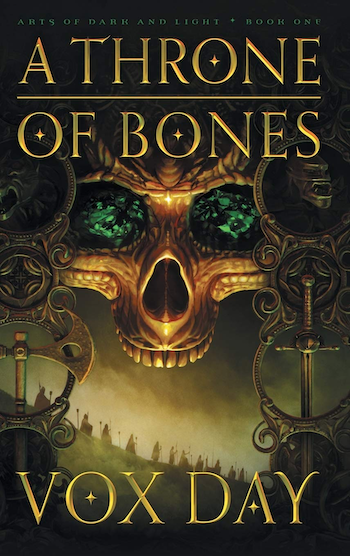
This weekend I'd like to introduce many of you to Vox Day's "A Throne of Bones".


It's grand fantasy in the line of "Game of Thrones", except that I think it's better written than the latter.  The blurb reads:


In Selenoth, the race of Man is on the ascendant. The ancient dragons sleep. The ghastly Witchkings are no more; their evil power destroyed by the courage of Men and the fearsome magic of the Elves. The Dwarves have retreated to the kingdoms of the Underdeep, the trolls hide in their mountains, and even the savage orc tribes have learned to dread the iron discipline of Amorr's mighty legions. But after four hundred years of mutual suspicion, the rivalry between two of the Houses Martial that rule the Amorran Senate threatens to turn violent, and unrest sparks rebellion throughout the imperial provinces. In the north, the barbarian reavers who have long plagued the coasts of the White Sea unexpectedly plead for the royal protection of the King of Savondir, as they flee a vicious race of wolf-demons who have invaded their islands. And in the distant east, the war drums echo throughout the mountains as orcs and goblins gather in vast numbers, summoned by their bestial gods.


It's a long and complex book, almost defying one to select just one excerpt for a blog article like this.  I've chosen one that depicts family conflicts and rivalries that will grow into a major plot element in the book.


They had made excellent time, all things considered, thought Corvus as he and Saturnius approached the bridge over the river that separated the Republic of Amorr from the vast empire over which it ruled. They had left most of the twenty guards who had accompanied them the day before, freeing them to separate and visit their families, which were settled in Vallyrium. The two who lacked families, and the two whose families lived in the city, were following a few lengths behind where they could talk freely without concern for their officers overhearing. Saturnius had initially balked at abandoning most of their honor guard, but he’d withdrawn his objections when Corvus had pointed out that no brigand would attempt to interfere with six armed men wearing legionary cloaks within a day’s ride of Amorr.

He was more eager than ever to see Romilia but reluctantly concluded that it was Magnus to whom they must go first. Corvus didn’t relish delivering the bones that were presently stowed away on the back of one of their two pack horses. But over the course of their travels he had convinced himself that Magnus would be inclined to receive the news as a proper stoic should. Did he not pride himself on his equanimity? The guards at the bridge tower recognized their rank and saluted as he and Saturnius passed. One of them must have been acquainted with one of the legionaries, as a series of glad cries erupted behind them.

Corvus smiled at the sight of the hustle and bustle of the city life that was so familiar, and yet seemed so foreign after four months in the wilderness of Gorignia. The smells were nearly as strong as the stench of the battlefield from which they’d come, but far more varied and significantly less vile. And some of them were mouth-wateringly delicious.

“I have dreamed about those for months,” Saturnius said, eyeing a vendor who was selling garlic-fried songbirds on a stick.

“Go on then, buy as many as you like. Get me one, no two, as well.”

“As the consul commands,” Saturnius said with a grin. He didn’t even bother dickering with the vendor, but simply grabbed a handful, tossed the man a silver coin, and popped one in his mouth as he rejoined Corvus. “Mmmmph, now that is really good! Why can’t our cursed cooks manage to feed us decently if these fellows can create such delicacies out of the birds they catch on the street?”

Corvus wrinkled his nose after taking a bite of his bird. It was crunchy, and all he could taste was the potent garlic in which the little bird had apparently been stuffed, rubbed, and fried. “I think you could serve goblin this way and it would taste no different.”

“If goblin tasted like this, I’d eat it.” Saturnius vowed. “It would certainly simplify the logistical situation.”

“My son once told me he read the orcs do just that when they march. They use the goblins as shock troops and provisions alike. Probably just a story, though. They’re also said to grow from rocks. Or maybe that’s trolls, I don’t recall.”

“Not a bad idea, actually. Although I don’t see either the men or the Church smiling on it.” He looked at Corvus appraisingly. “And I can’t imagine you’d be good for anything but soup, being as lean and stringy as you are.”

They had no sooner turned into the quarter in which both Magnus and Corvus himself resided when Corvus spotted a pair of familiar faces among a group of young men dicing on a corner. One was Marcipor, his son’s longtime slave, and the other was a man from Magnus’s stables. Both of them looked up at the sound of the iron-shod hooves on the cobblestones, but their reactions were completely different. Marcipor smiled and rose to his feet, but Magnus’s stable slave’s eyes narrowed and after exchanging a word or two with the young man holding the stakes, he ran off in the direction of Magnus’s domus.

Corvus sighed. It wasn’t as if he intended to surprise Magnus, but something about the slave’s reaction suggested that there might be trouble ahead.

He glanced back. The four guards were only a few lengths behind them. But surely they wouldn’t be needed!

“My lord Corvus, welcome back to Amorr,” Marcipor said, following his words with a deep and theatrical bow. The slave was a tall, golden lion of a man but about as martial as a kitten. He was deeply attached to Corvus’s son, and Corvus found him quite likable in his own right. “Did my master accompany you?”

“I’m afraid not, Marce,” Corvus replied. “But thank you, it is good to see a friendly face. Speaking of which, that slave, Magnus’s man. He ran off to warn Magnus, I presume, and he did not appear pleased.”

It was as if a light switched off. Marcipor’s face abruptly grew serious and his voice dropped. “I fear your welcome will be rather chillier at Magnus’s manse, my lord. There are rumors abounding, some of which I can scarcely credit! It is said that Gaius Valerius is dead, and not by the hand of the enemy either.”

Corvus and Saturnius looked at each other. Had word of the execution gotten back ahead of them somehow? Was it even possible?

“Who says it?” he asked the slave. “Who told you?”

“Sextus,” Marcipor replied. Corvus shook his head. Magnus must already know then, for he recalled that the young slave was as close to Marcus’s cousin as he was to Marcus himself. Damn that Clodipor. He should have sent the man back at once, empty-handed, no matter how strange it would have seemed under the circumstances.

“Trouble?” Saturnius asked.

“There may be.” Corvus reached into one of his saddlebags and withdrew a scroll with a broken Valerian seal. “Marce, run to the Senate, as quickly as you can. Find the primus fascitor and tell him their new Consul Aquilae requires eight fascitors at Magnus’s domus at once. At once! Accept no delays, and tell them to run, don’t walk. The primus should comply once he learns you’re of my household, but give him this letter if he requires additional convincing.”

“Consul, Lord Valerius?” The young man stared at him in astonishment. “Congratulations, my lord!”

“Consul Suffectus, it would seem. At any rate, I am entitled to the fascitors, so if you will please fetch them for me now.”

“At once, my lord consul!” His son’s slave took the scroll, bowed more respectfully than Corvus could ever recall seeing him do before, and ran off toward the heart of the city.

“Fine-looking lad,” Saturnius commented. “One of yours?”

“My son’s birth-companion. They used to be all but inseparable, but he’s always been on close terms with Magnus’s son Sextus, as well. Marcus gave him to Sextus when he kissed the eagle. Whatever he’s heard, rest assured it has reached Magnus’s ears as well.”

Saturnius sighed. “Damn that Fortex!” The legate immediately regretted his outburst and made the sign of the tree. “No, no, requiscat in pace and let there be mercy upon his soul. But truly, Corvus, how hard is it to not engage in a bloody single combat? Were my orders unclear? Three hundred other knights didn’t seem to have any trouble comprehending them.”

“Don’t waste time thinking about it. Your orders were perfectly clear. The boy was always headstrong to a fault.”

“It can be hard to tell the difference. The lad fought like a demon, though, I’ll give him that. And I was surprised when he returned to the field that day. Once the Second broke their cavalry and chased them off, I was certain we’d seen the last of him until nightfall. So he had a modicum of discipline.”

“Well, we did see the last of him that night,” Corvus said grimly. “And therein lies the problem. Are you sure you want to involve yourself in this, old friend? Magnus will make for a bad enemy. I’m family and a senator besides. You don’t have the protection of either.”

“I’m already involved, General. The dice will fall as they will. Even if I make an enemy of Magnus, Amorr doesn’t have so many competent generals that he can justify interfering with my appointments. No one would take him seriously, and he wouldn’t risk that. But you don’t honestly believe you’ll need the fascitors, do you?”

“I’d rather have them and not need them than need them and not have them. You know as well as I do that Magnus is accustomed to having things his way.” Corvus took a deep breath as their horses trotted past the curve and the white gates of his elder brother’s domus came within view. They were open and unguarded. As they rode past them, Corvus could see Magnus was sitting on the top step of the mansion, leaning back against a marble column. He looked old and unwell, and he was uncharacteristically attired in a torn and wine-stained tunica.

But upon catching sight of Corvus and Saturnius, he rose unsteadily to his feet, and his unshaved face darkened. He was a big man, Magnus, and as he approached, Corvus realized he was glad he had the advantage of being mounted, especially when he saw the size of the empty wineskin that had been concealed behind Magnus before he rose.

“Hail, Nepoticus!” He greeted Corvus with an angry, contempt-filled sneer. “Hail, to the uncle of corpses! How proud you must be to have defeated those unpronounceable goblin tribes, at the cost of a mere tribune? Shall the Senate grant you a triumph? Shall we name you Tribunicus?”

Corvus remained on his horse. “Brother, I mourn with you, and I regret exceedingly what has happened. I rode here immediately to bring you the news myself. Marcus Saturnius came as well, out of respect for both you and Gaius Valerius.”

“Never speak his name!” Magnus raged, taking a step closer and jabbing his finger up toward him. “You damnable crow! You say you mourn, but where is my son? Where is my son!”

Corvus been prepared for anger, he had been prepared for outrage, he had even contemplated the possibility of violence, but he had not been ready to witness such raw and boundless grief. He had seen his elder brother bury two infant daughters, as well as their own father, without shedding so much as a single tear, and he knew Magnus had sent hundreds, no, thousands, of men to their deaths without a pang of conscience or even a later moment of regret. And yet, the erstwhile stoic had been as unmanned by his son’s death as a eunuch by a heated blade.

Filled with pity and grief, Corvus could not find it within himself to meet his brother’s anger with anger.

“He is there, brother,” he said hoarsely. “On the grey.”

Magnus staggered past him, as if unseeing, toward the white horse that bore his son’s remains. At a gesture from Saturnius, two of the guards slipped off their mounts and loosened the straps that held the heavy canvas bag tight against the horse’s back. Sobbing, he embraced the bag. One of the legionaries reached out to steady him when it looked as if his legs might buckle. He staggered backward with it in his arms, then fell to his knees and unfolded the top. He did not reach in, but merely looked inside, as if to confirm that the bones he could undoubtedly feel through the canvas were really there.

It was a dreadful thing to see. Corvus felt his eyes watering, and he tried to control them, but even though he blinked repeatedly, a single insistent tear burned its way slowly down his left cheek. He didn’t look at Saturnius, but he heard the legate clear his throat twice and knew that Saturnius too was having to keep his emotions in check. Neither of them had ever wished this on the late tribune or his father.

Magnus arose with some difficulty, still clutching the charred remains of Gaius Valerius to his breast. Tears streaked his face, but when he looked up at Corvus, what he saw on his brother’s face provoked him to fury again. “You would shed tears?” he demanded. “Better you shed blood! I sent you my son, I trusted you with my son, and you bring me back this…this bag of blackened bones? What did you do to him? How did he die?”

“You don’t know?” Corvus asked, confused.

“Of course I don’t know, you bloody fool! You wrote that he died after the battle in your letter. Clodipor didn’t see him or Marcus in the camp. Was he wounded? Did he take ill?”

Oh, dear God, cleanse and purify us now, Corvus thought. This was not good. His brother’s derangement was bad enough just knowing that his son was dead. Hearing the actual reason for his death could only make matters worse. Steeling himself as if for a blow, he forced himself to swallow and look his brother directly in his grief-reddened eyes.

“I am sorry, but there is no easy way to tell you this, so I will be direct. He was executed, Magnus.”

His brother stared dully at him, so long that Corvus wondered if he needed to repeat himself.

“What?” Magnus finally shouted. “He was executed? My son was executed? At whose command?”

“Mine.”

His brother’s eyes widened with utter astonishment and, for a moment, Corvus seriously thought Magnus was going to drop his son’s bones and attack him. “You executed him? You executed your own nephew? For what? You can’t expect me to believe he was a coward or that he ran from bloody goblins!”

“Fortex was no coward, Magnus,” Saturnius said. “He was brave, certainly. One might even say he was too brave. But his orders were clear. The legion was under special discipline, and before the battle I ordered the cavalry to accept no individual challenges. Fortex defied my order and engaged in single combat with the commander of the enemy cavalry. He killed him, and his men scattered the enemy afterward, but the entire legion witnessed his action. Sextus Valerius had no choice. He was honor-bound to issue the sentence.”

“Honor? Where is the honor in killing young officers, especially one as courageous and promising as Gaius? Young officers make mistakes, they make stupid decisions, and they give ludicrous orders, but you don’t kill them for it! How can they ever learn, if the penalty for every mistake is death? Good lord, Corvus, have you gone mad? You once killed an Avaran in single combat yourself!”

“I’m here to mourn with you, brother, not to argue with you.” If you weren’t half out of your mind with grief and anger and wine, you’d remember we weren’t under austeris at the time and I didn’t defy any orders either. And you would know it all perfectly well, since you were the one who told me to accept the bastard’s challenge. “Magnus, please, I beg you, forgive me. I had no choice in this, no choice at all.”

“Spare me your false tears! Of course you had a choice! You were the stragister militum! You could have subjected him to degradation or stripped him of his rank, you could have put him on rations. Or you could have done what you should have done and simply sent him home to me! If you didn’t want him on your staff, there are ten other legates who would have been delighted to have a Valerius as their tribune! Blood and bones, you didn’t have him stoned or beaten by common legionaries, did you?”

“He was beheaded, Magnus, by the primus pilus, Junius Honoratus. He died well.”

“With all the courage that befitted his name,” Saturnius added.

Their assurances were not helpful.

“Is that supposed to comfort me?” spat Magnus. “Post-mortem plaudits from the murderers of my son?”

Suddenly, Corvus found that he had had enough. “Brother, your grief maddens you. Gaius Valerius was not murdered! He was guilty, and he admitted his crime openly before the legion. His fate was the same as would have been meted out to any other man in the legion. I did not tell you how he died in order to comfort you or to ease my conscience, but to honor his last wishes. Those were his last words, his last and final request. ‘Tell my father I died well.’ And so he did.”

Their raised voices had attracted attention within the domus. Several of the household slaves had already gathered around the windows, and now the front doors opened slowly. Julia, Magnus’s wife, appeared. She had been well past her prime when Corvus had last seen her eighteen months ago, but she had still been an attractive woman, tall, with long black hair fading gracefully into grey. Now she looked like the grandmother she was, as if her son’s death had aged her a decade or more. She was painfully thin, and she leaned on Galerus, the majordomus of Magnus’s household in the city, for support.

“Corvus?” she asked, as if bewildered at his presence. “It is good of you to come. Do you bring word of our poor boy? And Magnus, why are you shouting at your brother?” She looked from one to the other, and both of them were reluctant to answer her.

Magnus turned toward her. “Corvus has brought us back our son, my love. He has brought us back his bones.”

Julia closed her eyes and clutched at her chest, but she did not otherwise react. Lost in the depths of mourning, she looked to have no more tears left in her. Corvus desperately hoped Magnus would not say anything about the execution, as there was already an ugliness in the air that a woman’s hysterics could easily set on fire. Fortunately, he merely stared at Corvus as if daring him to speak.

Instead, Corvus dismounted from his horse.

“Help the ex-consul bring his son’s remains into the atrium,” he ordered the two soldiers already dismounted. But Magnus waved them off, instead beckoning his slaves to come and take his burden from him. Four of them came forward, and they handled Gaius Valerius’s remains with reverent care. From their stricken faces, it was easy to see the lad had been well-loved throughout the household.

Corvus approached Julia with care, and with half an eye on Magnus. He took her too-thin hands in his and squeezed them gently. “Sister, I am deeply sorry I could not bring your son back safely to you. Gaius Valerius was the bravest officer in the legion, and his men admired him exceedingly.”

She nodded hesitantly. “Thank you, Corvus. He was a man, and he took a man’s chances. Do not blame yourself.”

That was too much for Magnus to bear. “Galerus, take Julia inside,” he snapped with barely repressed rage. “My love, see that Gaius’s bones are washed and laid out on clean linen cloth. I must speak with my brother about the funeral. And Galerus, see that you find something to occupy these eavesdroppers. If you catch any of them sneaking back and trying to listen, have them flogged. To death.”

“Of course, my lord,” the majordomus said, his eyes wide with surprise.

“Yes, Magnus.” Julia took Galerus’s arm and bade farewell to Corvus with a sad half-smile, then followed the slaves bearing her son’s bones inside the house.

Magnus watched her go, and as soon as the doors were safely closed behind her, he turned back toward Corvus and fairly spat at him.

“To Hell with your pretense at pity! If I see you at the funeral, I will kill you. I don’t give a damn about your imperium, I will strangle you with my own hands. Do you understand me, Corvus?”

“Magnus,” Saturnius said, “with all respect for you and your son, you must know that if your brother hadn’t taken it upon himself to pronounce the sentence, I would have done so. With no hesitation. We conferred with the senior centurions, as well. It was agreed. To ignore such a blatant violation of discipline on the battlefield could not be done. You know as well as I do that the law of the legion is iron, and there is no mercy in them.”

Magnus scoffed. “Who are you, Marcus Saturnius, to speak of the law of the legion to the head of House Valerius? A Valerian has led Amorr’s legions since the city still had kings! I was leading three legions against the Avarii when you were but a tribune. Would that I had the foresight to take your damned head! Tell me, Marcus Saturnius Inglorious, who was your father? Who was your father’s father’s father? Has Amorr fallen so far already? Can this be the city I, my father, and generations of Valerians before him have fought to defend, a city where Amorr’s noblest patrician blood is shed by plebian scum?”

Saturnius appeared unruffled. “I have never sought fame or fortune, only victory for Amorr. And it is not noble blood that makes the general, Magnus—it is noble deeds. Amorr knows only one law. There is not one law for the patrician and another for the plebian.”

“Our House is Amorr,” Magnus shot back. “Surely you have heard that before. Neither you nor any pleb can ever truly understand what it means. Without House Valerius, without the other Houses Insurgus, there is no Amorr.”

“No, it is you who have never understood what that means, brother.” Corvus shook his head, half in pity, half in contempt. “You have it precisely backward. Other great houses are loyal to the family first, the city second. House Valerius stands apart because we do not distinguish between our interests and the nation’s interests. Honor demands, honor dictates, that we will be the last to exclude ourselves from the standards we demand of others. Even Gaius Valerius Fortex understood it at the end, and he died a true Valerian’s death.”

“Honor! You were always so damned concerned about your precious honor! That’s all this was, wasn’t it? You murdered my Gaius as a sacrifice to your filthy honor!” Magnus spat upon the ground. “That for your honor. It’s not even worth my piss, let alone my son!”

Corvus started to reply, but a rhythmic tromp-tromping of iron-studded sandals over the cobble-stoned street caught his attention. He looked back and saw the eight fascitori enter through the open gate in two lines of four. They were helmed and armored, and they bore the ceremonial axes indicative of their authority. They marched without hesitation past the horses, wheeled around, and stopped in front of Corvus’s horse.

“My lord consul, we are at your service.” The fascitori saluted as one, and Corvus nodded to acknowledge them. “I am Caius Vecellius.”

Magnus, however, only sneered at their arrival. “I see you feared to face me alone, little brother. Four legionaries, a squad of fascitors, and even a legate to hold your hand while you offer me sanctimonious justifications in defense of your murder.”

Corvus didn’t bother trying to argue with Magnus. What was the point? After all, it wasn’t entirely untrue, and he certainly felt safer now that the fascitors had arrived. But his brother wasn’t finished.

“Don’t make the mistake of thinking your imperium renders you immune from consequence, Corvus! I made you consul, and I can unmake you just as easily. And as for you, Marcus Saturnius, you had better leave for Cynothicus now if you know what’s good for you. I’ll find a way to see my son avenged. Just see if I don’t!”

“To think I once wondered where Gaius learned his lack of discipline!” Corvus spat back.

His brother struck Corvus across the face with an open hand. Magnus might be over fifty, but he was still a big man, and the force of the blow drove Corvus to one knee.

He tasted blood in his mouth; the unexpected slap had caused one of his canines to puncture his lip.

Slightly dazed, he rose to his feet again to see two of the fascitors had dropped their axes and seized Magnus.

Between them, they forced him to his knees, and Caius Vecellius stepped toward the kneeling man with a lethally impassive expression as he shifted his grip on his axe to hold it in both hands. The two legionaries had drawn their swords, as well.

The fascetor looked to Corvus.

“Do you want this man arrested, my lord consul? In striking you, he has struck the city.” Corvus, his cheek burning, stared into his kneeling brother’s eyes. They were still red and filled with madness, but the fury had faded enough for him to see grief and despair behind it. Corvus suspected that his brother half-wanted to be executed for treason, if only to escape his pain. Fascitors had been known to behead men for lesser crimes than the one Magnus had just committed. And for the crime of vituper-maiestas, arrest meant summary execution.

He realized he had to leave right now and get the fascitors out of Magnus’s presence before what was already an ugly situation spiraled completely out of control. It was bad enough that he had had his nephew beheaded. If he didn’t end this farce immediately, he’d find himself saddled with the reputation as a fratricide, as well.

Corvus wiped the blood away from his mouth. “The ex-consul has insulted neither me nor Amorr, Caius Vecellius. He has only just now learned of the manner of his son’s death, and he is understandably aggrieved. It would be unjust to hold him responsible for his actions. Release him, and we will leave him and his family to their mourning. Now, I must speak with my consular colleagues, so if you will lead us to the Forum?”

“At once, my lord consul!” Caius Vecellius bowed smartly and returned his axe to his shoulder.

Two of his fellows helped Magnus to his feet, then rejoined the others and began to follow Vecellius toward the gates.

Corvus didn’t say anything to Magnus, he remounted in silence and turned his horse around.

Saturnius did likewise, and the two knights also clambered into their saddles and followed them out to the safety of the street.

When he reached the gates, Corvus looked back and saw that Magnus was still standing motionless, watching him, and his eyes burned with an unfraternal hatred that chilled Corvus’s soul.

“Well, that went well,” Marcus Saturnius said.

“In what way?” Corvus spat, and a red gobbet splattered against the white wall outside the gate, leaving a faint crimson stain behind as it slowly trickled its way down the wall.

“I was listening to the lads earlier,” the legate indicated the knights riding behind them. “It was four to one that either you or your brother wouldn’t survive that meeting.”

“And yet you decided to ride along—out of morbid curiosity?”

Saturnius grinned up at him. “I always bet the chalk, General. But sometimes it helps to keep an eye on your investment.”


I'm currently re-reading the book for the third time.  Its sequel, "A Sea of Skulls", was published some years ago, but is currently being expanded.  Those who've bought the current version will receive the expanded edition free of charge when it becomes available.  I'm looking forward to reading it, hopefully later this year.

Peter


Friday, January 13, 2023

I've changed the comment policy - you no longer need a Google account


For years I've used the Blogger setting to require a Google account in order to comment here on Bayou Renaissance Man.  It's been one of the few defenses against spammers and scammers that's really helped - not always, but much of the time.

However, scammers and spammers have found new ways to get around that, to the point that they were overwhelming my comments with their dreck.  Accordingly, not too long ago I switched to moderating all comments, no matter who they were from.  I don't like that, because it slows down comments and responses depending on when I can get to a computer to approve or reject them;  but it was the only solution available on Blogger.

The new system seems to be working;  in fact, I think I'm getting more comments than before.  Therefore, given that I'm now checking all comments instead of only a few, I reckon it's time to remove the Google account requirement.  From now on, anyone can comment here, subject only to comment moderation before what they've said will appear.  Scam and spam comments will be deleted automatically, as will those using foul language or being unduly argumentative.  Disagreement is welcome, provided it's politely and professionally voiced.  Polemics and diatribes - not so much.

I know there are readers who don't comment here because they don't want to register in the Googleverse to do so.  Some of them have e-mailed me from time to time to complain about my previous policy in that regard.  Well, friends, you no longer need to Googlify yourselves, so have at it!

Peter


Doofus Of The Day #1,100


Today's Doofus is a drunken driver from Spokane, WA.  Apparently she believed that a recent change in State law meant that police could not legally pursue her.


As a trooper was on patrol in Spokane Valley, he spotted a Ford 150 swerving through lanes of traffic. As any officer would deduce, he reasonably believed the driver was driving under the influence.

It was reported that once the trooper pulled behind the vehicle and flicked the cruiser’s lights on, Baporis then sped up. She allegedly then started a pursuit that reached speeds of more than 100 miles per hour.

. . .

According to Washington State Patrol spokesman Trooper Ryan Senger ... the driver, Baporis, [believed] that her constitutional rights were “being violated” and therefore, [she] did not need to pull over.

In addition to refusing to pull over for the DUI suspect pursuit, it was reported that Baporis called 911 during the chase. She allegedly claimed that she was being illegally chased.

Senger responded to media by calling the 911 call- “hilarious”. You can add ironic and moronic to that.

Thankfully, the State Patrol was able to successfully and safely disable the vehicle from the DUI suspect pursuit.


There's more at the link.

I've seen this strange behavior many times before in criminals I have known.  They get it into their heads in some unknown fashion that their presumed "rights" override those of anyone else (particularly law enforcement), or give them the freedom to do as they please irrespective of any danger to others their actions may pose.  They insist that any attempt to enforce the law is a violation of their rights, and even (in some cases) appear to think that defending themselves against such enforcers is part of their right to self-defense.  They can't be persuaded otherwise, no matter how lawyers and courts may try to explain it to them.

What's even weirder is that, when a criminal has committed a crime, he/she will regard the proceeds of that crime as their property, giving them the right to defend it against anyone trying to take it from them - be that other criminals, or the original owner, or even police.  They regard it as theft to take what they've already stolen, and many end up in very serious legal trouble for acting on that impression.

On this occasion, the driver learned a lesson without it costing her too much.  She may not be so lucky next time...

Peter


Thursday, January 12, 2023

Is the US military destroying "vaxxed" blood?


EDITED TO ADD:  THIS MAY BE A HOAX.  Larry is checking for confirmation, and will let us know if he finds any.  In the meanwhile, treat this report with caution.


Larry Lambert informs us that the US armed forces are destroying blood donated by vaccinated service members, because it's been found to produce side effects in those receiving it by transfusion.


They say empirical evidence proves beyond all doubt that although donors might not present vaccine-related side effects, recipients of tainted plasma have had adverse reactions, including sudden death, to contaminated blood. Case in point: Staff Sgt. William Wright, a healthy 36-year-old male stationed at Fort Bliss, Texas, was wounded during a training exercise to the point of needing a transfusion. Wright was not vaccinated; he had been fighting an arduous battle to obtain a religious exemption. He was unconscious at the time and therefore couldn’t ask whether the plasma entering his veins had been siphoned from a vaccinated person. Unbeknownst to Wright, the donor had been double-vaxxed and boosted. He seemed to recover—his vitals were normal and he was eating solid food—but remained under observation at the William Beaumont Army Medical Center-Fort Bliss, and had enough strength to ask whether he’d been given vaccinated blood. When told he had, he protested. Two days later Wright, still at the hospital, died suddenly—a major heart attack. A postmortem examination found an 11” blood clot in an artery in his lungs.

“When an unvaccinated patient receives vaccinated plasma, well, statistics don’t lie. What we’ve witnessed is an astronomically large number of troops present everything from mild and temporary to severe and lasting side effects, and, in some cases, death. I’m personally aware of 12 men that needed a transfusion and vehemently objected to getting vaccinated plasma. They were told they were government property and had no right to refuse it,” a physician at Womack Army Medical Center, Fort Bragg, told Real Raw News.

On Thursday, the senior leadership at Womack Army Medical Center reached a consensus to incinerate and destroy its stockpile of vaccine-contaminated blood—approximately 500 liters of refrigerated plasma and whole blood that hadn’t yet been spun in a centrifuge. News of the heroic act spread rapidly among the White Hat community, and within hours other military bases began torching polluted blood. Fort Meade, home to U.S. Cyber Command, destroyed its supply, as did Hunter Army Airfield and Fort Benning, both in Georgia. All told, 23 installations obliterated toxic blood.


There's more at the link.

I haven't seen any other reports about this in the mainstream media, but then, given their overall mendacity and political extremism, one wouldn't expect to, would one?

If any reader can shed more light on this, I'll be grateful if you'll please leave a note in Comments.  Thanks!

Peter


The cartels versus the Mexican and U.S. governments - a state of war


Two recent articles have highlighted the fact that the security situation on the US-Mexico border amounts to nothing less than a de facto state of war.

Real Clear Wire describes it as "The Invasion Equation".


Rape trees, river floaters, skeletal remains, and fentanyl candy. The new vernacular of illegal immigration is an indictment of the U.S. Department of Homeland Security’s (DHS) loss of operational control along the U.S.-Southern border. A consequence of this is the transformation of cartel insurgencies into well-formed armies that recruit and employ uniformed soldiers, have supporting intelligence operations, and control terrain. The challenge now confronting state and federal law enforcement is no longer how to deter an insurgency; it’s how to defeat an army.

Modern armies are resourced by nation-states who provide moral leadership in times of war. But the accountable governments of nation-states can falter and fail. Mexico in particular has a compromised central government that is not protecting its own homeland from subversive actors. When this happens, a conglomerate of paid professionals, mercenaries, conscripts, and criminals fills the void to either protect or exploit the resources of a community. It was true within the first communities of Mesopotamia, and it is happening now in communities across Mexico. This is how armies begin. A state is incapable of securing its communities, accountable governments lose legitimacy, and subversive actors start vying for control of terrain to exploit resources.  

The hallmark of any effective army is its ability to control terrain. The cartel armies have done that by co-opting the gangs of the U.S. and operate the world’s largest crime syndicate complete with narco distribution hubs throughout the U.S.. In Mexico they cordon cities and run roadblocks to collect information and extort residents. To date, as much as 20 percent of Mexico has come under control of the cartels as previously reported by CIA analysts. Their center of gravity is the illicit drug and human trafficking revenues from which they derive their strength. The illegal aliens that they infiltrate, the drugs that they smuggle, and the terrorist that they give safe passage each infiltrate the Southern border under their control and further empower their control of terrain.


There's more at the link.

Austin Bay claims bluntly that "Mexican Crime Cartels Wage Narcotic and Demographic War on USA".


In early 2009 sensationalists claimed that Mexico was a failed state. Foreign Minister Patricia Espinosa rebutted the accusation, pointing out the 2009 Mexican federal government was quite strong. Failed states have no real government.

. . .

December 2018: Andres Manuel Lopez Obrador (AMLO) becomes president after winning an overwhelming electoral victory. In his inaugural address he invoked a word that transfixes Mexico: Impunity. Under his administration "Corruption and impunity" will end he said.

For angry and disenchanted Mexican citizens, "impunity" means embedded injustice within their nation's governing institutions and society.

Donald Trump gets credit for understanding a border wall not only hindered illegal immigration it obstructed cartel smuggling. AMLO eventually agreed that Trump's U.S.-Mexico-Canada Agreement was a good deal for Mexico -- real jobs and honest income.

The Jan. 5 shootout in Sinaloa state is a warning for Mexico that it still faces well-armed and well-financed internal enemies. Three days before Biden's El Paso photo op, 3,600 Mexican soldiers and security personnel captured Ovidio Guzman, the son of jailed Sinaloa (aka Pacific) cartel kingpin Joaquin Guzman. The operation resulted in a 10-hour battle with gunmen in a town near Culiacan. Security forces captured 50-caliber sniper rifles and two dozen vehicles with add-on armor.

Culiacan is 500 miles from the US-Mexico border but the cartel wages war throughout North America -- yes, the border war now reaches New York City. In December the DEA announced during 2022 the U.S. seized 50 million fentanyl-laced pills and 10,000 pounds of powder -- "379 million potentially deadly doses." The Sinaloa and Jalisco New Generation cartels produced most of the fentanyl at "secret factories in Mexico with chemicals largely sourced from China."

. . .

An undefended U.S. border increases cartel profits and makes Mexico more vulnerable. Drugs, crime and social support costs sap the U.S. The demographic shifts present additional challenges.

Who benefits? Communist China, drug cartels and corrupt politicians. Quite a strategic consequence.


Again, more at the link.

Our border security is like most other problems tackled by the US government.  It's been addressed more in the breach than in the observance.  Partisan political interests, pressure groups and the influence of outside funding on politicians (a.k.a. "re-election fund contributions") have neutered any effective response.  The can has been kicked down the road far too often, so that a problem that could have been addressed relatively easily in its early years has now ballooned out of control.  There is no longer any easy fix for our border problems.  Even a full-scale border wall would now face military-style breaches by the cartels, who have more than enough weapons and gunmen to do the job.  Perhaps the only thing that would now work is a "no-mans-land" along the border;  two border walls, one about 10 miles inside Mexico, the other about 10 miles inside the USA.  Anything and anyone moving between those walls would be targeted, if necessary by "shoot-on-sight" automated defenses.  If there's any other practical, effective way to stop the current invasion, I can't think of it.

Folks, we're in a state of war with the Mexican drug cartels.  They're now making almost as much money out of illegal alien smuggling as they are out of drugs.  They're rolling in money, and money talks.  We can't cut off the money, thanks to feckless politicians who worry more about lining their own pockets than about securing our borders.  Therefore, we have to face up to the fact that this is a war, and right now we are being defeated in detail.

How to fix it?  Well, I know how to fix it.  Any military veteran can tell you how to fix it.  However, the politicians will never allow that solution - so we're stuck.


Peter


Quote of the day


From Klaus B. on Gab, following this news:


Biden’s cabinet is so Jewish they want to ban gas ovens.


Oh, ZING!!!  That's funny no matter what your faith (or lack thereof).  I tried it on a Jewish rabbi friend (Orthodox, no less), and he nearly fell out of his socks laughing.


Peter


Wednesday, January 11, 2023

Two great images


Two photographs have caught my eye this week on social media.  Click either one for a larger view.

First, from SNAFU Solomon, we have this image of a bird and a snake competing for a fish.


Then, from user CertainHOPE on Gab, here's a lovely winter scene titled "Sugarcoated Serenity".  The photographer captured the light just right.


Both are great examples of photography - and being in the right place at the right time to capture the picture.

Peter


Thoughts about Sgt. Bob, and living with pain


The recent tragic death of Sgt. Bob, and his reasons for taking his life, had a big impact on me.  In his final blog post, he wrote:


The time is 10:38 a.m. Eastern Time, 31 December 2022. I just swallowed 10 capsules of Lisinopril. I want the pain to end.

Around 7 a.m. I searched to find out if Lisinopril is an effective method for suicide. The internet gave no yes or no reply, but did list the drug’s usages. There were several suicide hotline numbers as well. I am well beyond hotline information.

I just want the pain to stop. Drugs do not help. Physical therapy has not helped. A dozen doctors of medicine did it listen when I told them of my pain and my idea that it was related to the 1986 cerebral aneurysm and a diagnosed right side focal dystonia. Doctors said, “There must be a problem with your lower back. Let’s get X-Rays of your lower back.” When nothing showed on X-Rays, the doctors said nothing.

So, since medicine cannot stop the pain, I have used medicine to do it.


There's more at the link.  Please say a prayer for Bob's soul, and for his surviving family.  They all need it, I'm sure.

I'm very familiar with the effects of long-term pain.  I've suffered from it since February 13, 2004 (yes, it was Friday the 13th!), when I experienced a work-related spinal injury that's left me partially disabled ever since.  It's grown worse over the past year, because as one gets older, the spine deteriorates, and that puts greater pressure on the injured nerves.  That's been particularly frustrating to me, because it's interfered with my ability to write and produce more books.  I'm still able to do so, but only when the pain level is low enough to not distract me from being creative.  When it gets too high, a lot of things grind to a halt.  Creative writing is one of them (at least for me).  Pain gnaws on you, like a dog gnawing on a bone.  It grinds, it tears, and it rips you in mind as well as body.

I know, too, what Bob went through in trying to get doctors to deal with his pain.  I have a lot of sympathy for the doctors, too:  they're trying to treat something that's often nebulous, hard to pin down to one specific location or organ or injury.  Furthermore, if they treat the pain more or less effectively, they may cause other problems (up to and including shortening the patient's lifespan, or making him a danger to himself and/or others if he drives or uses machinery).  To add to their difficulties, many of the most effective painkillers are severely restricted due to problems with addiction, and can't be freely prescribed (particularly for extended periods) without attracting official scrutiny.

After my injury, I was put on a "cocktail" of three medications to manage my pain:  Gabapentin, Ultracet and Flexeril.  Sadly, the combination made me feel like a zombie, as if a permanent gray cloud had taken up residence in my head and was blocking me from enjoying life.  It didn't take me long to figure out that was no way for a man to live.  I abandoned the "cocktail" and learned to live with a higher level of pain, using OTC analgesics to cope most of the time and Tramadol to deal with the worst days.  I've been doing that for sixteen years now . . .  (After my injury and resultant surgeries, I was also prescribed Percocet for the worst episodes of pain;  but nowadays that's no longer so freely available, thanks to official restrictions.  Fortunately, one can take multiple Tramadol tablets per day if necessary, which is almost as effective.)

So, you see, I really can understand how Sgt. Bob felt.  There have been days when I've felt the same.  I'm not suicidal at all (I have a very strong religious prohibition against it to sustain me), but there have been bad pain days when I've understood very clearly - experientially! - why some decide to check out rather than carry the burden any longer.  I've never taken that step, and please God I never will:  but I'm here to tell you from personal experience, pain can come to dominate your outlook on life to the point where it removes almost all hope, unless one has a very strong will to live.  It's no surprise to me that many people in that situation say simply, "I've had enough.  I can't take any more."  Sgt. Bob was far from the first to make that call, and he'll be far from the last.

I've been very, very blessed by my wife in dealing with pain;  and I think I've been a blessing to her too.  You see, she was also badly injured earlier in life.  One of her knees was shattered into tiny pieces when she ended up the meat in a two-car sandwich, and her shoulder has been dislocated multiple times.  She's no stranger to pain in her own right.  When sudden changes in the weather are imminent, both she and I have built-in pain barometers that let us know all about them!  That may sound like a recipe for an unhappy marriage, but with us it's the opposite - it strengthens our bond.  When one of us is having a bad pain day, the other can say from all too much experience, "Yes, I really do understand how you're feeling!"  We stand by each other, make allowances for each other, and generally try to be helpmates for each other.  That mutual support is worth more than gold to us.

I'm still trying to re-balance my life in terms of the increased pain I've experienced over the past year.  I have to keep on writing:  it's almost the only way I have to earn a living, given my physical limitations, but the pain has certainly slowed me down.  I have multiple books very close to completion now (over 75%), and I hope to publish several this year if my body backs off a bit and lets me finish them.  I hope my readers will forgive the delay.  I really don't want it, but there are times when I simply can't produce quality output that meets the high standards I set for myself.  I'm doing my best.  Unless I find a literary sugar-daddy (a critter I don't think exists), I'll have to continue to earn my bread by the sweat of my brow in the old-fashioned way.

I guess the point of this rambling discourse is really to say:  try to understand the people in your life who are afflicted by ongoing pain issues.  It's the most debilitating, depressing, exhausting thing you can imagine, far more bitter in its effects on your mind than it is on your body.  It's a burden you can never put down.  You can only learn to live with it.  If some people find they can no longer do that, and decide they have to end it, please don't condemn them for that.  It's hard enough on those they leave behind, many of whom can't or won't understand why their loved one would "abandon them" like that.  They can't understand from the inside that the burden of pain can grow so great, one can't think of anything else, and can't bear it any more.  I can only thank God that so far, I've not been driven to that extremity.  By his grace, I hope never to get there.

If you know a person who's battling with chronic pain, please try to help them as much as they'll let you.  They probably won't take kindly to someone trying to "mother" them, or be a Karen, or smother them with unwanted assistance.  Take the time to get to know them, and for them to let you through the barriers hurting people always erect (I know this:  I've done it myself).  Then, find out how you can help.  Go the extra mile for them, if you can.  Precious few others will do so in this largely uncaring world.  They may even have been abandoned by their family because they're "difficult", or "troublesome", or whatever.  Perhaps you can help fill that gap, and bring at least some healing to them.  For those who are Christians, this falls under St. Paul's admonishment to "Bear one another’s burdens, and so fulfill the law of Christ".  Pain is a heck of a burden.  Some, like Sgt. Bob, find it so hard to bear that it eventually becomes impossible.  Help them bear up under the load before things reach that stage.

To all my readers who suffer from ongoing pain:  find others you can talk to about it, people who'll understand.  A listening ear and a shoulder to cry on (sometimes literally) can be a life-saver.  We can also learn from others what's worked to help them, that we may be able to try for ourselves.  If we help each other stay upright, we can stagger down the road together a bit further.  That's a whole lot better than despair.

Peter


Is Russia buying weapons from South Africa?


I noted with interest a Wall Street Journal report that a Russian vessel recently spent a couple of days loading cargo at Simonstown, the premier naval port in South Africa.


A Russian merchant ship whose owner has allegedly carried weapons for the Kremlin turned off its transponder last month before surreptitiously docking at South Africa’s largest naval base, where it delivered and loaded unidentified cargoes, according to witnesses and a senior U.S. official.

South Africa has declined to say what the ship was carrying or what was loaded onto it at the Simon’s Town navy base. The country’s defense minister shrugged off U.S. concerns, saying Washington “threatens Africa, not just South Africa, of having anything that is even smelling of Russia.”

. . .

A senior U.S. official said Washington was concerned by the support the South African armed forces provided to the Lady R, including allowing it to enter and move cargo at a naval base while its automatic identification system was switched off.

For two nights, during which Simon’s Town was plunged into darkness by nationwide power cuts, a mobile crane moved crates off and onto the 122-meter-long vessel under the watch of armed guards, according to witnesses and photos viewed by The Wall Street Journal.

“There is no publicly available information on the source of the containers that were loaded onto the Lady R,” the U.S. official said.

The Lady R left Simon’s Town the morning of Dec. 9. ... Since mid-December, the vessel has been anchored off the coast of Mozambique, where it pulled into the port of Beira over the weekend, according to ship-tracking services, which give its destination as Istanbul. From Istanbul, it is a relatively short trip to Russian Black Sea ports.


There's more at the link.

South Africa used to have a large and sophisticated armaments industry, right through the 1990's.  However, it's fallen into decline since then, and today is not a major factor in the world's arms trade.  I'm not sure it would have much in the way of hi-tech equipment that Russia could use;  its indigenous anti-tank and anti-aircraft missiles are very different from their Russian equivalents, and it would take considerable effort to train Russian personnel to operate them.  However, South Africa could probably provide artillery and mortar ammunition, and possibly also locally manufactured equivalents of old-model Soviet equipment.

Given that Russia is reportedly buying hundreds of thousands of rounds of artillery ammunition from North Korea, it might well have extended its purchasing network to South Africa as well.  Also, given that South Africa is part of the BRICS partnership (Brazil, Russia, India, China, South Africa), it would probably be willing to sell military hardware to Russia, perhaps in exchange for things South Africa needs.

I'll be watching to see whether such semi-clandestine port visits continue.

Peter


Tuesday, January 10, 2023

Losing weight - fat vs. muscle


A thread on Gab provided these pictures.  They certainly made me think!  Click either image for a larger view.


The sheer volume of fat, compared to the same weight of muscle, illustrates why it's so hard to shed fat.  Also, one now understands why one's weight seems to remain stable when exercising, rather than dropping.  One is replacing fat mass with muscle mass, so that even as one loses inches, one's muscles weigh more through being better developed.

Not pretty images, but they certainly explain a lot!


Peter


An enjoyable travel narrative


E. M. Smith, blogging as Chiefio, narrates his adventures and misadventures in driving from California to Florida with a truckload of his possessions.  The prices on the West Coast (which read like a nightmare to those of us in more economically sane climes);  the fun (???) involved in driving a heavily loaded van around hairpin turns and up and down steep slopes in tight mountain passes;  and his encounters with others make for interesting reading.

You'll find his two articles at these links.  I suggest you read them in that order.


Fetching First Stuff Trip

First Load Cross Continent – Part 2


Here's an excerpt from the second article to whet your appetite.


I crossed Texas from Amarillo down to I-20. Exiting Texas I crossed into Louisiana and then went diagonally across the State on Highway 49. There was a storm… Storm warnings were in effect at my last stop. A Highway Patrol SUV passed me, flashers on, at about 50 mph. This was about 9 PM and dark. At one point, wipers going at full extent, I was down to about 30 to 40 MPH on the freeway, depending on visibility. A big SUV (Cadillac I think) whipped past me at about 60. Wind was gusting and at times it was grim. Visibility was maybe 100 yards. Which made it all the more exciting when the SUV, about 90 yards in front of me, went all sideways, then wobbled back to sideways the other way, then eventually wobbled back to forward… and proceeded to do about 45 MPH after that.

Being a bit Awake from all this, and a bit “energized”, I decided to turn on the radio for, hopefully, a bit of calming music. What did I have come right out of the speakers as soon as it was on?

“Hail Mary Full Of Grace!… The LORD is with thee!” I think: “OMG! The Truck is saying Hail Marys! It must be BAAAAD!”

Turns out that the frequency that had been news in Texas was a Catholic Evening Mass in Louisiana. This was on a Sunday, don’tcha know… I have never had my car say “Hail Marys” at me before, but I can tell you it is WAY spooky!


There's more at the link.

Recommended reading, particularly for those planning a cross-country or long-distance move in the near future.  You'll learn a lot!

Peter