The idle musings of a former military man, former computer geek, medically retired pastor and now full-time writer. Contents guaranteed to offend the politically correct and anal-retentive from time to time. My approach to life is that it should be taken with a large helping of laughter, and sufficient firepower to keep it tamed!
You may want to give credit where credit is due to Al Gore and his global warming campaign the next time you fill your car with gasoline, because there is a direct connection between Global Warming and four dollar a gallon gas. It is shocking, but true, to learn that the entire Global Warming frenzy is based on the environmentalist’s attack on fossil fuels, particularly gasoline. All this big time science, international meetings, thick research papers, dire threats for the future; all of it, comes down to their claim that the carbon dioxide in the exhaust from your car and in the smoke stacks from our power plants is destroying the climate of planet Earth. What an amazing fraud; what a scam.
. . .
There is no significant man made global warming. There has not been any in the past, there is none now and there is no reason to fear any in the future. The climate of Earth is changing. It has always changed. But mankind’s activities have not overwhelmed or significantly modified the natural forces.
Through all history, Earth has shifted between two basic climate regimes: ice ages and what paleoclimatologists call “Interglacial periods”. For the past 10 thousand years the Earth has been in an interglacial period. That might well be called nature’s global warming because what happens during an interglacial period is the Earth warms up, the glaciers melt and life flourishes. Clearly from our point of view, an interglacial period is greatly preferred to the deadly rigors of an ice age. Mr. Gore and his crowd would have us believe that the activities of man have overwhelmed nature during this interglacial period and are producing an unprecedented, out of control warming.
Well, it is simply not happening. Worldwide there was a significant natural warming trend in the 1980’s and 1990’s as a Solar cycle peaked with lots of sunspots and solar flares. That ended in 1998 and now the Sun has gone quiet with fewer and fewer Sun spots, and the global temperatures have gone into decline. Earth has cooled for almost ten straight years. So, I ask Al Gore, where’s the global warming?
. . .
Now allow me to talk a little about the science behind the global warming frenzy. I have dug through thousands of pages of research papers, including the voluminous documents published by the United Nations Intergovernmental Panel on Climate Change. I have worked my way through complicated math and complex theories. Here’s the bottom line: the entire global warming scientific case is based on the increase in carbon dioxide in the atmosphere from the use of fossil fuels. They don’t have any other issue. Carbon Dioxide, that’s it.
Hello Al Gore; Hello UN Intergovernmental Panel on Climate Change. Your science is flawed; your hypothesis is wrong; your data is manipulated. And, may I add, your scare tactics are deplorable. The Earth does not have a fever. Carbon dioxide does not cause significant global warming.
. . .
All the computer models, all of the other findings, all of the other angles of study, all come back to and are based on CO2 as a significant greenhouse gas. It is not.
. . .
I estimate that this square in front of my face contains 100,000 molecules of atmosphere. Of those 100,000 only 38 are CO2; 38 out of a hundred thousand. That makes it a trace component. Let me ask a key question: how can this tiny trace upset the entire balance of the climate of Earth? It can’t. That’s all there is to it; it can’t.
. . .
So now it has come down to an intense campaign, orchestrated by environmentalists claiming that the burning of fossil fuels dooms the planet to run-away global warming. Ladies and Gentlemen, that is a myth.
So how has the entire global warming frenzy with all its predictions of dire consequences, become so widely believed, accepted and regarded as a real threat to planet Earth? That is the most amazing part of the story.
To start with global warming has the backing of the United Nations, a major world force. Second, it has the backing of a former Vice President and very popular political figure. Third it has the endorsement of Hollywood, and that’s enough for millions. And, fourth, the environmentalists love global warming. It is their tool to combat fossil fuels. So with the environmentalists, the UN, Gore and Hollywood touting Global Warming and predictions of doom and gloom, the media has scrambled with excitement to climb aboard. After all the media loves a crisis. From Y2K to killer bees the media just loves to tell us our lives are threatened. And the media is biased toward liberal, so it’s pre-programmed to support Al Gore and UN. CBS, NBC, ABC, CNN, MSNBC, The New York Times, The LA Times, The Washington Post, the Associated Press and here in San Diego The Union Tribune are all constantly promoting the global warming crisis.
So who is going to go against all of that power? Not the politicians. So now the President of the United States, just about every Governor, most Senators and most Congress people, both of the major current candidates for President, most other elected officials on all levels of government are all riding the Al Gore Global Warming express. That is one crowded bus.
. . .
I am very serious about this issue. I think stamping out the global warming scam is vital to saving our wonderful way of life.
The battle against fossil fuels has controlled policy in this country for decades. It was the environmentalist’s prime force in blocking any drilling for oil in this country and the blocking the building of any new refineries, as well. So now the shortage they created has sent gasoline prices soaring. And, it has lead to the folly of ethanol, which is also partly behind the fuel price increases; that and our restricted oil policy. The ethanol folly is also creating a food crisis throughout the world – it is behind the food price rises for all the grains, for cereals, bread, everything that relies on corn or soy or wheat, including animals that are fed corn, most processed foods that use corn oil or soybean oil or corn syrup. Food shortages or high costs have led to food riots in some third world countries and made the cost of eating out or at home budget busting for many.
So now the global warming myth actually has lead to the chaos we are now enduring with energy and food prices. We pay for it every time we fill our gas tanks. Not only is it running up gasoline prices, it has changed government policy impacting our taxes, our utility bills and the entire focus of government funding. And, now the Congress is considering a cap and trade carbon credits policy. We the citizens will pay for that, too. It all ends up in our taxes and the price of goods and services.
So the Global warming frenzy is, indeed, threatening our civilization. Not because global warming is real; it is not. But because of the all the horrible side effects of the global warming scam.
I love this civilization. I want to do my part to protect it.
If Al Gore and his global warming scare dictates the future policy of our governments, the current economic downturn could indeed become a recession, drift into a depression and our modern civilization could fall into an abyss. And it would largely be a direct result of the global warming frenzy.
My mission, in what is left of a long and exciting lifetime, is to stamp out this Global warming silliness and let all of us get on with enjoying our lives and loving our planet, Earth.
I highly recommend that you read the whole article - and perhaps print it out, and distribute it as an answer to the prophets of doom, gloom and disaster.
To illustrate just how stupidly and blindly the mass media are following the Global Warming Is Death lemming migration, there's a Warm List maintained by an English web site. It lists the things that have been blamed on global warming. Each entry is a link to a news article blaming that particular thing on climate change. It's great fun to read, particularly because some of the entries are so daft, contradictory and confusing. For example, dealing only with headlines and stories about our planet, the following links are given:
Earth biodiversity crisis
Earth dying
Earth even hotter
Earth light dimming
Earth lopsided
Earth melting
Earth morbid fever
Earth on fast track
Earth past point of no return
Earth slowing down
Earth spins faster
Earth to explode
Earth upside down
Earth wobbling
It would be comical if it weren't affecting us so seriously. Take a look at the long, long list of stories at the Warm List and see for yourself.
There have been a series of reports about Brazilian prisons, and the ability of inmates there to run their gangs and criminal enterprises almost with impunity from behind bars. To give just one example, here's a report from early this month.
With a plasma TV, a DVD player, $172,000 in cash, gym equipment, two refrigerators and a couple of guns, Genilson Lino da Silva had everything he needed for a luxurious life -- in his Brazilian prison cell.
It came to an end on Monday when his cell, which also contained a king-sized bed, was raided in a police operation against drug traffickers in the northern city of Salvador.
"He was alone in all that comfort. It wasn't very big but the other cells had several prisoners in them," a spokesman for Bahian state authorities said on Tuesday.
Officials said Da Silva, also known by his nickname "Leg," was serving time as the biggest drug trafficker in Bahia state. He was reported as saying the money in his cell was from old robberies and gambling in prison.
"We will investigate if the leaders of the prison were conniving in this," Paulo Gomes, a state prosecutor, told reporters.
He said he was not surprised that kidnappings, murders, and drug trafficking were being directed from inside the jail. "The surprise was finding 280,000 reais ($172,000) inside a cell."
A sharp increase in drugs and cellphones found inside a Brazilian prison mystified officials - until guards spotted some distressed pigeons struggling to stay airborne.
Inmates at the prison in Marilia, Sao Paulo state had been training carrier pigeons to smuggle in goods using cell phone sized pouches on their backs, a low-tech but ingenious way of skipping the high-tech security that visitors faced.
Officials said the pigeons, bred and trained inside the prison, lived on the jail's roof, where prisoners would take their deliveries before smuggling the birds out again through friends and family.
The scheme was uncovered when guards on the prison walls saw some pigeons struggling to fly.
Ingenious indeed! Perhaps it's time for a pigeon shoot around the walls of the prison . . .
Police reports show that three men arrested in a Phoenix home invasion and homicide Monday may have been active members of the Mexican Army.
While on the J.D. Hayworth show, Phoenix Law Enforcement Association President Mark Spencer said that the men involved were hired by drug cartels to perform home invasions and assassinations.
The Monday morning incident at 8329 W. Cypress St. resulted in the death of the homeowner. Between 50 and 100 rounds were fired at the house.
Spencer said a police officer told him that one of the men captured said they were completely prepared to ambush Phoenix police, but ran out of ammunition.
He added that all were all dressed in military tactical gear and were armed with AR-15 assault rifles. Three other men involved in the invasion escaped.
A report from a Phoenix police officer bears out the news report. It's a PDF file, so in case readers don't have Adobe Acrobat, I've included the relevant text as a graphic below (click to enlarge).
I can't say I'm surprised by this report. Drug dealers and gangs have far more money than any Mexican military personnel will earn from the State, and the former can afford to bribe the latter to do their bidding. However, when such activities cross into the USA, we're all at risk.
Readers living in states bordering Mexico may wish to take note.
Courtesy of an e-mail from Mike B., I was introduced to this clip of performers from what appears to be a Chinese circus act at the Circus Festival of Monte Carlo. It's absolutely amazing, and I had to share it with you here.
Incredible! I've got to find a way to see this live sometime.
Six Romanians have been arrested on allegations they stole mobile phones and laptops in a daring heist from a tractor-trailer as it roared down the German autobahn at 60 miles (100 kilometers) an hour, Dortmund police said Tuesday.
"It was an extremely dangerous stunt — like an action film," said Manfred Radecke, a spokesman for Dortmund police.
Officers, having been tipped off about the gang's tactics, were able to stake out an area and watch them in action last week, Radecke said.
In the nighttime darkness, with their lights off, the men drove up behind a transport truck.
Once in place, one man climbed onto the hood of his own car, then used a bolt cutter to break a lock on the trailer door before heaving it opening and climbing inside. He then handed boxes of electronics back to a second man on the car hood, who loaded them into the thieves' vehicle, Radecke said.
A second car blocked the left lane during the operation to prevent other cars from pulling too close, he said.
Because both cars had their headlights off, Radecke said, the truck driver never noticed he was being robbed.
Daring, risky, and audacious for sure. I can't help but wonder, though, how successful this would have been in the long term. It can only have been a matter of time before someone fell under the wheels of the truck or one of the cars.
To bolster its standing among the whisky geek community, where no detail is too mundane, Bruichladdich installed webcams around the distillery so that fans could log on to the site and watch the whole process from barley to bottle.
It turned out that it was not just the whisky aficionados watching; so too was the Defense Threat Reduction Agency (DTRA), a US government agency based in Belvoir, Virginia. It is charged with protecting the US and its allies from the threat of chemical and biological weapons.
The distillery discovered the additional interest after the DTRA emailed to complain that the distillery’s webcam was out of action.
When Bruichladdich asked why the agency was interested in a distillery in a remote Scottish location, the agency said that the process of manufacturing chemical weapons and distilling whisky were very similar so it was using the Bruichladdich web site to train its operatives.
[Mark] Reynier [Managing Director of the distillery] made the most of the opportunity. He released the story to the national press and then launched his own WMD: a whisky of mass distinction. “That was an example of guerrilla marketing at its best,” he says with a grin.
Giggling happily at the story, I had to investigate further. I found the distillery's Webcams here, and spent an enjoyable half-hour watching activities there. I have to confess to a few mouth-watering moments. I also found many video clips of the Bruichladdich distillery on YouTube.
I also did some looking around their Web site. The owner definitely has a sense of humor. The DTRA incident wasn't his only encounter with the military. The story of the Yellow Submarine is highly entertaining:
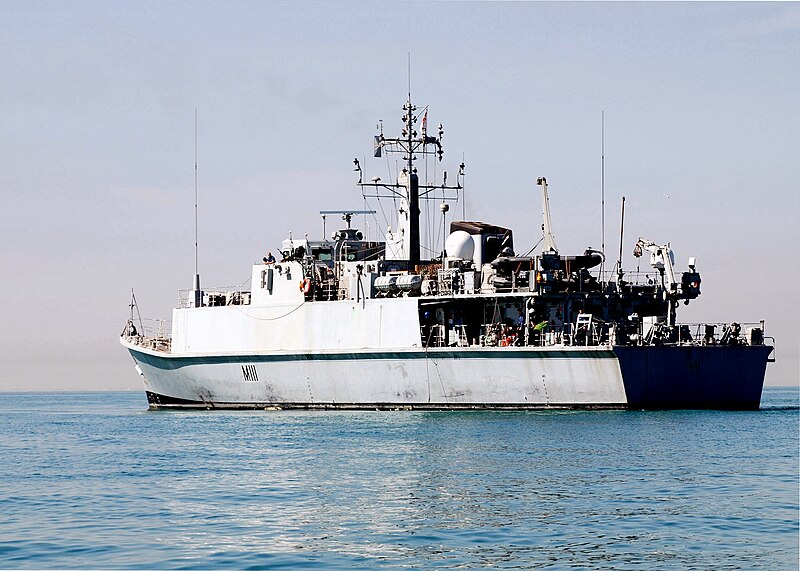
At dawn on 8th September 2005 HMS Blyth, a Royal Navy mine hunter, slipped in to sleepy Port Ellen on the Hebridean isle of Islay to collect some rather embarrassing lost property of theirs. A submarine.
Local fisherman, John Baker, fishing 7 miles from Bruichladdich, discovered a large drum-like object floating beneath the surface - a hazard to shipping. To his surprise it was a mini-submarine bristling with hi-tech surveillance equipment. There were Ministry of Defence markings.
Having towed it to port, the £500,000 submarine was craned out of the water and positioned on the fisherman’s driveway. The MOD were dutifully alerted.
The MOD at first denied it was theirs, then denied the vessel was missing – then implied the fishermen must have stolen it. The fishermen at first, out of pique, refused to divulge it’s whereabouts. A stalemate ensued.
Local Carl Reavey: “For ten days this state-of-the-art, secret piece of spying kit was floating about the high seas and the Royal Navy couldn’t find it. And it had to be yellow - bright yellow.”
Technically, a Royal Navel vessel cannot be claimed as salvage - but this didn’t stop the speculation in the bars of Islay at how many millions the fishermen would be rewarded. And they say there is no money in fishing anymore.
Bruichladdich Distillery CEO Mark Reynier: “People think Islay is a quiet, sleepy place. How wrong they are! If it’s not the CIA spying on us for WMD via our web cameras, then it must be the MOD snooping about under water up to goodness knows what. Who's next?
“We celebrated the WMD event with a special bottling of our single malt: “WMD – The Weapons Inspectors” that was a great success. So our latest launch (so to speak) had obviously to be 'WMD II – The Yellow Submarine'. And it goes down well too.”
The submarine was loaded in double quick time and the ship departed. The skipper, was pleased to accept a gift of a case of the Bruichladdich “Yellow Submarine”.
As the submarine was loaded aboard, fisherman John Baker asked the Man from the Ministry what the large silver protuberance on the submarine’s belly was. He was startled to learn that it was a depth charge. Fortunately for him - unarmed.
Post script
The somewhat humourless press office of the MOD have suggested there are inaccuracies in our version of events described above: there was no hazard to shipping, a ransom had been demanded for the return of the vessel, there was no accusation of theft, and the coastguard had been alerted to the loss of the submarine.
We believe that a 1 ton submarine floating under the surface for 10 days is a hazard to shipping. There was no ransom demand made by the fishermen. The MOD said: “There is no way that this vessel was where the fishermen said they found it.” And the coastguard were entirely unaware of the loss of the vehicle – when the find was reported by the fishermen to them. One of the finders is even the local submarine liaison officer!
The bottling is a mighty fine dram. Customers for the WMD II have included the submarine manufacturer, Lieutenant Commander Donald Crosby, the skipper that lost the submarine in the first place, and, of course, . . . the MOD.
This incident led to the WMD-II brand of whisky from the distillery.
Mark Reynier tells the story (very amusingly) in this video clip:
One of Britain's dumbest has been caught on camera, stealing from an unmarked police car - for the third time.
James Milsom, 21, was filmed breaking into the vehicle, just six weeks after he was released from prison for stealing a sat nav from another unmarked police car.
The pictures revealed it took him only six seconds to smash the window and grab the sat nav from the vehicle parked in Cumberland Road and make a quick getaway in broad daylight.
Milsom, from Mangotsfield, Gloucestershire, was released from jail less than six weeks ago.
It was the third time in four months Milsom he had been caught breaking into an undercover vehicle. In February and March 2008, he was caught on camera breaking into cars parked in Queen Charlotte Street car park and Tyndalls Park Road, police said.
He has now been jailed for another 14 weeks.
You know, one would think that this dumbass would learn from his experiences. When he sees a car with all sorts of tempting loot laid out, just waiting to be burgled, surely his previous sentences would make some sort of alarm bell go off in his head? As in, "The cops did this to me before"?
It appears not.
Ah, well. My only objection is the sentence. Instead of 14 weeks, how about 14 years? That'd make the possessions of decent people a lot safer!
I was intrigued to read of the 'destruction therapy' offered by a group of businessmen in Castejon, Spain. The latest instalment was held this past weekend.
We’ve all felt the urge to let go and release our inner maniac, especially at work. Unfortunately, the boss isn’t going to be very forgiving if he comes back from lunch to find you’ve taken a crowbar to the photocopier after one jam too many. For most, frustrations like these are just a part of modern-day life, but for three Spanish entrepreneurs, they were a gap in the market. In 2003, Jorge Arribas, Francisco Pérez and Hani Charwani founded Destructoterapia (destruction therapy), to help people take out their rage on the tools of office existence, albeit outdoors in a supervised environment.
So how does the ‘therapy’ work? It’s pretty straightforward. ‘Patients’ are offered a variety of tools with which to break things and a slew of things to break. With guidance from Destructoterapia employees, they go through a series of violent actions to release the beast within. “It’s a safe and controlled way to liberate stress and anger without hurting or shouting at people around you, like your family, friends or colleagues,” says founder Charwani. He calls it “supervised anti-violence”. The idea is that the destruction therapy helps relieve pent up physical tension and, after a while, the act of destruction becomes something of a game. Sessions are usually about one hour long and cost €200 to €300 per group, and although the Destructoterapia team is based in Soria, in central Spain, they’ll travel to requested locations. If your head needs seeing to, there are also licensed psychologists available on-site, though mostly these sessions simply revolve around smashing things up.
If this sounds like a butch activity, it’s not just men who feel the need to wield a sledgehammer. About 40% of participants are women. Cars are the most popular items to smash, says Charwani, followed by computers and phones. Although clients aren’t allowed to bring along their own items to destroy “due to safety measures,” they put in a request for objects to break before they arrive. The rules? The object needs to be causing you personal stress. And – just in case this needs clarification – it has to be inanimate. Your boss is not fair game.
When groups schedule a session, the Destructoterapia gang buys the materials from stores or junkyards, or scavenges for already-broken equipment. Then, when the ‘patients’ arrive, they’re kitted out in hard hats, boots, goggles and fetching blue overalls. Once properly attired, they’re let loose on the objects, venting their spleen to heavy metal or rock. Local thrashers El Petardo Infecto have proved a particular favourite.
The company most often finds themselves hosting these sessions of all-out mayhem for corporate teams. Apparently it’s extra-therapeutic to break the things that stress you out around the people who stress you out. Just don’t try taking a swing at that waste of space from accounts.
Looks like everyone was having a good time! This video clip of the 2005 event gives a more graphic presentation.
I wonder if they'd let me attend, using my shotgun instead of a sledgehammer?
A unique golf ball that is more than 150-years-old and stuffed with goose feathers is to be sold at auction - and is expected to go for an staggering £25,000 pounds.
The feathery 'midget' dates from 1835 and is believed to be the only one of its type in existence.
It pre-dates the introduction of India rubber gutta-percha balls by 15 years and although it has been used, it has retained its shape remarkably well.
John Mullock, from Mullock auctioneers, who is selling the ball, said: 'The ball came from the Harry B. Wood collection and is labelled 'Feather Midget about 1835'.
'It is thought to be the only one in existence and was probably kept because it is smaller than usual balls.
'The feathery balls were made by putting a top hat's worth of goose feathers into a leather ball, then sewing it up.
'They took some effort to make and as such they were relatively expensive - you wouldn't want to lose many of them.
'They got out of shape quite quickly and towards the end of the 19th century had been replaced by the gutta-percha balls made from India rubber.
'The new balls also meant a change in club design because they were harder than the feathery variety.
I wonder if whoever buys it will have the temerity to put it on a tee and hit the thing?
Reminds me of the old joke . . .
Pat and Mike were admiring Pat's new Cadillac. Pat showed Mike all the buttons, bells and whistles, and Mike was duly impressed.
"What are those, Pat?" he asked, pointing to two plastic objects in the center console tray.
"Oh, those are tees," Pat explained. "You put your balls in them when you drive off."
"Man," Mike exclaimed, "General Motors thinks of everything!"
Looks interesting. There's instructions on how to proceed, and a gallery of fonts already constructed by users. Names such as 'Hairy Bugger' and 'Maze Illegible' virtually demand viewing, don't they?
Go on - build your own font, and either post it on your blog, or here in Comments! I'm working on mine.
In previous articles on this blog (here and here) I've examined the unacceptable cost inflation of military aircraft. I won't repeat those comments here except in passing. I'd like to suggest that if you haven't read those earlier articles, doing so now would provide good background material for this article.
The United States Air Force (USAF) is exhibiting all the signs of a failing organization. If it were a commercial enterprise, and had the same number and seriousness of problems, analysts would undoubtedly be downgrading its stock, and advising potential purchasers of its products to reconsider their options. Let's take a look at some of the problems, then examine how the USAF got itself into such a hole, and finally consider ways it can regroup and get itself back on a firm foundation for the future.
The current problems of the USAF are legion. To list only the better-known, in no particular order of importance:
Its procurement of new tanker aircraft is running years behind schedule, and has been dogged by scandal, from an improperly awarded lease contract to a badly-managed selection process that has just culminated in the Government Accountability Office (GAO) upholding a protest from a failed competitor. As a result, many of its tanker aircraft date from the Eisenhower administration. Such ancient aircraft are prone to failure and are extremely expensive to maintain.
The USAF's aircraft are getting very old. Since the first Bush administration, no new fighters or fighter-bombers except the F-22 have been ordered. The backbone of the fleet, the F-15's and F-16's, are in many cases nearing the end of their service lives, and no replacements are expected in the short term. Even if the troubled F-35 Joint Strike Fighter program succeeds and is cost-effective (and, as noted in earlier articles, this is anything but guaranteed), the USAF has stated publicly that it cannot afford to fund procurement of the new aircraft in sufficient quantities to replace older aircraft as they wear out. Also, the USAF's transport fleet is too small for the demands placed upon it, and political interference from Congress has contributed to it not being able to replace its transports timeously or with aircraft of sufficient capacity. Many of its transports are over 40 years old, and are exhibiting major airframe problems requiring expensive fixes that may not be cost-effective in the long term. Meanwhile, the USAF is forced to rely on expensive private charter flights to supplement its fleet, including the use of Russian transport aircraft, like the Antonov AN-124 shown below, for some large items of freight that can't be handled by US resources.
The immense cost of new aircraft is a huge limitation on the numbers that can be purchased. The USAF tries to disguise this cost by referring to 'fly-away price' - the cost of a given aircraft at the time of its production, ignoring all the money spent on research and development to bring it to that point. This is, to put it bluntly, false and fraudulent accounting. The actual cost of an aircraft program includes every cent spent on it - research, development, testing, production, etc. That total cost should be divided by the number of aircraft purchased, to arrive at an actual cost per aircraft. By this measure, the true extent of financial deception practised by the USAF and its suppliers can be revealed. For example, the actual cost of an F-22 fighter, based on total program expenditure, is in excess of $350 million, whereas early in the program, in 1986, the USAF and Lockheed were promising a 'fly-away' cost of $35 million apiece. Do the math. Someone was lying - big-time. The same financial legerdemain is being practised in connection with the F-35 aircraft (shown below), as noted previously on this blog. A good (and critical) look at the aircraft cost issue may be found here.
The same issue - the cost of new equipment - is driving policies that are almost certainly detrimental to the long-term health of the USAF. For example, the just-resigned Secretary of the Air Force and its Commanding Officer planned to reduce USAF personnel by 40,000 to free up funds for equipment purchases. This, in a service that can't maintain its existing fleet due to lack of qualified personnel! Existing personnel are often not properly trained or assigned to core mission responsibilities. USAF Wings have traditionally been commanded by Colonels, but today there are more and more Brigadier-Generals occupying these command slots. The USAF offices in the Pentagon are stuffed with literally thousands of administrative staff who are pushing papers from desk to desk, fulfilling no useful purpose except that of a self-perpetuating bureaucracy.
There is disarray in the running of the USAF. Generals argue with one another and with the civilian leadership of the Armed Forces over what is required (for only one recent example, see here and here). Internal reorganizations are conducted with no apparent thought as to their long-term effectiveness (an excellent example is the structure of USAF maintenance units, which have been 'reorganized' no less than three times since the end of the Cold War, going back and forth between different approaches and models). Far too much time is spent competing with other branches of the US Armed Forces instead of concentrating on the USAF's mission (for example, see here, here and here). In particular, the USAF seems to spend an inordinate amount of time and effort to ensure that it alone operates all airborne assets that it regards as 'significant', rather than allow other services to 'encroach' upon its 'territory'. This dog-in-the-manger attitude is counter-productive, to say the least.
The USAF has mounted an immense effort to develop its new Cyber Command. The question is, why? What is it about this mission that makes it primarily USAF territory? Could the same mission not be handled by other services, or by a new command independent from existing services? Why is the USAF putting so much emphasis on a new command when it can't even get its existing commands and problems sorted out?
The same applies to operations in space. There's no 'Air' in space - so why is the USAF seemingly determined to maintain control of all military space operations? Why should it be allowed to do so? Shouldn't it rather focus on meeting the operational demands of its primary commitments, instead of diverting immense resources to other areas? For that matter, a spaceship would appear to have more in common with a submarine than an aircraft - it's 'immersed' in a hostile environment, which has to be kept out at all costs. That being the case, why not let the Navy in on the act? If that's undesirable, what makes Air Force involvement any more desirable? Why not establish a completely separate 'US Space Force' to take care of that environment?
The USAF seems dominated by a clique of pilots who regard piloting skills as the ne plus ultra of excellence in its officers. They've taken this to such a ridiculous extent that even the USAF's unmanned aerial vehicles (UAV's) are operated by trained pilots. Very few other military organizations in the world do this - for example, the US Army trains NCO's and officers from non-aviation backgrounds to do the same job, with great success. However, the USAF appears to worry that if non-pilots gain such operational exposure, the value of pilots as senior leaders may be drawn into question. Personally, I think that's long overdue. The fact that someone may be a good pilot has no bearing whatsoever on his or her qualifications for senior military leadership. The commercial world doesn't require all the senior executives of an oil company to have begun their careers as drillers or refinery technicians; hospitals don't require all their administrators and managers to be skilled doctors; auto executives needn't have begun on the assembly line; so why should the USAF require most of its leadership cadre to be pilots?
Clearly, with such dramatic advances in materials and applications, it's no longer acceptable to have a twenty-year-plus development cycle for a new aircraft and its systems. The 'state of the art' at the beginning of that cycle will be hopelessly obsolete by the time the aircraft enters service. A classic example is the F-35. According to the USAF itself, the origins of the Joint Strike Fighter (JSF) program date back to the early 1980's. The JSF initial development contract was signed in 1996. The first examples of the F-35 will enter squadron service in the forthcoming decade. In other words, from conception to initial in-service operation will have taken the program almost thirty years! The F-35's technology can no longer be described as 'state-of-the-art' - indeed, a lot of it is at least ten years behind the current state of the art, and will be even further behind by the time it enters service.
Effectively, our understanding of an aircraft will have to evolve to where it's considered no more than a vehicle to transport a system or weapon using these new technologies: and there are going to be many options other than conventional aircraft to transport them. Indeed, given the advent on the battlefield of light-speed beam weapons (which is certain to occur during the next twenty to thirty years), it's possible that no conventional aircraft will be able to survive within line-of-sight of such weapons. If they can detect it, they'll be able to shoot it down, simply by putting their sights on it. At light speed, there'll be no possibility of evading the beam from such weapons.
Unless stealth technology develops to hitherto unimaginable efficiencies, this may mean the end of piloted aircraft over any area protected by such systems. In the absence of such stealth technology, to fly over them would be to commit suicide. Furthermore, today's stealth aircraft carry their weapons internally, opening a weapons bay to drop or fire them. While those bays are open, the aircraft's radar signature is greatly increased. Beam weapons may well be able to lock on to the suddenly-enlarged signature and fire at it in only a few seconds: so, while a stealth aircraft may be able to get near such systems, it may not be able to hit them before it's destroyed by them, and the weapons it drops or fires will also be targeted. Artillery shells and rockets, and mortar bombs, have already been destroyed in flight by today's relatively primitive first- and second-generation beam weapons. The photographs below show a Katyusha artillery rocket being destroyed by Northrop Grumman's THEL laser in 2004.
To do the same to aircraft, and to aircraft-launched bombs and missiles, isn't much more difficult: and beam weapons and their guidance systems are improving by leaps and bounds. They're getting smaller, lighter, more mobile, and much more powerful. It's foreseeable that in the next fifty years, they may even be mounted on aircraft as primary offensive and defensive armament, replacing cannon and some missiles in that role.
What's more, the same explosion in new technology is giving new capabilities to other branches of the armed forces. The use of 'metamaterials' has already been noted above. There are also new targeting technologies and new support weapons to take advantage of them. UAV's are being developed in entirely new directions by other services and nations, including giving them full electronic warfare capabilities and other features. (Please note that the linked news reports in this paragraph are only a few out of literally hundreds of examples that could have been selected.)
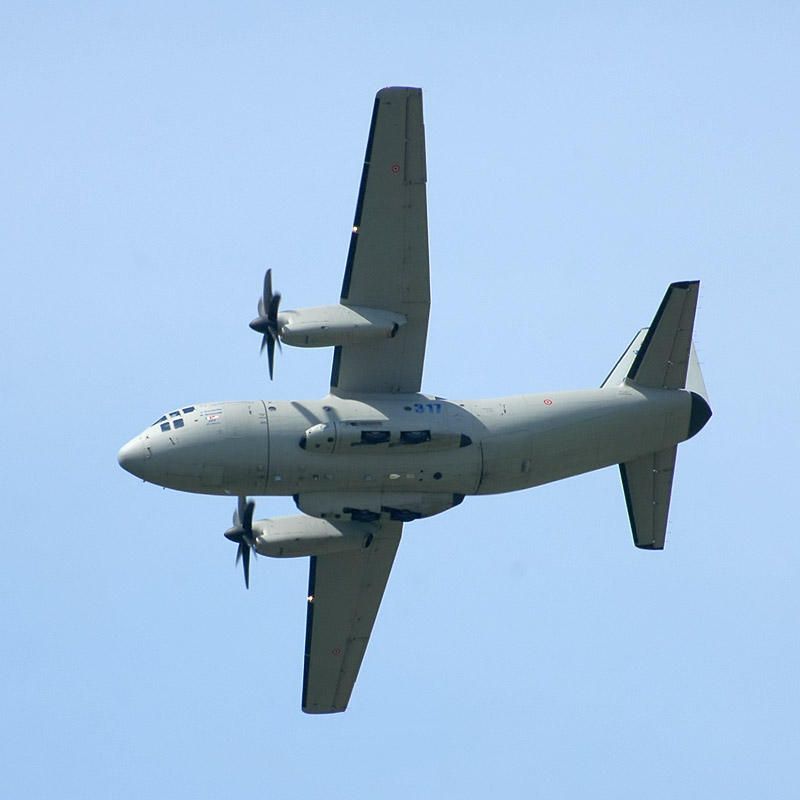
The other US armed services are pushing ahead with their own plans and developments, which may well take over some of the USAF's traditional responsibilities in their support. They're doing so partly because the new technologies make it possible, but also partly because they're so fed up with trying - often fruitlessly - to get the USAF to co-operate and meet their needs. The US Army's recent requirement for a new in-theater cargo aircraft was the subject of a 'take-over attempt' by the USAF, which clearly didn't want the Army operating such fixed-wing transports. The two services, directed by Congress, held the Joint Cargo Aircraft competition. This resulted in the selection of the Alenia C-27J (shown below) as the winning candidate, but even today the USAF has still not placed orders for its share of production. Indeed, the USAF and its allies in Congress appear to have mounted yet another effort to take this aircraft away from the Army. So far, thankfully (given the history of other USAF problems) this effort hasn't succeeded . . . but I'm not betting that the USAF won't try again.
The same applies to a critical mission like close air support (CAS). The USAF's 'fighter jockey' leaders absolutely loathe the slow, low-tech A-10 Thunderbolt II (shown below), which has been supremely successful in this field.
I submit that if the USAF isn't prepared to accept that it's only one of a number of players in the military field, all of whom must co-operate to fulfil their joint mission, then it should be stripped of its responsibilities (and personnel, and budget) in the areas where it won't 'play the game'. These should be handed over to its sister services, to allow them to do the job themselves. Current USAF attitudes are simply unacceptable. The US Marine Corps does a superb job of CAS - so why not let them teach the Army how to do it, and let the Army operate its own CAS forces? Alternatively, why not let the Marines (who already have a perfectly serviceable air organization) provide CAS for the army as well, taking over all the USAF assets currently assigned to this function? The same goes for in-theater air transport services. Why not let the Army handle it all? If the USAF won't 'play ball', take the ball away from them and give it to a service that'll do what's needed.
Amid the explosion of new technologies, the basic missions of the USAF have to be fulfilled, and new answers found to provide some missions that will not be practicable with current aircraft and weapons systems. The basic enterprise must be 'fixed', and put into a condition where it can respond to the new challenges confronting it.
The first reality is that money isn't available to purchase all the aircraft the USAF wants or needs. It's already complaining that it needs $20 billion more per year to fund acquisitions: but that money simply isn't there. Nor is there any likelihood that Congress will make it available. Therefore, the USAF will have to cut its coat according to its cloth, and stop living in a dream world where it can blame a lack of aircraft on the non-availability of funds. Instead, it has to purchase aircraft it can afford, even if these aren't the flashiest and newest available: and it has to cut out irrelevant expenditure to concentrate on its core mission.
The entire military procurement system in the USA (not just affecting the USAF) appears to be in serious need of reform. The following video report highlights the problem.
It appears that political leaders recognize the need for reform . . . but it's questionable whether they'll provide the necessary leadership to ensure it happens. After all, the defense industry isn't spending so many millions of dollars in political lobbying each year out of the goodness of their hearts!
I submit that a number of steps are essential to reforming the USAF. Here they are, in no particular order of importance.
I believe that the USAF must get away from its 'pie-in-the-sky' dream that the politicians will provide it with all the money it needs to do all it wants. This is not going to happen. Period. Therefore, the various missions confronting the USAF must be not only task-prioritized, but cost-justified. If cheaper alternatives are available, then they must be selected, and the more expensive services terminated. This is an absolute imperative that has become inescapable. I'll have more to say about specific USAF areas of responsibility below in this regard. The USAF budget must be presented to Congress in its entirety (no extra-budgetary 'wish lists' allowed), and explained to the politicians who must approve it. There can be no more 'fudging the figures'. Budgetary requests must also take account of the USA's fiscal reality, as outlined recently by the former Comptroller-General of the USA, Mr. David Walker.
The management of USAF procurement must be radically reformed (including axing many of those who currently run it). When the GAO, DCMA and other Government agencies persistently disagree with the USAF about its project management, funding estimates, etc., there's clearly something very wrong. Given the history of over-budget, under-performing USAF aircraft and systems, I think it's clear that the GAO and DCMA know far more about this area than the USAF's staff. The latter need to have their thinking adjusted - or be fired. There can be no more fiascos like the CSAR-X or KC-X competitions.
The USAF must stop its 'dog-in-the-manger' approach to other branches of the Armed Forces operating their own aircraft. It should get out of the C-27 and V-22 programs altogether. They're not part of the USAF's core mission, and they're wasting USAF resources that can be better applied to that core mission. The 'turf wars' have got to end.
There can be no more ruinously expensive and cost-unjustifiable programs such as the F-22 and F-35. The 'cost bloat' of these programs, as highlighted by the GAO and DCMA, is absolutely unacceptable. Not a single F-22 has so far flown in support of current US operations in Iraq or Afghanistan - so the tens of billions of dollars sunk into this program are effectively useless in dealing with current military conflicts. I agree that an air superiority fighter is necessary, and we probably need more than the minimal number of F-22's authorized for that function (the F-35 is a strike aircraft with self-defense capabilities, not a dedicated air-to-air fighter, and therefore won't be as useful as the F-22 in the latter role). However, the F-22 was developed as an air-to-air vehicle only. This is simply not cost-justifiable any more. It will probably never again be cost-justifiable to do this. A combat aircraft has to be a multi-purpose weapons systems platform, in order to justify the immense costs involved in modern aircraft development.
The USAF is on record as stating that it cannot afford to purchase the F-35 in sufficient numbers to replace all its older-technology fighters as they reach the end of their service lives. There's also no guarantee that the current purchase price figures being bandied about will be attainable. I therefore submit that the USAF should begin to purchase a limited number of the latest-technology F-16 fighters each year, to shore up the 'legacy fighter' force and keep its fleet numbers at an acceptable level. The Israeli F-16I (pictured below), UAE F-16 Block 60 and proposed Indian F-16IN are all far more advanced than any F-16 (and some of the earlier F-15's) in the USAF inventory, and are available at a fly-away cost of about $50 million (no development costs would be incurred - these were amortized long ago). Buying, say, 24 per year would replace the oldest F-15's and F-16's as they are retired, and allow the lower-rate F-35 production that the USAF protests is all it can afford, without unduly drawing down the overall numbers of the USAF's fighter fleet. For those who complain that this is spending money on older technology - hey, we're selling these aircraft to our allies as the latest and best available. If they're good enough for them, why aren't they good enough for us? It's also worth noting that Israeli experts have spoken of flying their F-16I's in co-operation with their F-35's in future, operating as a 'networked' force, letting the latter communicate sensor information to the former and thereby upgrading the performance of its fleet overall. The USAF could easily do likewise.
The USAF should retire as many older single-purpose aircraft as possible. For example, the older F-15's are air-to-air fighters only. They can't manage bombing missions as well. We can't afford to keep them operational for such missions when multi-purpose aircraft such as the F-16 and later-generation F-15's can do their job, and more. The same applies to the nuclear bomber fleet. We need aircraft that can drop conventional as well as nuclear weapons. In fact, it's arguable that the likelihood of needing to drop nuclear weapons in the foreseeable future is so small that the retention of a dedicated nuclear bomber fleet simply can't be cost-justified. Why not leave the nuclear mission to USAF and US Navy ballistic and cruise missiles, and scrap all the bombers currently assigned to nuclear deterrence? Keep enough bombers to handle the conventional bombing mission (and upgrade the B-52 fleet with more economical engines and modern avionics while we're at it), and retire the rest.
The entire B-1 fleet should be retired. This aircraft is very capable, but it's also very expensive to maintain, and its missions can be handled by the B-52's and B-2's. In 2001 the USAF announced that it would retire a large number of B-1's, and use the savings thus generated to upgrade the remainder. It retired the aircraft, but didn't spend the money saved on upgrades. Someone lied. In the absence of those upgrades, keeping the current B-1 fleet in the air is just too costly. Hard choices have to be made - and I submit this is one of them. The B-1 (shown below) is the least cost-effective (in relation to capability) of the three bombers currently in the USAF fleet, and the Air Force can't afford it in the current budgetary climate, no matter how good it may be.
The USAF should actively seek synergy with other services where a single aircraft type, or a single service, can handle missions currently performed by more than one service. For example, the USAF's J-STARS aircraft are getting old, and upgrades for their critical systems are financially not feasible. The E-10 program, which was to replace it, has been canceled due to budgetary constraints. The Navy is launching its EPX program to replace its EP-3E aircraft, and EPX looks very much as if it might be able to handle the J-STARS mission too. If so, why not let the Navy handle it? The USAF doesn't have to duplicate that mission. If military realities necessitate the USAF retaining the mission, why not participate with the US Navy in the EPX program, thus saving the expense of developing another aircraft for a similar purpose? Let the Navy take the lead, and buy some of its aircraft.
The USAF should abandon upgrades to older aircraft that are already nearing the end of their service lives. A good example is the avionics upgrade for older C-130's. This is an expensive program, and the airframes of the C-130's have been over-stressed by the demands of supporting military operations in Iraq and Afghanistan over the past five years. The older C-130's (particularly the E models) should be mothballed as soon as possible, and replaced by new-production C-130J's and C-17's. This would be more cost-effective than spending money on expensive upgrades that will be in service for only a few years. The USAF has already adopted this approach to its C-5 Galaxy fleet, with only newer C-5B's (shown below) and -C's receiving new engines and avionics. The older C-5A's may receive avionics upgrades, but not new engines, and may indeed be retired soon instead of upgrading them.
By mothballing the older aircraft referred to above, the USAF should be able to save enough money to afford to buy new aircraft to augment its current fleet, which is wearing out. The USAF has allowed its aircraft to get old and wear out, which was a bad mistake. It now needs to rectify that situation as a matter of urgency. Its fighters must be supplemented by new-production F-16's, as mentioned above, just as the US Navy has supplemented its fleet with new-production F-18E/F Super Hornets while waiting for the F-35 to enter production. It should replace older-model C-130's with new-production C-130J's, continue production of the C-17, and consider foreign transports such as the Airbus A400M or Antonov AN-70 (pictured below). The latter is produced in the Ukraine, a state we are trying to help, and which has been a NATO partner nation since 1994. Production of the AN-70 there would also take some pressure off US production lines: and buying one transport type (out of several in service) from a foreign supplier would hardly threaten US self-sufficiency in aircraft production.
The USAF must realize that air power alone cannot and will not win wars. It is merely one component of the US armed forces, all of which are necessary to the military protection of the USA. It's time for the old school of thought, that maintained that strategic air power was a war-winning tool in and of itself, to be rooted out once and for all.
The USAF must prioritize the redeployment and reorientation of its personnel. Far from cutting numbers, it must use them better, to support operational requirements rather than administration, bureaucracy and turf battles, and train them in the areas most required by today's operations. It must do so in liaison with the other armed forces, paying particular attention to where the other forces are developing their own systems and solutions. It can profitably allow those new areas to be addressed by the other services, redeploying its own staff to service those activities that will require USAF participation.
The USAF must be constantly aware of the impact of new technologies on its mission. I personally think it's doubtful that manned aircraft will be as important twenty years from now as they are today. It's already technically feasible to fly an aircraft from airport to airport without any pilot at all - even a large commercial airliner or freighter. I'm sure this will become a reality in the commercial transport field before too long, and in military transport as well. Combat missions are already flown on the same basis, albeit without aerial opposition, and even the latter will probably be handled by UAV's within a decade or two. The pilots who currently dominate the USAF's leadership structure must accept this - or be replaced by others with greater breadth and depth of vision.
Well, that's the situation as it exists today, and those are my thoughts as to how to rectify it. What about you, readers? Any ideas or suggestions?
An American hiker given up for dead was rescued from the side of a mountain when she alerted rescuers of her whereabouts by throwing her bra into a cable car.
Jessica Brown had fallen off a ledge in the Austrian Alps and was stranded injured for 70 hours in freezing temperatures.
Mountain rescuers had been looking for her but gave up because they believed she had fallen to her death.
But the 24-year-old spotted a cable car on its way up the mountain in Salzburg and managed to take off her underwear in time to fling it.
Luckily, her bra landed inside the cable car which was carrying food, as it passed her.
Workers higher up the mountain found the garment while unloading the food and immediately sent out search party.
One rescue worker said: "It certainly beats sending up a flare.
"She hadn't been wearing much when she started on her walk and she ended up with even less on."
Purchasers of hybrid vehicles, which are subsidized by the federal government and championed by environmental activists as a way to reduce gasoline consumption, are trading in their vehicles because of health fears concerning electromagnetic fields created by the hybrid batteries.
As noted in an April 27 article in The New York Times, some hybrid vehicle owners are complaining of a variety of health problems allegedly caused by strong electromagnetic currents from the cars' batteries. Reported ailments and concerns include rising blood pressure, drowsiness behind the wheel, and higher leukemia risks.
Drivers who have given up their hybrids have reportedly documented "dangerously high" electromagnetic fields, leading them to conclude driving the vehicles is not worth risking blood for oil.
"Their concern is not without merit," reported the Times. "Agencies including the National Institutes of Health and the National Cancer Institute acknowledge the potential hazards of long-term exposure to a strong electromagnetic field, or E.M.F., and have done studies on the association of cancer risks with living near high-voltage utility lines."
So the solution to one problem - high fuel consumption - brings with it a whole new set of problems. Who'd o' thunk it?
The BBC reports that a 'slow art' project is attracting interest.
Muriel, Austin and Cecil are snails for the electronic age.
Each snail is fitted with a tiny capsule which holds a Radio Frequency Identification (RFID) chip. RFID allows objects to communicate over short distances.
Users of the service send a message via the Real Snail Mail website which is routed to the tank at the speed of light to await collection by a snail "agent".
As the three snails slowly amble around the tank, they occasionally come into range of an electronic reader, which attaches the e-mail message to the RFID chip.
The electronic messages are then physically carried around the tank by the snails until one of the gastropods passes close to a second reader.
It is then forwarded over the net in the usual way.
"It could be quite frustrating for some people," Vicky Isley, one of the artists told BBC News. "It's completely subverting that normal system."
So far, the three snails have managed to deliver 14 messages.
Users of the service will hope that Austin is on hand to collect their messages. The Snail has made 10 of the deliveries so far with an average delivery time of 1.96 days.
"He's a super-powered snail - he's doing really well," said Ms Isely. "He's really quite big - he's always the one that gets to the food first."
Unfortunately, Muriel is still languishing, waiting to make her first delivery.
I have to admit, that's a clever idea. I've spoken glibly about the speed difference between e-mail and 'snail mail', so to use snails to deliver e-mail is a nice twist!
Sunday marks the anniversary of the invasion of the Soviet Union by Nazi Germany, 67 years ago. That was Hitler's greatest mistake of the war, leading to the inexorable defeat of Germany four years later.
We in the West tend to underestimate just how gigantic a killing machine the Eastern Front was during World War II. More than three-quarters of all German casualties were incurred on that front, and the Soviet Union lost well over twenty million dead, both military and civilian. The precise number will never be known, but some estimates put the total - including dead, wounded and missing - as high as fifty million. Certainly, no country paid a higher price than the Soviet Union during the war.
The war inflicted huge losses and suffering upon the civilian populations of the affected countries. Behind the front lines, atrocities against civilians in German-occupied areas were routine, including the Holocaust. German and German-allied forces treated civilian populations with exceptional brutality, massacring villages and routinely killing civilian hostages. Both sides practiced widespread scorched earth tactics, but the loss of civilian lives in the case of Germany was incomparably smaller than that of the Soviet Union, in which at least 20 million civilians were killed by the Nazis.
When the Red Army invaded Germany in 1944, many German civilians suffered from vengeance taken by Red Army soldiers. After the war, following the Yalta conference agreements between the Allies, the German populations of East Prussia and Silesia were displaced to the west of the Oder-Neisse Line, in what became one of the largest forced migrations of people in world history. The German minority scattered over large swaths of Eastern Europe was thus expelled and those who did not manage to leave were exterminated.
Much of the combat took place in or close by populated areas, and the actions of both sides contributed to massive loss of civilian life as well as a tremendous material damage. According to a summary, presented by Lieutenant General Roman Rudenko at the International Military Tribunal in Nuremberg, the property damage in the Soviet Union inflicted by the Axis invasion was estimated to a value of 679 billion rubles. The largest number of civilian deaths in a single city was 1,2 million citizens dead during the Siege of Leningrad. The combined damage consisted of complete or partial destruction of 1,710 cities and towns, 70,000 villages/hamlets, 2,508 church buildings, 31,850 industrial establishments, 40,000 miles of railroad, 4100 railroad stations, 40,000 hospitals, 84,000 schools, and 43,000 public libraries. Seven million horses, and 17 million sheep and goats were also slaughtered or driven off.
It's also worth remembering that the only reason the Normandy landings in 1944 were possible is that two-thirds of the German armed forces were concentrated on the Eastern Front, facing the Soviet juggernaut. The remaining third had to be split between combat duty in the Balkans and Italy, garrison duties in Western Europe and Norway, and defense of the Reich against the attacks of the Allied air forces. All those demands meant that relatively few divisions were available to confront the Anglo-American invasion forces when they arrived.