Friday, May 22, 2020

Not a safe place to fall overboard!


An Australian fisherman was sailing his small leisure craft back to shore the other day when he ran into a so-called "bait ball" of small fish, being attacked by dozens of sharks.  The big predators were in a feeding frenzy.


Note the casual way he talks about his boat being bumped by sharks several times.  Me, I'd have been getting the heck out of there as fast as possible!  I've seen (off Seal Island in False Bay near Cape Town) how fast and brutally sharks rip apart their prey.  I'd want to make as certain as possible that I wasn't near enough to be even potentially on their menu!


Peter

Thursday, May 21, 2020

"A Band-Aid on a chest wound"


That's how the Guardian describes the rush by illegal immigrants to get in line for California's handout of taxpayer dollars to them.

Last month, California made headlines when it announced a first-in-the-nation plan to create a $125m coronavirus relief fund for undocumented workers. But its rollout got off to a chaotic start this week, with thousands of calls flooding phone lines, creating huge delays, and so many visitors to the official website that it crashed for hours.

Adding to already overwhelmed telephone systems, the state issued last-minute directives that said callers needed to reach a live person in order to apply for aid.

Nonprofits across the state selected to distribute the money reported huge demand as people rushed to secure a spot for the first-come, first-served program.

The Coalition for Humane Immigrant Rights of Los Angeles, or Chirla, one of 12 nonprofits tapped by the state to distribute the funds, received more than 1.1m phone calls on day one of the program – 630,000 calls just within the first 90 minutes of opening the hotline.

“We knew the number of applicants would be high, but we were just overwhelmed,” Chirla’s executive director told the New York Times.

Lucas Zucker, the policy and communications director for a nonprofit north-west of Los Angeles that advocates for social and environmental justice, wrote on Twitter that the program’s rocky rollout was predictable.

“Websites and phone lines across the state crashed. Our team saw so much frustration, anger and sadness from folks just trying to feed their kids. The need here is way too large to be met with a one-time disaster relief fund. We’re putting a Band-Aid on an open chest wound,” wrote Zucker.

. . .

Undocumented immigrants make up an estimated 10% of the state’s workforce ... [there are an] estimated 2 million undocumented immigrants living in California.

There's more at the link.

Note the last paragraph cited above.  I daresay the sheer volume of calls demanding a share of that money gives the lie to the 2 million estimate.  (My law enforcement contacts in California privately estimate the number of illegal aliens there to be at least 5 million, possibly more.  They base that on their experience of traffic stops, criminal investigations, and so on.  I believe them.)

Of course, the state of California should not be rewarding illegal aliens for their presence with taxpayer dollars.  That's flatly insane, and can do nothing except encourage further illegal entry (which is probably the point, given the nature and policies of that state's government).  However, this stampede for assistance highlights the economic plight of the marginally employed.  We've already seen that many are apparently returning to Mexico under the impact of the coronavirus pandemic.  They have no jobs there, and Mexico has few (if any) social assistance or entitlement programs to help them.  Those who remain in this country aren't eligible for the federal government's assistance or stimulus package, yet are also at risk of losing their jobs not just temporarily, but in the long term, as the economy contracts.  To say that they're becoming desperate is to put it mildly.

What does this forbode for social stability?  I don't think it's anything good.  I expect demonstrations, even riots, in California as the illegals demand more sustenance to which they're not legally entitled (at least, not under federal law).  I expect California's government to cave in to their demands, and expend more taxpayer funds on them.  That, in turn, will arouse resentment and anger among taxpayers, who see their money being wasted on those who have no right to it.  I don't think that's going to end well.

Will this have an impact on the November 2020 elections in that state?  Is the special election there earlier this month an early "canary in a coal mine" for a sea change in California politics?  Who knows?  We can but hope . . .

Peter

In Memoriam: Chuck Taylor


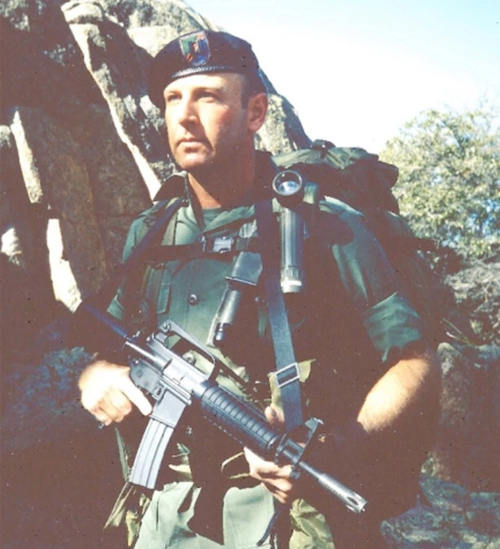
Back in the late Southeast Asian unpleasantness, a.k.a. the Vietnam War, Chuck Taylor was a Captain in the US Army's Rangers.  He saw combat, was wounded, and came home with medals for valor in action.  In other words, he was the real deal, not an REMF or a "PowerPoint Ranger" (to use a more modern expression).


As such, I always gave extra weight to his opinions on self-defense equipment, tactics and training for civilians.  Not many instructors can boast that sort of real-world background, and being a combat vet myself, I naturally regard it as important.  (There's nothing quite like getting shot to remind you that you're neither invincible nor invulnerable.  How do I know this?  Ask my wife, who's had to pick shrapnel out of my old scars on more than one occasion.  As Clint Smith - another Vietnam combat veteran - has been known to observe, "Incoming fire has the right of way!")

Taylor was the first Operations Manager at Gunsite, the legendary shooting school founded by the late, great Jeff Cooper in Arizona in 1976.  He went on to found his own school, the American Small Arms Academy.  Some of its courses are still taught by Defense Training Associates.  He was also a member of the US National Team of the International Practical Shooting Confederation (IPSC).  Taylor taught civilians, law enforcement and military units for decades, passing on what he'd learned the hard way in combat and the techniques he helped develop in civilian life.  He was the founding editor of SWAT Magazine, still regarded as one of the premier firearms periodicals, and used its pages to convey much of the same instruction to its readers.

Some felt that Taylor was too rigid and dogmatic in clinging to what he'd learned by experience in combat, rather than being open to new technologies and techniques developed since then.  On the other hand, I think he was spot on.  To this day, I remain skeptical of "the latest and greatest thing since sliced bread".  If a new technology comes along that promises to make self-defense easier and more reliable, I want to have that thing wrung out six ways from Sunday, and proven in the field, not just in the laboratory or on the training range.  (Red dot sights are a good example.  Early models were all too prone to run their batteries down or suffer breakages just when you really, really needed them.  By the late 1990's and early 2000's, those initial teething troubles had largely been overcome, and they became so useful as to be almost indispensable.  The US Army and Marines have subsequently bought hundreds of thousands of them, with good results.)

Taylor was adaptable enough to change his views after such new technologies were proven.  His earlier books and articles reflected his initial attitudes about such things, but people reading them today often fail to take account of his later work, where he recognized their value after taking the time to prove (and im-prove) them.  He retained my respect as a man who'd "been there and done that", and therefore knew what he was talking about in a very practical, experiential way that most instructors can't match.

Sadly, Taylor passed away earlier this month, after only a year of retirement to relax and enjoy himself.  He joins Jeff Cooper, Ray Chapman and other stalwarts of the 1970's and 1980's on the Honor Roll of those who've made a tangible difference to the art and science of defensive shooting.  More and more of their colleagues are leaving us as age catches up with them.  The shooting world will be much poorer when the last of them has passed.  So vast an accumulation of practical, empirical knowledge can't be replaced, and can't be reduced to mere words on paper.  (That said, some of Taylor's books are still available, and are worth reading, IMHO.  Many of his articles are also out there, some available online.  He was particularly well known for his "torture test" of an early-model Glock 17 pistol, which has fired several hundred thousand rounds yet remains perfectly serviceable and reliable.)

May Chuck Taylor rest in the peace he so richly earned through his service to his country and the shooting community.

Peter

Your feel-good video of the month


A construction operator took a few moments to make two kids very happy.


I don't know if his employer gives a public relations award to worthy employees, but if they do, his name should be on it.  Well done, sir.

Peter

Wednesday, May 20, 2020

State of the author, and a teaser snippet


I've had a number of readers ask how new books are coming along.  I guess I should give you an update.

As most of you know, I suffered a heart attack last November (my second, if anyone's counting).  I've recovered from it, but I'm on additional blood-thinning medication, and will be for several months yet.  In combination with the meds I already take for pain (from my 2004 disabling back injury) and other issues, this has had a nasty effect on my writing creativity.  It's hard to get my brain to think (and write) creatively in a fictional world.  It isn't a problem in terms of non-fiction;  I'm able to keep up this blog, for example, and I'm working on a non-fiction book.  However, novels have perforce been put on the back burner since then.

I'm glad to tell you that my wife has written another book, which I think is her best yet.


Look for it by the end of the month, if Amazon gets its publishing act together (they appear to be slower than usual at present).  I'm busy with that process as you read these words.  I'm glad editing and formatting aren't affected by my medications!

My current non-fiction book project is an examination of what's involved in preparing for emergencies.  I'm focusing on practical, everyday concerns (for example, weather events, earthquakes or wildfires), not a TEOTWAWKI event such as nuclear war, the zombie apocalypse, or an alien invasion.  (If something like that happens, we're probably going to die, no matter how well prepared we are.  Suggestions to the contrary are simply unrealistic, despite popular entertainment programming to the contrary.)  I don't have a working title yet:  I asked for suggestions here a while back, but nothing really "bit".  (One suggestion was "Camping on Vesuvius", which I really like, but it doesn't really convey what the book's all about.  Pity . . . it has a certain flavor to it, doesn't it?)  At any rate, it's well under way.  I hope to have it ready by late June or early July.

I have several fiction projects on the back burner.  I work on them sporadically, as and when I find inspiration, but it's difficult right now.  When I come off my new medications in a few months' time, I hope to get right back to work on them.  They include:
  • The sixth volume in the Maxwell Saga, "Venom Strike";
  • The third and final volume in the Laredo War trilogy, "Knife to the Hilt";
  • A sequel to "Taghri's Prize", as yet untitled;
  • The fifth book in the Ames Archives Western series, also untitled;
  • A Viking fantasy novel, of which you've seen three snippets in these pages already.

I very badly want to get moving with those books.  (For a start, my income, and ability to put food on the table, depends on them!)  Rest assured, as soon as my levels of medication permit (hopefully not too long now), I'll be hard at work.

To give you something to be going on with, here's a snippet from the sixth volume of the Maxwell Saga, "Venom Strike" - just to prove I'm still writing!

Tom knew there was something wrong the instant he slid open the door, and the detector in his chest pocket began to vibrate. He gave no outward sign that anything was amiss, instead pulling the door closed behind him as the lights came on. He looked casually around the outer office. The walls hadn’t been recolored in years, and had yellowed from their original pristine white to a muddy cream color. The desk was made of plain gray plastic, its surface and the chairs behind and in front of it slightly dusty, devoid of any evidence of use. Nothing was obviously out of place, but that didn’t mean anything when snooping devices could be smaller than the head of a pin.

He walked across the threadbare carpet to the corner kitchenette, putting down the bag in his left hand. As he took a sachet of coffee from a cupboard, filled the coffeemaker with water and started it brewing, he cast quick, covert glances around the room. None of the likely places to conceal a listening device or hidden camera showed anything suspicious. There was nothing to catch the eye in the inner office either. Its desk – twin to the one in the anteroom – and filing cabinet were seemingly just as he’d left them the night before. The room’s only concessions to comfort were a higher-quality chair behind the desk, and two moderately padded visitor’s chairs before it. The lights on the alarm panel were the same cheerful green as the previous evening, but the detector in his pocket continued to vibrate.

He kept his jacket on as he sat down, unlocked the drawer unit, and used a remote control unit to adjust the one-way vizpane in the outer bulkhead from its overnight opaqueness to a daytime transparency. Black letters on the outer surface proclaimed that this was the office of ‘HAGGARD INVESTIGATIONS’. He took a bacon and egg sandwich from the bag and ate it slowly, brushing occasional crumbs from his jacket and shirt, while waiting for the coffee to brew. He grimaced as he tasted the filling.  The eggs and bacon were vat-grown substitutes, like almost all food served in orbit. The plant had got the flavor right, but not the texture – immediately noticeable to someone who’d eaten better-quality food over many years in space.

Pouring a cup of coffee, he swiveled his chair to look out of the vizpane and began to study the walkway outside. The pedestrians passing the window mostly wore utility coveralls or Service Department uniforms, tool belts jingling as they moved purposefully from their lodgings and flophouses to the day’s tasks. They’d have looked completely out of place on the more fashionable levels of the space station. He looked up and down the walkway, watching for people moving more slowly than usual or standing around idly, giving special attention to shop fronts and alleys.

It took him several minutes to spot the lurker, in an alley next to a saloon three doors down. The watcher kept out of sight, but hadn’t realized how strong the light was over the side door of the saloon. It cast a faint shadow of a human head and shoulders onto the sidewalk at the entrance to the alley. With that to guide him, Tom didn’t take long to spot the slight bulge that had appeared on top of a piece of molding on the saloon’s tawdry façade. It was almost certainly a surveillance camera, watching his office door and sending back its pictures to the person in the alley. He probably had a link to whatever bug had been planted in here, too.

Tom sat back in his chair and thought. The saloon’s watchman would normally prevent anyone loitering in the alley. That meant either the lurker had enough influence to be allowed to stay, or the watchman had been threatened or bribed into compliance. Briefly he considered calling his contact in the Terminal police, but dismissed the idea. Even if the snooper didn’t hear his call and disappear before a patrol officer could arrive, the cop might not be able to find out who was behind the problem. He needed that information, so he’d have to deal with this himself.

. . .

He opened the door to the service alley cautiously, looking around before going out. No-one was in sight – not surprising at this time of the morning, when the workers in this area would all be making last-minute preparations for the daily trash compaction cycle. He walked down the alley to the next block and took the escalator up to the next level. He emerged one block behind the saloon.

Easing up to the corner of the alley, he saw the watcher leaning against the wall of the saloon, looking down at something in his hand. He guessed it was probably a monitor for the camera he’d placed on the saloon’s façade. His back was to him – and even better, he wore a set of earbuds, presumably listening to the bug in the investigator’s office. Tom grinned tightly as he drew a pliant, flexible sap from a jacket pocket, hefted it experimentally in his hand, and eased forward.

Some sixth sense must have warned the watcher. As Tom covered the last step, he dropped whatever he was holding and whirled around, eyes widening in alarm, hand flashing into the open front of his coveralls. It came halfway out, clutching the hilt of a knife, but Tom didn’t give him time to complete the movement. He swung his sap viciously, catching the snoop across the left side of his head. His earbuds came out as his eyes went blank, unfocused, and he tumbled to the deck. Tom caught him and eased him down, trying to make as little noise as possible.

He was surprised to see that the man’s face looked Chinese, unusual in this sector of space. He squatted next to his victim, took the knife from the man’s hand and examined it carefully. It was of a design he hadn’t seen before, its blade almost twenty centimeters long, relatively narrow with a strong, heavy spine. The inside of the hilt and the back of the blade were flattened, as if they were half of a knife that had been divided down its length. Feeling inside the coverall he found a second knife, also flattened on one side, clearly the twin to the blade in his hand. It was in a scabbard that contained slots for both blades, one behind the other. He took it out, sheathed the first blade alongside its companion, and leaned the scabbard against the wall of the saloon.

Investigating further he found a small console, probably for the bug in his office. Another pocket held a thick wallet containing a printed message in a language he didn’t know, the equivalent of a couple of thousand credits in four different currencies, and a merchant spacer ID issued by the planet Calaba in the name of Yao Bao. A third pocket yielded a soft linen bag, closed with drawstrings, containing what looked and felt like a large number of gold taels.

The other pockets of the man’s coverall were empty. The only other thing of interest was a black medallion on a silver chain around his neck. Tom eased the chain over the man’s head and stood up, easing his aching thighs, to examine the medallion more closely. It appeared to be made from a thinly-sliced piece of stone. One side bore the image of a coiled snake, its body thick and heavy, brown in color with white geometric markings at intervals. The triangular-shaped head was raised, tongue flickering out. The other side bore several Mandarin characters inlaid in white.

He was peering at them when his feet were kicked violently out from under him. Toppling backwards, he dropped the medallion in a desperate attempt to break his fall. He succeeded, but wrenched his left arm as he landed awkwardly. Looking up, he saw his erstwhile victim lunging for the knives leaning against the saloon. Seizing the scabbard, the man drew a blade with blinding speed as he spun around towards him. His face was twisted in a malevolent scowl.

Tom didn’t try to grapple with him – there was no future in that with a man who clearly knew how to use the blade in his hand – and he didn’t waste time trying to stand. His right hand flashed into the left side of his jacket, seizing the butt of a pulser with a fat, suppressed barrel, dragging it from its shoulder holster as he kicked out frantically, trying to hold off his attacker long enough to complete his draw. He felt a burning sensation as the other’s knife cut through his trousers into his shin, but didn’t let it distract him as he brought up the pulser, its laser targeting beam automatically activated by the draw. He placed the bright green dot in the middle of his assailant’s chest and pressed the firing button six times, as fast as he could cycle it.

The sound of the shots was a series of low, distinct phuts. The first round struck precisely on the point of aim, drawing a grunt of pain from the man as the next five rounds rose up his body, the pulser climbing under the impetus of recoil. The last round hit the bridge of his nose, penetrating all the way through his brain and smashing out of the back of his skull. His head snapped back as he crumpled limply to the floor, the knife falling from his hand.

I hope you enjoyed that.  Expect the book, God willing, in the second half of the year.

Peter

The coronavirus may damage nature for years to come


Having worked in the Third World (specifically sub-Saharan Africa) for many years, I've been expecting an uptick in human predation on the environment, due to many people being thrown out of work by the coronavirus pandemic and becoming desperate to survive.  It looks like that's already happening worldwide.  The BBC reports:

You might be forgiven for thinking that the global lockdown measures keeping us all at home can only have been good for the environment ... But in the world’s tropical forest regions, it’s another story. Environmental agencies have reported an uptick in deforestation during lockdowns, as well as increases in poaching, animal trafficking and illegal mining worldwide. The trends are alarming, environmental experts say, and could be hard to reverse.

“This narrative of nature having been given a break during Covid, it’s not entirely accurate. It’s accurate in cities and peri-urban areas,” says Sebastian Troeng, executive vice-president of Conservation International. “But unfortunately in the rural areas, the situation is almost the inverse.”

. . .

Brazil and Colombia have seen an uptick in illegal logging and mining; the Philippines has also reported illegal logging and wildlife trafficking; Kenya has reported increased bushmeat and ivory poaching, as well as increases in charcoal production, which has been illegal since 2018; Cambodia has seen an increase in poaching, illegal logging and mining; and similar reports have come from Venezuela and Madagascar.
Concerns have also been raised in Malaysia and Indonesia, which have the highest deforestation rates in South-east Asia, while in Ecuador, indigenous and afro-descendent communities have reported increased illegal mining in the Choco and Amazon rainforests.

There are two main factors that could be driving these trends, says Troeng. The first is criminal groups and opportunists expanding their activities, taking advantage of lockdown and diminished forest monitoring and government presence. The second is that people living in these rural areas are facing increased economic pressures and are forced to rely more heavily on nature for food and income. In some cases, such as Madagascar and Cambodia, there has been a large urban-rural migration as people lose their jobs in the cities or return home to be with their families during quarantine, which has put extra pressure on local environments.

“What worries me is that we’re seeing these emerging trends, and they’re not going to be reversed when Covid measures are lifted because they’re related to economic factors. So my anticipation is that we’re going to have to deal with this for potentially months and years,” says Troeng.

There's more at the link.

In my old African stamping-grounds, this is particularly evident.  When so many people are surviving on the ragged edge of starvation, any added burden like the coronavirus pandemic will drive those barely "making it", now deprived of what little opportunity they had, to turn to anything available - even if that means destroying nature around them.  It's that, or die, as far as they're concerned.  The BBC again:


It isn't just for food or money, either.  Animals that compete with humans for scarce resources will be regarded as a threat, and eliminated on the simple basis of economic competition.  Headlines from Botswana this week bear that out.

Wildlife authorities in Botswana, the country with the world’s biggest elephant population, are seeking an explanation for the death of 56 of the animals in the north west of the country.

Over the past week 12 carcasses were found, adding to the 44 found in a week in March, the environment ministry said in a statement on Tuesday. Tusks hadn’t been removed from the elephants, indicating that they were not the victims of poachers, the department said.

. . .

Elephants have become a political issue in the southern African nation with President Mokgweetsi Masisi last year lifting a hunting ban and saying more needed to be done to stop the 135,000 elephants in the country from damaging crops and occasionally trampling villagers.

Again, more at the link.  Bold, underlined text is my emphasis.

I know that part of the world.  The only income - I repeat, the only income - in the area comes from tourism to the Okavango Delta, one of the greatest game reserves in the world.  It's an almost unbelievably beautiful place, one that I hope to visit again before I die . . . but the people living there must compete with wildlife to survive.  As long as they derive income from tourists, that's not a problem.  Take away the tourists (as has happened over the past couple of months), and it's a different story.  I'm willing to bet that those 56 elephants were probably poisoned, just as poachers in Zimbabwe have used cyanide to poison elephants in nature reserves and steal their tusks.  If it's a question of "we eat our crops, or the elephants eat our crops", the elephants will go to the wall.

Ecological and environmental sensitivity is basically a rich person's prerogative.  Those living on the margins are just trying to stay alive, and they'll do whatever it takes - even if that means destroying the world they live in.  As far as they're concerned, they're living for today.  Tomorrow?  If they live long enough to see tomorrow, they'll worry about it then.

That's already been a death sentence for ecologically sensitive areas and endangered animal (and human) populations all over the world.  It's likely to get worse, more's the pity, because the richer First World is preoccupied right now with economic survival and regrowth.  It doesn't have money to spare to help with Third World problems.

Peter

Nah. I'm sure there's no connection. None at all . . .


Headlines to make you see red, when taken together:


What a coincidence!  That the states falling over themselves to hand out taxpayer dollars to illegal aliens, the homeless and what they define as "needy" groups, should turn around and demand that the rest of us pay them ONE TRILLION DOLLARS for "coronavirus aid"!  And what a coincidence that only a few days after announcing millions in taxpayer dollars as a handout to illegal aliens, California's governor is asking state employees to tighten their belts!  There can't possibly be a relationship between them.  Right?  Right?  Anyone . . . Bueller?

Perish the thought that the "coronavirus aid" Western states are demanding might not be for costs related to the current pandemic, but instead to replenish their states' coffers that they've depleted wasted through misspending, overspending, ideological blindness and just plain incompetence - so they can turn around and waste that money all over again in the name of "compassion" or "tolerance" or "equality".

None of those things could possibly be more than coincidental . . . could they?


Peter

Tuesday, May 19, 2020

Isn't this fraudulent misrepresentation?


I was baffled to read about a sales tactic by food delivery companies such as DoorDash and others.

In March 2019 a good friend who owns a few pizza restaurants messaged me ... For over a decade, he resisted adding delivery as an option for his restaurants ... But he had suddenly started getting customers calling in with complaints about their deliveries.

. . .

He realized that a delivery option had mysteriously appeared on their company's Google Listing. The delivery option was created by Doordash.

To confirm, he had never spoken with anyone from Doordash and after years of resisting the siren song of delivery revenue, certainly did not want to be listed. But the words "Order Delivery" were right there, prominently on the Google snippet.

. . .

Tricking businesses onto your platform and creating additional headaches for small business owners in the pursuit of Softbankian growth is a bad as it gets. Many restauranteurs were complaining about their Google listings being "hijacked" by Doordash, sometimes even usurping their own preferred delivery.

These underhanded tricks aren't unique to Doordash though. In recent weeks there has been some great work coming out around a Yelp - Grubhub phone scam. This one is just priceless (seriously, read this Buzzfeed piece). Grubhub for their own sites generates a phone number for each restaurant that goes to a centralized, Grubhub owned call center. If someone calls in and orders via this number, the restaurant gets charged a fee. Apparently, some enterprising BD folks came up with the idea that Yelp could put the Grubhub phone numbers in place of the real restaurant phone number on the Yelp listing. Customers who think they’re “helping” their local restaurants by calling in the order are still creating a fee for Grubhub.

There's more at the link.

I'd say that tactic is at least underhanded, if not downright dishonest.  How is it legal to publicly pass off a phone number for your company as the phone number to order from another company?  How is it legal to misrepresent your phone number as theirs, on other business Web sites?  How is it legal to have Google add your delivery service to the Web listing of another company, without that company's permission and authorization?  Isn't that almost the definition of the crime of fraudulent misrepresentation?  Why have no criminal charges or civil lawsuits been filed?  I'd appreciate comment from the legal eagles among my readers.

In this case, I'm glad to say that the misrepresentation backfired on Doordash when the owner of the pizza business found a way to make them pay him a lot of money at no extra cost to himself.  It's an amusing tale that I'll leave you to read for yourselves.

There's also the issue of delivery services charging fees to restaurants for referrals, even if customer calls didn't result in orders.  GrubHub is in all sorts of trouble in New York over that practice.  It looks like Yelp got in on the scam as well.  I don't understand why charges haven't been filed against both companies.  Surely that's illegal?

All I can say is, if I found another company misrepresenting itself as my business, I'd be furious.  Those sorts of shenanigans are why so many small restaurant owners I know are very angry with food delivery services.  They claim they're costing them customer goodwill by delivering food late and cold, causing customers to blame the restaurant, and post negative reviews about it on social media.  In other words, they're blaming the restaurant for the delivery service's shortcomings.  In the restaurant's shoes, I'd try getting together with others to launch a class action lawsuit against the delivery companies concerned.

That's why I won't use most food delivery services.  I'd rather call in my order direct to the restaurant, making sure it's their number, not a third party's.  I'll use a delivery service with whom they've contracted, knowingly and honestly, or collect my order if necessary.  I don't want to reward dishonest misrepresentation with my customer dollars.

Peter

Sometimes the jokes write themselves


I'm still giggling after reading the news that two robbers in Louisa, Virginia wore hollowed-out melons over their heads as a disguise, to fool the security cameras.


Sometimes the jokes just write themselves.

  • Clearly, since one has already been arrested, their efforts didn't bear fruit (even if the robbers did).
  • I daresay by now the arrested man is feeling melon-choly about the whole thing.
  • George Lucas will be jealous.  They look like ecologically correct stormtroopers!

Go on, add your own in Comments.  You know you want to!


Peter

Quote of the day


From Tamara:


Peter

Monday, May 18, 2020

40 years ago today . . .


. . . Mount St. Helens blew its top.


Say a prayer for the 57 people who were killed by the explosion, and for those they left behind.

One is constantly reminded that for all the destructive power of which our armed forces boast, Mother Nature can put them all to shame whenever she feels like it.

Peter

Asking the unthinkable question


The wholesale erosion - or even flat-out denial - of our civil liberties and constitutional rights during the coronavirus lockdown has (not for the first time) raised vitally important questions.
  • To what extent should we allow our government to do this?
  • To what extent should we be prepared to acquiesce, to knuckle under, before we take a stand and say, "This far and no further!"?
  • How should we resist when the intrusion into our rights becomes too great to bear?  Must we restrict ourselves to fights in the courts, which may well result in a verdict proving us right, but in the meantime - until that verdict is issued - will result in our having to endure those intrusions?  Or are we entitled to take physical, dynamic measures to resist oppression?

Let's set the scene first.  Carol Brown lays it out.

We have become part of a mass scale human experiment in government control and it turned out that stripping away our freedom wasn’t all that difficult. Under the guise of concern for our health and well-being, tyrants came out of the woodwork.  Our Constitution, our Bill of Rights, and our lives are being destroyed as the left solidifies and expands their oppressive powers. We’ve been herded around like cattle, threatened, isolated, confined, silenced, and arrested. You name it, it’s happening.

. . .

We’ve been told who can work and who can’t ... We’ve been physically and verbally harassed, threatened, fined, detained, arrested, jailed, and/or placed in forced quarantine ... Stay home. Do not go out. Do not earn money. Do not pay your bills, feed your family, maintain your credit rating, live your life. Do not make a single move without permission from the State or you will be punished.

Do not dare go to church. They have been shut down, some threatened with permanent closure. Even services that maintained social distancing were not tolerated ... Religion cannot thrive in a totalitarian state, as the state must reign supreme.

. . .

In several places, our right to protest has been stripped away as has our right to promote protests ... The Bill of Rights has been set on fire and tossed off the top of a skyscraper as a police state rushes in ... The government will hunt you down, find you, and force you and other members of your household to stay in your home, even if there’s no food in the house. The quarantine cycle could leave an entire household locked up for weeks and weeks on end, with no end in sight as we are essentially placed under house arrest. Strategies for how to identify people who’ve met certain criteria have been discussed, including government issued armbands.

. . .

And while the lust for power underpins this shocking spectacle, it’s wrapped up in the guise of “safety.” Who could possibly question a doctor in a white coat touting such an idea? No good totalitarian regime would be without its idealized worldview to sell fools down the river.

And so we’ve sailed, as our economy has collapsed, Americans have been controlled, law enforcement has complied, and people are bombarded with fearful messages every hour of every day – messages riddled with distorted information and lies, from bogus models to inflated mortality rates and everything in between ... When nations go to war, they do so to defend their culture and way of life. Instead, we are destroying ours.

. . .

So far, the police state has been a wild success.

There's more at the link.

If you want a classic example of the above, just look at Illinois Governor Pritzker's latest insanity.  He's going to make criminals out of anyone and everyone who dares disobey his dictatorial edicts.  Will the people of Illinois stand for it?  If they do, they've strayed far from the path our Founding Fathers laid out for us . . .

There have been some - pitifully few - law enforcement officers and agencies who have taken a stand, and refused to participate in this mandated assault on our constitutional rights and civil liberties.  However, the statists simply don't care about this.  They go right on riding roughshod over the "little people" they despise, even as they rule them.  Witness how the Virginia governor and legislature have ignored (and openly expressed contempt for) the more than 90% of Virginia counties who have opposed their drive to restrict gun rights.  Despite many counties declaring themselves "Second Amendment sanctuaries", despite thousands of gun owners demonstrating at the Virginia capitol, the powers that be went ahead and passed most of their anti-gun agenda into law.  The balance is likely to follow before long.  They were completely unfazed by the opposition;  in fact, their determination was probably strengthened by it.  "We'll show these deplorables who's boss!" appears to sum up their attitude.

What's more, our acquiescence in such administrative, executive and legislative overreach appears to be evidence that they can get away with it.  Apart from a few demonstrations, where has been the public outrage?  Where has been the mass civil disobedience that such overreach should call forth?  Where has been our signers of a modern Declaration of Independence who will pledge their lives, their fortunes and their sacred honors to stopping such overreach, no matter what the cost?  All those things have been conspicuous by their absence.  No wonder the statists are emboldened!

The news media and social media are, of course, solidly behind the statists.  Facebook, Twitter and YouTube are actively censoring any views that oppose the mainstream, no matter how expert or authoritative the person espousing those views may be.  Dissenters are de-platformed, de-monetized, denigrated and denied the ability to propagate their views.  If those views are too well grounded in fact to be contradicted, they're simply ignored, as if not talking about them will somehow magically make them go away.

It's no coincidence that most of these offenses against our rights and liberties have occurred in left-leaning states and cities.  Matt Taibbi, no conservative, explains why.

Democrats have lately positioned themselves as more aggressive promoters of strong-arm policies, from control of Internet speech to the embrace of domestic spying ... Democrats clearly believe constituents will forgive them for abandoning constitutional principles ... In the process, they’ve raised a generation of followers whose contempt for civil liberties is now genuine-to-permanent. Blue-staters have gone from dismissing constitutional concerns as Trumpian ruse to sneering at them, in the manner of French aristocrats, as evidence of proletarian mental defect.

Nowhere has this been more evident than in the response to the Covid-19 crisis, where the almost mandatory take of pundits is that any protest of lockdown measures is troglodyte death wish. The aftereffects of years of Russiagate/Trump coverage are seen everywhere: press outlets reflexively associate complaints of government overreach with Trump, treason, and racism, and conversely radiate a creepily gleeful tone when describing aggressive emergency measures and the problems some “dumb” Americans have had accepting them.

Again, more at the link.

Sadly, many applications to the courts to overturn executive overreach have been delayed, tied up in legal red tape, or even denied by activist judges who are entirely in sympathy with statism versus constitutionalism.  A shining exception is Texas Supreme Court associate Justice Jimmy Blacklock.  In a recent decision, he stated flatly and emphatically for the majority:

“The Constitution is not suspended when the government declares a state of disaster.” In re Abbott, No. 20-0291, 2020 WL 1943226, at *1 (Tex. Apr. 23, 2020). All government power in this country, no matter how well-intentioned, derives only from the state and federal constitutions. Government power cannot be exercised in conflict with these constitutions, even in a pandemic.

In the weeks since American governments began taking emergency measures in response to the coronavirus, the sovereign people of this country have graciously and peacefully endured a suspension of their civil liberties without precedent in our nation’s history. In some parts of the country, churches have been closed by government decree, although Texas is a welcome exception. Nearly everywhere, the First Amendment “right of the people to peaceably assemble” has been suspended altogether. U.S. Const. amend. I. In many places, people are forbidden to leave their homes without a government-approved reason. Tens of millions can no longer earn a living because the government has declared their employers or their businesses “ ‘non-essential.’ ”

Those who object to these restrictions should remember they were imposed by duly elected officials, vested by statute with broad emergency powers, who must make difficult decisions under difficult circumstances. At the same time, all of us—the judiciary, the other branches of government, and our fellow citizens—must insist that every action our governments take complies with the Constitution, especially now. If we tolerate unconstitutional government orders during an emergency, whether out of expediency or fear, we abandon the Constitution at the moment we need it most.

Any government that has made the grave decision to suspend the liberties of a free people during a health emergency should welcome the opportunity to demonstrate—both to its citizens and to the courts—that its chosen measures are absolutely necessary to combat a threat of overwhelming severity. The government should also be expected to demonstrate that less restrictive measures cannot adequately address the threat. Whether it is strict scrutiny or some other rigorous form of review, courts must identify and apply a legal standard by which to judge the constitutional validity of the government’s anti-virus actions. When the present crisis began, perhaps not enough was known about the virus to second-guess the worst-case projections motivating the lockdowns. As more becomes known about the threat and about the less restrictive, more targeted ways to respond to it, continued burdens on constitutional liberties may not survive judicial scrutiny.

Ideally, these debates would play out in the public square, not in courtrooms. No court should relish being asked to question the judgment of government officials who were elected to make difficult decisions in times such as these. However, when constitutional rights are at stake, courts cannot automatically defer to the judgments of other branches of government. When properly called upon, the judicial branch must not shrink from its duty to require the government’s antivirus orders to comply with the Constitution and the law, no matter the circumstances.

More at the link.

I, for one, am not prepared to see the Constitution ignored or abandoned.  I swore an oath to support and defend it against all enemies, foreign and domestic, and that oath had (and still has) no expiration date.  By that logic (and it is logical), those who ignore or trash the Constitution in their statist decrees and dictates are its enemies.  That means it's incumbent on me not to merely tolerate, temporarily, their excesses and overreach until courts can rule on the subject - particularly when we can't be sure the courts will rule as the Constitution requires.  Instead of tolerating, I need to take action.  The question is . . . what action?  To take up arms against, and violently resist, the duly and Constitutionally elected government and its officials - whether local, state or national - is by definition a criminal act.  However, it's well in line with the Declaration of Independence, which preceded the Constitution and precipitated the American Revolution.  That's a dynamic tension which may have to be resolved before too long.

I blame a great deal of the inaction of the American people on the abolition of civics education in American schools and colleges.  Even the Atlantic, a very left-wing, progressive source indeed, observed in 2016:

While there surely are many varied causes for the current American political situation, one among those is the relative ignorance of basic American history, scientific, technological knowledge, and what some refer to as “civics” among a large sector of our population. It is testimony to the failure of the country’s education system that a high percentage of the voting-age population is simply ignorant of basic facts—knowledge that is necessary to act reasonably and rationally in the political process.

. . .

James Madison put the current dilemma clearly in focus almost 200 years ago, when he wrote in an 1822 letter to W. T. Barry: “A popular Government without popular information, or the means of acquiring it, is but a Prologue to a Farce or a Tragedy, or perhaps both. Knowledge will forever govern ignorance: And a people who mean to be their own Governors, must arm themselves with the power which knowledge gives.” The American people are not doing this today, and the results are evident in the cracks appearing in the country’s democracy.

More at the link. Bold, underlined text is my emphasis.

The problem, of course, is that statist administrations don't want people educated in civics.  Their poisonous intrusion into and effective trashing of Constitutional rights couldn't be done if the electorate were more aware of the limitations on their power.  Remove that awareness, and overreach becomes much easier.

So . . . what do we do?

We hold these truths to be self-evident, that all men are created equal, that they are endowed, by their Creator, with certain unalienable Rights, that among these are Life, Liberty, and the pursuit of Happiness.

That to secure these rights, Governments are instituted among Men, deriving their just powers from the consent of the governed, That whenever any Form of Government becomes destructive of these ends, it is the Right of the People to alter or abolish it, and to institute new Government, laying its foundation on such principles, and organizing its powers in such form, as to them shall seem most likely to effect their Safety and Happiness.

Prudence, indeed, will dictate that Governments long established should not be changed for light and transient causes; and accordingly all experience hath shewn, that mankind are more disposed to suffer, while evils are sufferable, than to right themselves by abolishing the forms to which they are accustomed. But when a long train of abuses and usurpations, pursuing invariably the same Object, evinces a design to reduce them under absolute Despotism, it is their right, it is their duty, to throw off such Government, and to provide new Guards for their future security.

God forbid that a new civil war should be brewing . . . but I have a feeling in my water that one may be on the horizon.  I will not be ruled as a slave, licking the feet of dictatorial statist masters.  I will not allow my Constitutional rights and liberties to be ignored, trampled or taken away.  That's my bottom line;  and I'm old enough, and have little enough to lose, that I'm willing to insist on it, no matter what the cost.

What's your bottom line?  And how far are you prepared to go to insist on it?

This would be a good start . . . but I don't think it goes far enough.

The 2020 elections in November aren't far away.  Will the American electorate vote for statism, or freedom?  Subjection, or liberty?  We're about to find out.

Peter

Memes that made me laugh 7


Found on the Internet over the past week:


Peter

Sunday, May 17, 2020

Sunday morning music


Let's have a change of pace this morning, to a bygone age.

English composer and organist William Boyce was Master of the King's Musick from 1756 until his death in 1779.  He wrote eight symphonies, plus many other works.  Here's his Symphony No. 1, a pleasant, easy-listening short late baroque/early classical piece.


All eight of his symphonies may be heard on YouTube.  They're typical of English music of the period.  I don't find them particularly outstanding, but they're pleasant background listening, and easy on the ear - which is probably exactly what the Master of the King's Musick was supposed to compose.

Peter

Saturday, May 16, 2020

Saturday Snippet: A dog of war (sort of)


As most readers know, I served in the armed forces of South Africa for several years during the period known as the Border War.  I also spent time in Rhodesia during that period, when it was allied with South Africa against terrorism, before demographics produced the inevitable result and it became Zimbabwe.

Rhodesian helicopter pilots were renowned throughout the region for their skill and courage.  Flying small French Alouette III's (and, in the final years, obtained in defiance of international sanctions, a few old, worn-out Bell UH-1's that threatened to fall apart in mid-air if you looked at them funny), they established a combat record second to none.


Rhodesian Air Force Alouette III helicopter


Fireforce operations were ferociously effective against internal terrorist groups.  For an excellent account of them, see the book of the same name by Chris Cocks.  It's an outstanding description by a participant of what was almost certainly the most effective counter-insurgency unit in the world at the time.


A pro-Rhodesian photo-journalist essay about the counter-insurgency war there, published in 1976, may be found here.  It's one-sided, but reasonably accurate if you allow for that.  (I was there from time to time during and after the same period, so I should know!)

As well as internal counter-insurgency warfare, external operations against terrorist bases in neighboring countries wrought havoc, and reduced local and regional economies to smoldering ruin.  In terms of military skill and effectiveness, there was no doubt that the Rhodesian forces were the best in the region (including South Africa).  What doomed the country was the inexorable tide of demographics.  A tiny white minority simply could not compete against being outnumbered better than 20-to-1 by indigenous tribes, who hated the minority for keeping them in suppression and denying them many basic human rights.  Also, in the context of the Cold War, the support of the Soviet Union and communist China for the so-called "liberation movements" meant that while they could be (and were) tactically defeated almost at will, they could never be strategically eliminated, in the absence of any support from the West.  Thus, in the end, white-ruled Rhodesia became majority-ruled Zimbabwe.

Numerous international volunteers served in the Rhodesian armed forces.  I've mentioned some in these pages before.  One of them was British pilot Mike Borlace, who flew Alouette III helicopters in 7 Squadron of the Rhodesian Air Force.  He's written a no-holds-barred, and at times extremely funny, account of his combat flying experiences in that country called "Spider Zero Seven" (his radio callsign during the war).


Borlace saw a great deal of action during the war, being shot down five times and wounded twice.  In July 1976, he wrote off this helicopter while trying to land troops in thick bush - fortunately causing only minor injuries.  The image is courtesy of a collection of 7 Squadron photographs on the Web.  The figure in the photograph is his technician/gunner at the time, "Butch" Graydon.


Borlace went on to join the world-renowned Selous Scouts, and served undercover outside Rhodesia's borders, enduring torture in captivity before the end of the war.  He's one of only five pilots to be awarded the Silver Cross of Rhodesia.

He owned an Old English Sheepdog named Doris (male, despite its moniker).  It seems to have had a mind of its own, and many of his stories about Doris are very funny.  I thought you might enjoy some of them this morning.  I've linked to explanations of some of the terms and locations that may not be familiar to American readers.

Doris is my Old English sheepdog. He picked me out for special treatment, gambolling and sprawling over the length of a room to deliberately crap on my foot when I went to see the litter, the first of that breed born in Rhodesia. He’s been flying since he was eight weeks old, and has more hours in helicopters than most of the air force. However, as I keep telling him, no one in the old dogs’ home will ever believe him. He thinks I’m his mother, and there is obviously some Oedipus problem judging by the uncommon interest he shows in my leg on the odd occasions I get to shark in on one of the farmers’ daughters or other odd bits of stray that turn up in the bush sometimes.

He travels everywhere with me. Initially I used to zip him up in a holdall with just his head sticking out, but now his chopper drills are immaculate. He loves flying, but has learned that when the siren goes for a fireforce callout he’s not invited and doesn’t even bother to come to the helipad, although he’s invariably there to meet me when I land, and dutifully sits outside the rotor disc until the blades stop, to the delight of the troops.

There are other dogs around in the bush. Benji – or, more correctly, Sergeant Benji – has been a camp follower since Centenary days. He is mustered on strength, and earns his rations and the odd bonus for ‘service above and beyond’ by despatching rats and snakes around the gun pits and bunkers wherever he is posted. I think it is 2 Commando who have a dog that has been fitted with a harness and completed a parachute jump, and Ken Blain acquires a Red Setter, which also comes to the bush. Due to having been all over the country, however, Doris is a freer spirit, and more widely known these days, not least because he is a unique and quite astonishing sight on first meeting. He is a huge dog, and having no tail at one end and covered eyes at the other earns him the memorable description of being ‘a two-way dog’ by one of the goffals in a protection company.

There has been the odd problem. Some mining company executives were delayed for several hours until the fireforce returned, as nobody had the balls to drag the hairy apparition out of their aircraft, where he had settled in to the air conditioning for an afternoon siesta. If they had waved a stick of biltong, he’d have followed them to Bulawayo.

At Buffalo Range, Chiredzi, there is a daily Air Rhodesia flight and the aircraft stays for an hour or two before returning to Salisbury. Most of the airline’s pilots do voluntary call-ups with the air force, and the girls are pretty good about bringing down mail and the odd goodies, so if we are not flying we generally wander over for tea and biccies whilst they are on the ground. If we are flying, Doris wanders over for his elevenses on his own.

We are just returning from a lemon one day as the Viscount is taking off. Ops call me and ask me to contact the Viscount captain direct. I call for a formation fuel check and switch frequencies, thinking that he has probably just been shot at and we can be overhead the scene in about three minutes. The captain is Robin Hood and he tells me not to worry about my dog, which up to that moment I hadn’t. It transpires that he’d stretched out under some seats at the back of the aircraft and was only discovered after they were airborne. They are going to take him to Salisbury, he’ll spend the night with one of the girls and they’ll bring him down on the service tomorrow. He’s started organising his own night stops! I’m jealous; I wouldn’t mind a night with Mary-Ann either.

In general he gets on pretty well with the troops. On arriving at an FAF he does a quick recce and locates the kitchen first and the radio room next – the radio room generally being air conditioned. Third on his list is the bar – he knows if he hangs around there long enough I’ll eventually turn up. He amazes everybody at Darwin one evening. The fireforce is out late and the bar is already open. He always hears the helicopters long before we’ve even made our joining call, and trots off to the pad to meet me. This time, however, the choppers are on finals and he is still stretched out on the deck. The troops try to throw him out and down to the pad, but he’s having none of it and settles back down with his crisps. He’s right, the K-Car isn’t with the rest of them – apparently he can actually distinguish between the respective aircraft noises.

For some reason a lot of the techs and guards enjoy washing him when they’re not working. I’ve never really understood engineers’ preoccupations; maybe they are just compulsive about keeping things clean. They have a full-time job on their hands; he normally very quickly finds some mud to roll in. They are not so keen on his enthusiastic joining of their volleyball games but, as it is ‘bush rules’ and his indiscriminate chasing after the ball hampers both sides equally, he is accepted as a local hazard.

His chopper enplaning and deplaning drills take a while to hone. Not long after he outgrows his bag and is trusted to stay lying on the cabin floor, I have to fly from Vic Falls to Fort Victoria, which is right on the extreme range of the helicopter and takes about three and a half hours. As I taxi in, Doris is out of the aircraft before it stops. He makes directly for an angle-iron post next to the refuelling point and gets a leg in the air fast. It takes several minutes to cool the engine down and the blades stopped, but when they are he is still at it. There is a lake of ginormous proportions around the post, and he is desperately hopping around trying to keep his other three paws dry. If he’d let that loose in the aircraft we’d have been drowned. He doesn’t make that mistake again and learns to go before we take off.

Some years later, when I am sailing on Lake Kariba, I notice him eyeing the mast thoughtfully, and remembering the capacity of his bladder quickly rig up a sling and use the boom as a derrick to hoist him into the water – there’s no fear of flat dogs [crocodiles], he’ll poison them.

We arrive at Mtoko and are treated to a live Tom and Jerry cartoon. Doris debusses and starts on his tour of inspection. One of the camp cats has recently had a litter and they are all out sunning themselves. Unfortunately, she is several yards away from them when an image from her worst nightmare comes prancing around the corner of the ops room and straight through the litter, which he doesn’t even actually notice. Instinct takes over; there’s spitting and snarling and she launches herself forwards to give him a good solid wallop on the nose, claws fully extended. The kittens wake up fast and disappear; there is a mighty roar from Doris, half pain and half rage. Apart from the odd paw being trodden on, he has never been hurt in his life. The cat realises that maybe she has acted a bit hastily and streaks away towards the mess hall at warp factor five with Doris about ten yards in line astern and accelerating fast. It is lunch time and perhaps she knows that, for him, the mess hall is off limits. As she gets inside, the concrete floor has a damp sheen on it and she can’t get a grip. The legs are going like aircraft propellers, but she is hardly making any forward progress as the horizontal abominable snowman crashes through the door in hot pursuit. He has the red rage and has forgotten about the mess hall being out of bounds; the cat is going to die. He hits the greasy floor and is leaned over too far, loses his footing and momentum slides him into a collision with the cat. There is a scrabbling of paws never seen outside of a cartoon; the cat has hit the siren button and there is a high-pitched two-tone wailing which is accompanied by a continuous guttural growling from Doris. She’s up first and off down the room with legs rotating at about 2000rpm and forward speed about six inches an hour, but Doris is, surprisingly, quickly back in the saddle and only a – bleeding – nose behind. He seems to have trained for the wet going better and is definitely gaining ground. People eating their lunch are in suspended animation, forkfuls of spaghetti poised halfway towards mouths.

Momma cat makes a lifesaving decision and leaps sideways, crashes over a table scattering ketchup, glasses, plates of bolognese and the rest, and hits the wall. The laws of gravity are suspended and somehow she sticks there. She has instinctively exploited one of the primary rules of combat – know your enemy’s weaknesses. Doris is not equipped for a high-speed turning chase; he has no tail to balance out sudden changes of direction, and his fringe isn’t conducive to pinpoint targeting. Not quite as bad as a super tanker, but it takes him a while to stop, reorganise himself, get turned around and relocate the cat.

Newton, however, has got fed up with the cat wasting her chance. The laws of gravity resume and the cat falls off the wall, knocks whatever was left on the table onto the floor and starts the high-speed moonwalk back towards the entrance. She gets there marginally ahead, which gives her a good start on the grass. She’s at the top of the only tree in the vicinity in milliseconds. Doris gets up to about ten feet before he remembers he is a dog and crashes back to the ground like a sack of potatoes.

Subsequently, the cat becomes a nervous wreck. The kittens have reached that difficult age where they do the exact opposite of whatever they’re told. They actually enjoy Doris, and he is quite happy for them to clamber all over him. Momma cat is frantic and keeps trying to call them away, but she is fully aware that Doris wants to discuss the nose business in more detail and keeps a respectful distance. It is several days before an uneasy truce develops and they come to some animal agreement that face will be saved all round if they ignore each other and go about their own business.

He has the dubious distinction of being one of the few dogs, if not the only one, to have been in aerial combat. As I said, they’ll never believe his stories at the rest kennels. He doesn’t come out of it well. We’ve spent a lot of time on fireforce duty with 3 Commando – nicknamed ‘The Lovers’, and he has obviously decided he is a lover not a fighter.

We are at Rutenga as a singleton helicopter on liaison duties with the army unit there. There is no war going on in this area at the moment – oh yeah – and the flying is ‘routine’. What this really means is that our meagre resources are being penny-packeted around the country. The fireforces would be far more effective with more aircraft, and these detachments invariably turn into major dramas where you are involved in trying to control inexperienced troops engaged in a major punch-up with a new group of bad boys who are fresh, keen, rearmed and resupplied and have infiltrated the area whilst the SF have had their eye off the ball.

I have to take some signallers to the top of a big brick to repair a rebro [rebroadcast, i.e. repeater] station. Their task will take a couple of hours and I plan our day out so that I can wait at a girlfriend’s nearby ranch, maintaining a listening watch on the radio. Alan Shields is my gunner, and Doris comes along for the ride. We drop the guys, have a very civilised lunch and siesta – or I do, Alan amuses himself polishing the gearbox or whatever – and eventually we go and uplift the team off the mountain.

It is late afternoon and we are cruising home pretty soporifically. About fifteen minutes out the day starts to go wrong.

The major problem from the air on arrival at a scene is determining if the gooks are there or not. We do not have the resources for keeping aircraft on station for long periods, and the fireforces quite often have other dramas to go to if things do not develop quickly at a callout. Once the aircraft are overhead, if the gooks are in cover they can make two big mistakes. Unless they move, it is extremely difficult to see them. But the biggest mistake of all is for them to open fire first, for then we know they are there. Our problem is not eliminating them, that is relatively straightforward once we are in contact. The problem is always locating them, and bringing them to contact.

There is a massive crash of rounds going through the cockpit and hitting the aircraft. We have flown over a base camp at about a thousand feet and presumably they thought an attack was imminent. It wasn’t, but it certainly is now.

There is pandemonium in the aircraft. These are signallers, not combat troops, and they are just discovering that there is very little natural cover in a helicopter. Alan is cocking the twin brownings. I am turning hard left to get the guns to bear, and calling for the fireforce, which by good fortune is close by returning from a lemon, fat on fuel, fully armed and chomping at the bit. We are also in a fast descent as Doris has tried to jump on my lap. We have coincidentally solved the ‘pulling excess power syndrome’: with a hundred pounds of petrified dog sprawled across your left arm it is impossible to keep straight and level power, never mind any extra.

Alan opens up with the brownings, producing a tremendous banging and clattering which is really getting Doris’ attention. He starts making for my lap in a big way. I wasn’t expecting to bat so I am not wearing a box and the left paw in the testicles produces enough incentive for my collective arm to throw him off. The collector bag on the gun has fallen off and hot ejected cartridge cases are flying around the cabin. One catches Doris in the ear and he changes tack, sees a small gap between the two signallers cowering on the front bench seat and goes for a fast climb across their shoulders and through to the very nose of the cockpit. A hundred pounds of dog arriving in a rush at the very front of the aircraft causes a fairly significant centre of gravity change but, for anybody compiling manuals on the subject, it is easier to deal with than the same weight cavorting around on your lap.

We manage to contain this three-ring circus until the fireforce arrives and takes over. There is a continual high-pitched whimpering; I can’t make out if it’s from Doris or the signallers.

When we land at Rutenga, Doris makes a reappearance, scrabbles frantically back over the two poor sods in the front and hits the ground running before we have come to a stop. I make a mental note to have a word with him about his deplaning drills but we have to refuel and rearm and get back to the fight, so leave him to it. The signallers are marginally slower, but only by a smidgen.

Amazingly we get a good result: eighteen out of twenty! The fireforce decide to stay for the night. Much beer is drunk and war stories tidied up. The only injuries on our side are bruising and claw marks on the cheeks of the two kids mauled by the demented dog. Doris eventually reappears in the bar. I tell him he’s a disgrace, and in any case, nobody will believe him at Kozy Kennels, but he has that superior ‘who is ever going to know the real truth’ look and has obviously adjusted the details of his version of the battle and his part in it. The siggies are definitely going to have to modify their stories; who on earth is ever going to believe how they got their war wounds?

. . .

I’ve been to Wankie once before, but this is Doris’ first visit, so he has never met Harvey, the resident hornbill. Harvey struts around the camp as befits his self-imposed rank of sergeant-major, and is understandably miffed when Doris doesn’t recognise his position and perceives him as a resident plaything for him to chase. Ground hornbills are a bit like pilots a year or so out of training – they don’t like getting airborne more often than is absolutely necessary to draw their flying pay. To escape this great hairy beast galumphing around, however, Harvey puts in more flying time than he has in the last year and takes to strutting around on the ops room roof, with the odd sortie onto one of the rotor blades and an occasional trip to the ground to spear a snack, after a good look around to make sure the coast is clear. He re-establishes authority on the fourth day. Doris is surprised to see him perched by the pond and breaks into a half-hearted trot, knowing Harvey is not going to play, and will quickly flap off.

But Harvey shows no sign of moving and the dog speeds up. Eventually, as Doris is getting really close, Harvey languidly gets airborne, but instead of climbing fast for the roof he stays low and slow, positioning himself tantalisingly out of reach a little above Doris’ nose and a yard or so in front and leads him across the camp. Doris has to raise his nose to keep his quarry visual from under his shaggy brows, so the low wall across the grassy area is out of his vision. The bird skims over the wall, but of course it takes Doris’ legs out from under him and he ends up in a great tumbling mass of hair and dust. Harvey lands and struts triumphantly past, not too close, and from then on they keep their distance from each other, but the sergeant-major resumes his strutting on the ground, rather than the sulking presence on the roof of the last few days.

. . .

On the inaugural night of the pub’s opening, I am there with both Henry Jarvie and Phil Tubbs, and of course Doris. Henry and Phil are performing a number of their routines, and have reached the one where Henry has got most of his kit off and is adopting a classic Greek superhero pose ... He has acquired a string of sausages and the pose is arranged so that his sports kit is out of sight of the audience, but the sausages have been positioned so that the end is just visible an inch or so above the knee. In the dim light it looks as though there has been an inadvertent slip in the arranging of his anatomy, and there is a lot of covert interest from the wives and daughters, as it seems he is hung like a donkey. Everybody is pretending not to notice, of course, but this is given the lie when Doris comes trotting by, gets a sniff of the meat and turns back and wolfs them in one gulp, causing a collective gasp from the crowd.

A dog of war indeed!


Peter