Saturday, June 7, 2008

Internet 'snipers' face backlash


I'm delighted to read that two Internet 'snipers' - people who denigrate, sneer at and seek to tear down others behind the veil of anonymous posting - are now in hot water over their actions.

In the murky world of internet blogging, "the Hack" and "Caz" were names to be reckoned with. They ran The Spin Starts Here, a website notorious for lampooning fame-hungry celebrities and duplicitous politicians.

It began as a way to take a pop at those in public life, but soon descended into vicious backbiting between bloggers.

And the most vicious were Caz and the Hack. Protected by anonymity, they would aim broadsides at anyone they wanted to. Those who disagreed with them could expect swift retribution.

When a blogger started a petition to have the site removed, the Hack replied: "Do f--k off and die, vermin."

Others who posted on the site anonymously had their identities bandied around the internet, allegedly often with their home addresses and details of employment.

But when they came close to being identified by one of their targets, Caz and the Hack withdrew from the site.

Recently they have tried to delete all the postings they made and even requested the National Archives of Australia to remove the site's pages from the public domain.

Despite these efforts to protect their identity and remove any offensive material, their cover was blown last week. The Hack was revealed as Jamie Duncan, a journalist with Australian Associated Press in Melbourne; Caz was named as his partner, Caroline Hamilton, a media adviser to Parks Victoria.

Both have refused to speak to the media, but a website entitled The Lulz Start Here has been devoted to "outing" them and recalling their most scathing blogs.

It tells readers: "The Hack and Caz are two gutless morose cowards and internet standover merchants who have spent the past four or five years tormenting and harassing numerous other people they've never met, purely out of spite and jealousy, from behind the shield of their own closely guarded anonymity; a point they love to gloat about."

The result has been full-scale blogger war.

Responding to the website, Mr Duncan and Ms Hamilton went to court for an interim intervention order against Bill Dennis, a blogger they suspected was responsible. The couple, who live in Eltham, alleged Mr Dennis was "stalking" them through the site.

To barrister Jeremy Sear, once a target for the Hack and Caz, such a complaint smacked of hypocrisy: "They were particularly vile in the way they treated anybody who disagreed with them or they took a dislike to," he says.

"It's almost funny that they've reacted so badly being 'outed', as this was something they regularly took part in with others."

Mr Dennis was due to appear in the Heidelberg Magistrate's Court next Tuesday to hear Mr Duncan give evidence against him. But it now appears that the pair have dropped their case.

"I think it's probably a smart legal decision," Mr Sear said.

"To have the interim order made permanent they would have needed to give evidence and allowed themselves to be cross-examined. They would have been quizzed about their own blogging activities and therefore have to admit to being the Hack and Caz — or perjure themselves by denying it."


I've never understood the desire by some Internet denizens to destroy the reputation of others. I've been the victim of a couple of minor efforts myself, and I know a number of other bloggers who've suffered similar problems. What is it that motivates such people? What makes them so petty, so full of themselves, that they can't stand to see others gain a deserved reputation for honesty, or wisdom, or other positive attributes, without seeking to tear them down?

In this case, it looks like justice has been done. Well done to those involved!

Peter

When liberal laws try to trump religious conscience


There's a huge fuss going on in England at present over the impact of the Equality Act on adoptions.

The law insists that there be no discrimination on the grounds of sexual orientation in the provision of 'goods and services'. In most countries, that doesn't include the provision of adoption services: but in the UK, the Government has decreed that the latter are, indeed, included. That brings religious-based adoption services into direct conflict with the Act. Catholic adoption agencies in particular have traditionally refused their services to homosexual and lesbian couples seeking to adopt children, on the grounds that such 'families' are in conflict with the moral principles of the Church. Now they're being forced to open their doors to such couples, irrespective of religious differences - and as a result, many will stop offering such services altogether.

A Catholic adoption agency has become the first to stop finding new homes for children because of the Government's new gay equality laws.

One MP said it was "a tragedy" that the Catholic Children's Rescue Service would have to stop doing the work it has carried out since 1886, and accused ministers of discriminating against Roman Catholics.

Its directors say they have been forced to stop recruiting, assessing or approving couples who want to adopt children because of new legislation which means they cannot follow their religious beliefs by turning away homosexual couples.

Several other adoption agencies around the country have cut their ties with the Roman Catholic Church - which has ruled that gay adoption is morally wrong - in order to comply with the Equality Act.

But the CCRS, which is supported by the actor John Thomson and the parents of comedian Steve Coogan, said it could not do so because it is so closely linked to the Diocese of Salford, and will become the first Catholic adoption agency to stop offering the service.

It will now merge with local Catholic welfare groups to provide care homes for children, homeless shelters and support for parents of adopted children.


Some Catholic agencies are defying the law and looking for loopholes to allow them to continue to function in accordance with their moral principles.

A Roman Catholic adoption agency headed by Britain's most senior Catholic churchman is to defy the Government over its controversial gay equality laws.

The Westminster Catholic Children's Society, whose president is Cardinal Cormac Murphy-O'Connor, will ignore new rules that require it to place children with same-sex couples.

While other Catholic adoption agencies are caving in to the legislation by severing their ties with the Church or even closing, the Westminster Society will continue its policy of placing children only with married heterosexuals and single people.

Its stance will set the Cardinal - who welcomed Tony Blair into the Catholic Church last December - on a collision course with New Labour and the gay rights lobby.

It is a high-risk strategy that could provoke a costly and bruising test case in the courts, with campaigners determined to see the Society closed down.

But advisers to the Cardinal, the head of the Catholic Church in England and Wales, believe they have found a legal loophole that could allow the Society to remain open and loyal to Catholic teaching, which opposes gay marriage and adoption by gay couples.

. . .

The Society, which was founded in 1764, has been advised by lawyers that if it amended its constitution it could comply with the Sexual Orientation Regulations, which take effect next year and aim to end discrimination against gays by businesses.

At the moment, the constitution simply refers to helping couples who wish to adopt. However, a quirk in the wording of the regulations means that the Society may be able to protect itself by amending its constitution to refer directly to married heterosexual couples.

The Cardinal said yesterday: 'I fully support the decision of the trustees in their endeavours to continue the valuable work of the Society.'

His defiance could influence Catholic agencies that are still considering their fate, although some have already thrown in the towel.

. . .

Jim Richards, the Society's director, said that by spelling out the charitable aims of the Society, it could be judged to have satisfied Section 18 of the Regulations, although this does not appear to have been the Government's intention.

He added: 'We simply want to continue to do what we have been doing for many years reasonably successfully. Adoption is a very important part of the Church's work with children who are extremely vulnerable.'

He said the crisis need not have happened if the Government had given an exemption to adoption agencies, as other EU countries had done.

'Other countries don't see adoption as goods and services and therefore it doesn't fall under their regulations,' he said. 'This is a problem of the Government's making which has been foisted on us.'


To me, the real tragedy in this situation is that the British Government - and others like it around the world, including several State governments in the USA - is trying to force its vision of society and morality on everyone, regardless of whether or not people agree with it.

I certainly don't deny to anyone the right to live his or her life according to the moral norms and standards he or she has selected. Free will is the basis of Christianity, after all. It's fundamental Christian teaching that we all have the right to choose whether to follow God's revelation, or turn aside from it and follow a different 'guiding light'. However, that free will is a two-way street. If I demand the right to follow my conscience, I have to extend the same right to others - or else I'm a hypocrite.

The problem with so many social activists is that they try to force everyone to conform to what they see as 'right' or 'just'. The brouhaha over adoption is only one aspect of this. Another is the demand that Catholic hospitals offer contraceptive and abortion services in areas where there is no State or private hospital available. This is, of course, out of the question from the perspective of faith: yet the pressure groups are trying to insist that the Church give in to their demands.

I can never accept this, and never will. I won't be dictated to by those with a different moral perspective from my own, just as I freely extend to them the right not to be dictated to by myself, or others who share my moral outlook. I do not and never will accept that a homosexual or lesbian relationship can be equated to the Biblical standard for 'marriage' or 'family'.

When it comes to the nature of the family, Christian revelation, tradition and teaching are clear and consistent. The family is regarded as being the union of a man and a woman, and the fruit of that union - children. If children cannot be conceived naturally, adoption of children has always been a viable option. However, Christian adoption agencies generally seek to place children with families that conform to Christian practice, having both a father and a mother. They usually won't place children with same-sex couples, because such families are viewed, not only as being contrary to the Christian ethic, but also as unnatural and abnormal, not the place where a child can receive a natural and normal upbringing.

Without taking away the right of choice of those non-Christians who follow this lifestyle, I have to admit that I'm in full agreement with the traditional Christian perspective on this matter. Look up the dictionary definitions of normal and abnormal, natural and unnatural. It's pretty clear that, given the 'normal' and 'natural' human relationship as a baseline for comparison (and even leaving Christian theology out of the argument), homosexual or lesbian couples are indeed 'abnormal' and 'unnatural' partnerships, by dictionary definition. I've had to work with some children raised in such relationships, and invariably they've had problems that I ascribe directly to the circumstances of their upbringing. I don't deny that children from more 'normal' families can - and do - also have problems. That's not the point. The issue is that for those of us with Christian beliefs, it's simply not acceptable to be forced to place the children entrusted to us into situations that are in violation of our most basic philosophy of life.

I have no objection to agencies and counselors from a non-Christian background offering the services they feel are morally justifiable and appropriate. However, I can never accept that the State can, or should, or is entitled to, force those with different moral standards to adopt a conflicting mode of operation.

This sort of pressure is growing. Canada has already got to the point where a Christian pastor can't preach about the Biblical morality of various issues (including homosexuality) without risking prosecution for 'hate speech'. It's time that we stood firm against such imposed tyranny, and demanded the same freedom of expression, and freedom to practice our beliefs, as the pressure groups on and for the other side are demanding for themselves. It works both ways.

Peter

Friday, June 6, 2008

Doofus Of The Day #32, #33, #34 and #35


What a wonderful week for Doofi this has been!

Doofus #32 is from Lebanon, Pennsylvania.

Rescue crews had to cut apart a portable toilet to rescue a man who got stuck naked inside the potty. Authorities say the 31-year-old man used his cell phone to call 911 on Sunday from inside a portable toilet.

Police say the man had been drinking and had taken off his clothes. Somehow, he immersed himself in the holding tank.

Deputy fire commissioner Chris Miller told WPMT-TV, "I've been on the job in one form or fashion for 21 years, and this is the first port-a-potty rescue I've ever had."

Police charged the man with public drunkenness and creating a health code violation, but they have no idea why he was in the toilet with his clothes off. They said he didn't suffer any serious injuries.


Uh . . . OK.

Doofus #33 is from Birmingham, Alabama.

A Jefferson County Jail inmate has quite a tale to tell about how he got there. The nude man claimed to be Jesus Christ and George Bush when sheriff's deputies shot him with a stun gun after he ignored their commands.

A motorist spotted the 30-year-old standing nude in the middle of Alabama 79 early Friday morning and called police.

The man struggled with police and was shot with a Taser four times before they subdued him and put him in handcuffs and leg irons.

He told the deputies he was Jesus Christ and George Bush and could break the handcuffs.

Police say he appeared to be intoxicated. The man was charged with disorderly conduct and resisting arrest.


Jesus Christ and George Bush? What a mixture!

Doofi #34 and #35 hail from Arvada, Colorado.


Police say the second thong bandit from an Arvada gas station turned himself in at the Wheat Ridge Police Department late Friday afternoon.

Police say Joaquin Rico, 20, is accused along with Joseph R. Espinoza, 24, with robbing a Diamond Shamrock gas station at Wadsworth Boulevard and West 68th Avenue in May.

Police say Rico was wearing a green thong during the time of the robbery. Espinoza had a blue one covering his face.

Police say Espinoza turned himself into Arvada police last Wednesday.

Both men are being charged with kidnapping and robbery.


Ah . . . guys . . . if you really had to wear women's underwear over your faces as a disguise, wouldn't it have been better to wear something offering rather more concealment than thongs? How about bloomers, for example?


Peter

Oh, the nausea . . .


I try to avoid commenting on politics on this blog. There are more than enough bloggers doing that, and besides, I'm fairly centrist on many issues, so I tend to offend those on both extremes when I point out the follies that both sides perpetrate.

However, there are times when I can't restrain myself. A column by Mark Morford in SFGate has absolutely turned my stomach.

Barack Obama isn't really one of us. Not in the normal way, anyway.

This is what I find myself offering up more and more in response to the whiners and the frowners and to those with broken or sadly dysfunctional karmic antennae - or no antennae at all - to all those who just don't understand and maybe even actively recoil against all this chatter about Obama's aura and feel and MLK/JFK-like vibe.

To them I say, all right, you want to know what it is? The appeal, the pull, the ethereal and magical thing that seems to enthrall millions of people from all over the world, that keeps opening up and firing into new channels of the culture normally completely unaffected by politics?

No, it's not merely his youthful vigor, or handsomeness, or even inspiring rhetoric. It is not fresh ideas or cool charisma or the fact that a black president will be historic and revolutionary in about a thousand different ways. It is something more. Even Bill Clinton, with all his effortless, winking charm, didn't have what Obama has, which is a sort of powerful luminosity, a unique high-vibration integrity.

Dismiss it all you like, but I've heard from far too many enormously smart, wise, spiritually attuned people who've been intuitively blown away by Obama's presence - not speeches, not policies, but sheer presence - to say it's just a clever marketing ploy, a slick gambit carefully orchestrated by hotshot campaign organizers who, once Obama gets into office, will suddenly turn from perky optimists to vile soul-sucking lobbyist whores, with Obama as their suddenly evil, cackling overlord.

Here's where it gets gooey. Many spiritually advanced people I know (not coweringly religious, mind you, but deeply spiritual) identify Obama as a Lightworker, that rare kind of attuned being who has the ability to lead us not merely to new foreign policies or health care plans or whatnot, but who can actually help usher in a new way of being on the planet, of relating and connecting and engaging with this bizarre earthly experiment. These kinds of people actually help us evolve. They are philosophers and peacemakers of a very high order, and they speak not just to reason or emotion, but to the soul.

The unusual thing is, true Lightworkers almost never appear on such a brutal, spiritually demeaning stage as national politics. This is why Obama is so rare. And this why he is so often compared to Kennedy and Martin Luther King Jr., to those leaders in our culture whose stirring vibrations still resonate throughout our short history.


Oh, dear Heavens above . . .

Senator Obama may be appealing to many people on many different grounds, but he's nothing more or less than yet another professional politician. His track record of accomplishment is threadbare, to say the least: and he's never been seriously challenged by anything or anybody. To go overboard and gush about him in this way is puerile.

I don't say that because I'm anti-Democrat, either. As I said earlier, I'm a centrist. There are some Democrats for whom I'd vote in a heartbeat, and some Republicans also. I'm not thrilled with either Obama or McCain as a candidate for the Presidency. I think both carry significant 'baggage', whether ideological, historical or personal. I wish we had a better selection . . . but we don't, so we'll have to make the best of the candidates we have.

Morford doesn't do his credibility any good by exposing his obvious partisanship, either.

I'm also certainly not saying he's perfect, that his presidency will be free of compromise, or slimy insiders, or great heaps of politics-as-usual. While Obama's certainly an entire universe away from George W. Bush in terms of quality, integrity, intelligence and overall inspirational energy, well, so is your dog. Hell, it isn't hard to stand far above and beyond the worst president in American history.

But there simply is no denying that extra kick. As one reader put it to me, in a way, it's not even about Obama, per se. There's a vast amount of positive energy swirling about that's been held back by the armies of BushCo darkness, and this energy has now found a conduit, a lightning rod, is now effortlessly self-organizing around Obama's candidacy. People and emotions and ideas of high and positive vibration are automatically drawn to him. It's exactly like how Bush was a magnet for the low vibrational energies of fear and war and oppression and aggression, but, you know, completely reversed. And different. And far, far better.


I don't approve of what President Bush has done during his presidency, and I agree that he's been a major disappointment to many of those who voted for him. However, anyone who believes that our politicians are spiritual conduits for the undefined, nebulous, unquantifiable 'energies' of the world, whether positive or negative, is in serious need of professional help.

Peter

Nine meals from anarchy?


That's the headline of a report in the Daily Mail in England.

The phrase 'nine meals from anarchy' sounds more like the title of a bad Hollywood movie than any genuine threat.

But that was the expression coined by Lord Cameron of Dillington, a farmer who was the first head of the Countryside Agency - the quango set up by Tony Blair in the days when he pretended to care about the countryside - to describe just how perilous Britain's food supply actually is.

Long before many others, Cameron saw the potential of a real food crisis striking not just the poor of the Third World, but us, here in Britain, in the 21st Century.

The scenario goes like this. Imagine a sudden shutdown of oil supplies; a sudden collapse in the petrol that streams steadily through the pumps and so into the engines of the lorries which deliver our food around the country, stocking up the supermarket shelves as soon as any item runs out.

If the trucks stopped moving, we'd start to worry and we'd head out to the shops, stocking up our larders. By the end of Day One, if there was still no petrol, the shelves would be looking pretty thin. Imagine, then, Day Two: your fourth, fifth and sixth meal. We'd be in a panic. Day three: still no petrol.

What then? With hunger pangs kicking in, and no notion of how long it might take for the supermarkets to restock, how long before those who hadn't stocked up began stealing from their neighbours? Or looting what they could get their hands on?

There might be 11 million gardeners in Britain, but your delicious summer peas won't go far when your kids are hungry and the baked beans have run out.

It was Lord Cameron's estimation that it would take just nine meals - three full days without food on supermarket shelves - before law and order started to break down, and British streets descended into chaos.

A far-fetched warning for a First World nation like Britain? Hardly. Because that's exactly what happened in the U.S. in the aftermath of Hurricane Katrina. People looted in order to feed themselves and their families.


The report goes on to point out how utterly dependent food production has become on oil and oil-based products like fertilizer, etc.

Conventional wisdom had it that in an age of mechanisation, the cost of producing the food that we eat would decrease as technology found new ways of improving yields and minimising labour costs. But there was a problem that hadn't been factored in. Production methods are now such that 95 per cent of all the food we eat in the world today is oil-dependent.

The 'black gold' is embedded in our complex global food systems, in its fertilisers, the mechanisation necessary for its production, its transportation and its packaging.

For example, to farm a single cow and deliver it to market requires the equivalent of six barrels of oil - enough to drive a car from New York to LA.

Unbelievable? One analysis of the fodder pellets which are fed to the vast majority of beef cows to supplement their grazing found that they were made up of ingredients that had originated in six different countries. Think of the fuel required to transport that lot around the world.

Now factor in the the diesel used by the farm vehicles, the carbon footprint of chemical fertilisers used by most nonorganic beef farms and the energy required to transport a cow to the abattoir and process it. The total oil requirement soon adds up.

And so as oil prices have risen, so too has the cost of food - and I'm afraid it's only set to get worse. The age of cheap food is at an end - and it will impact not only on our supermarket bills, but on the whole economy.

If a similar tragedy was to befall Britain, we are fooling ourselves if we imagine we would not witness similar scenes of crime and disorder.


These are thoughts worth studying. I try to maintain a food supply equivalent to thirty days' consumption for myself. Living alone, that's not too great a problem. However, when Hurricane Katrina hit, I found myself with more than a dozen unexpected guests, all taking shelter from the storm. They came from New Orleans and points in between there and my home. Guess what? The local supermarkets were swamped with refugees, and one couldn't get supplies for love or money for a few days. My food reserves withered away like ice-cubes on a hot rock in the sunshine.

I have many friends who believe in a 'survival approach', and they make good sense. The one part of their preparations that I can't quite figure out is how they expect to keep their year-plus supply of food, when everyone around them is getting desperate, and willing to take what they need if they can't get it any other way. If you're living in a town or city, and you're clearly well-fed when those around you aren't, you're going to be a living, breathing target for anyone and everyone with less than you have. You can't kill them all. Sooner or later, they're going to catch you when you're off-guard.

In order to prevent such tragedies, and to anticipate the sorts of problems raised by the article cited above, I believe very strongly that every family should maintain a thirty-day reserve of food and water, sufficient for every member of the household. This can be built up reasonably cheaply, by buying a bit extra each time they go to the store. It doesn't have to include luxury foods, either: just the basic nutritional items, canned or dry, that don't need refrigeration. Milk powder can substitute for cow juice, and one can get containers for water.

If the proverbial brown substance ever hits the rotary air impeller, having a thirty-day breathing space for help to arrive, and/or for the situation to get sorted out, might just make the difference between being a survivor, or being a statistic.

Peter

Thursday, June 5, 2008

Congratulations to Tamara - one million visits!


Tamara, of View From The Porch fame, has just recorded her millionth visit. Her first post was on August 28th, 2005, so it's taken less than three years for her to hit this milestone.

Congratulations, Tam, and may the next million be even swifter! Your blog's still one of the best sources of snark on the Intarwebs.


I'm a long way behind, but then I only started blogging at the beginning of this year. If present trends continue, I'll record my hundred thousandth visit early in July. Onward!

Peter

A shootin' buddy begins blogging


A shootin' buddy, David, has just ventured into the blogosphere for the first time. His blog is Artful Articulations.

Welcome to the world of blogging, David, and have fun! I'll be dropping in on your blog from time to time.

Peter

What's it like to live under a police state?


I've been asked that question by a couple of correspondents after posting yesterday about China's all-seeing eye, and the danger that something similar will come to our shores as well.

I have some personal experience of what untrammeled police power can mean. I lived in South Africa right through the social unrest (in reality a sporadic and unquenchable civil war) that dominated the country from 1976 through 1994, when democracy finally came to that country. I was regarded with suspicion by the security forces, because I condemned apartheid and tried to help the victims of violence. This suspicion could be rather more physically expressed than verbally.

I can still recall crossing the border between Lesotho and South Africa on one occasion. I was strip-searched, my belongings thrown from my suitcases and strewn all over the room, and all cassette tapes in my luggage confiscated. They were music tapes, but as the grinning Sergeant suggested, they 'might contain revolutionary propaganda', and would have to be listened to by the police before they could be cleared. He gave me an address to write to in order to reclaim them, but I never got them back. Frustrated, I protested that he couldn't do that. In reply, he punched me in the face, almost casually, and called me a 'f---ing Englishman', then informed me that he could do what the hell he liked, and there was nothing I could do about it. If I made any more fuss, he'd lock me up for a week or two to see how I liked it.

That wasn't my only encounter with the 'police state' that was South Africa in those years. My experiences, of course, pale into insignificance besides those endured by people of color in South Africa. They were regarded as less than human, insignificant, of no value or consequence. Many were killed by the security forces.

Perhaps the most completely documented example of a police state in modern times is the former East Germany. There's a complete Government department devoted to maintaining their records, and any German citizen or other interested person has the right to see his or her file from their archives. They're also restoring the most secret records, which the Stasi, the East German secret police, tried to destroy. They filled 16,000 sacks with 600 million fragments, which are now being painstakingly reassembled (with the help of a newly-developed computer imaging and matching program).


Perhaps the easiest way to get some idea of the all-pervasive nature of the Stasi's surveillance of everyone in East Germany is to watch the film, The Lives Of Others. It's a superb work, and has won many prizes (including the Academy Award for Best Foreign Language Film in 2007). Reviews of the film may be found here and here, and its Web site from Sony Pictures is here. The DVD is available from most online retailers.

If you want to know what it's like to live in a police state, that film is about the quickest and best introduction to the subject that I know. I recommend it very highly.

(Of course, if the 'surveillance society' we spoke of yesterday comes to America, you'll soon find out in person . . . and that's a ghastly thought.)

Peter

On This Day: June 6th, 1944


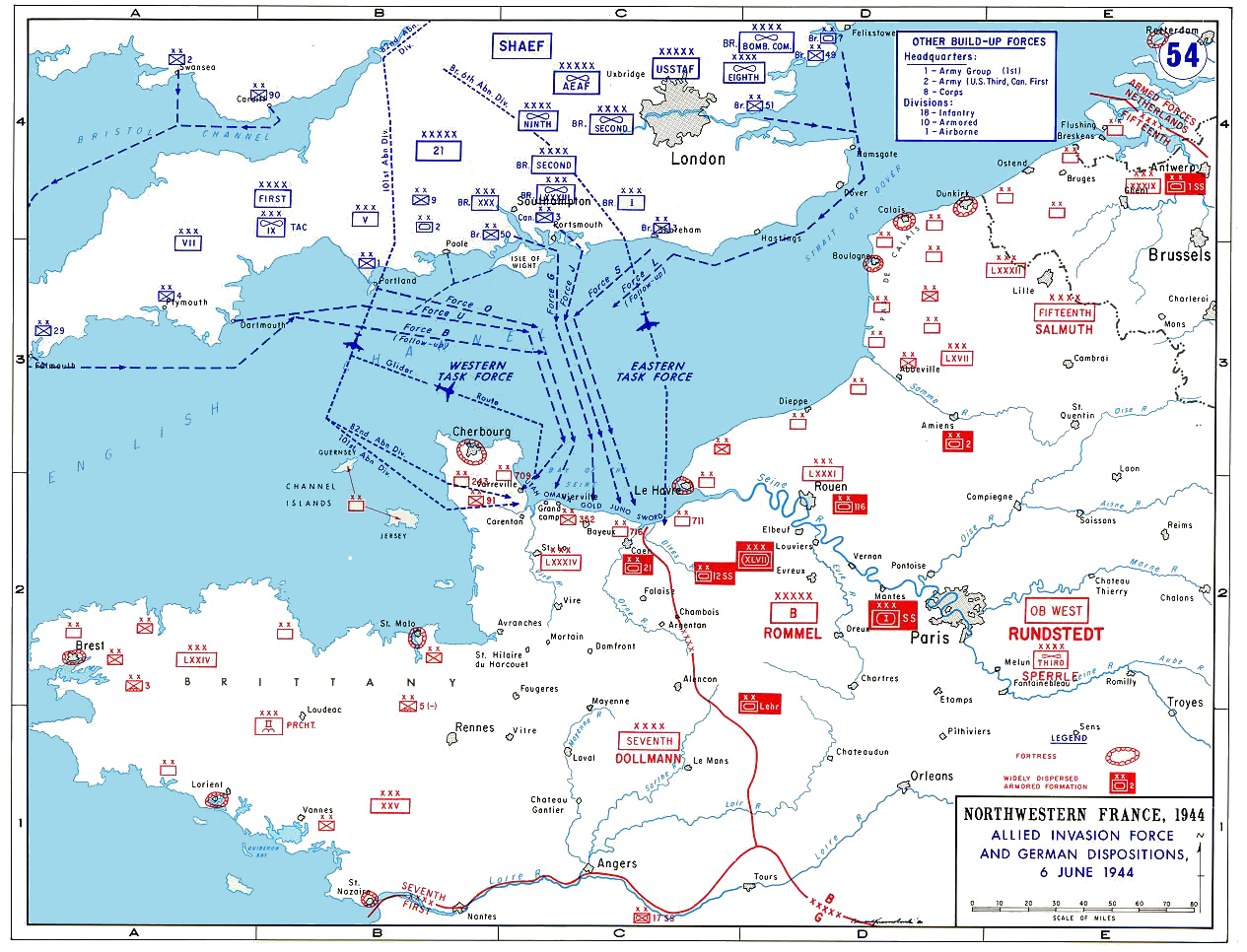
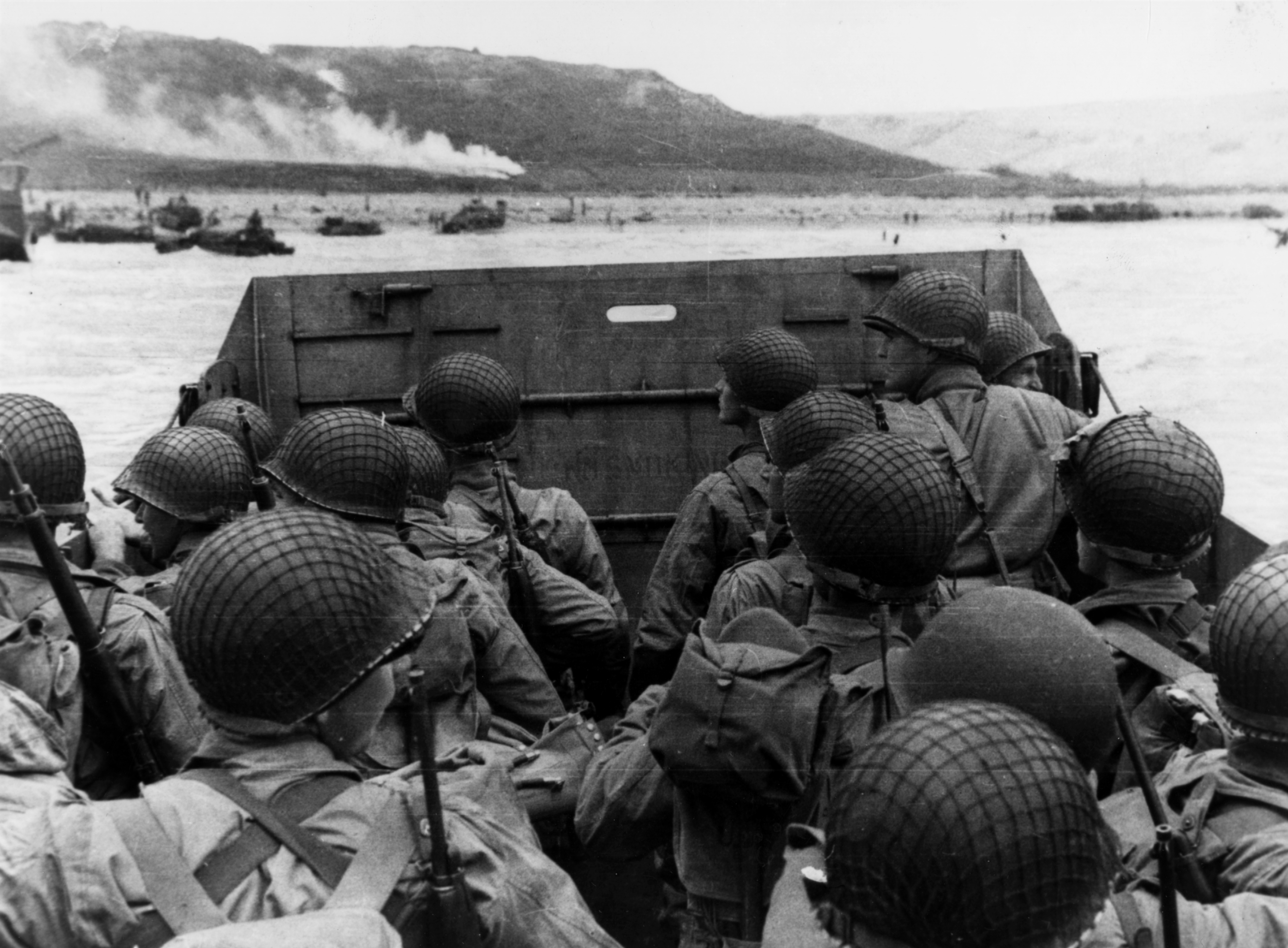
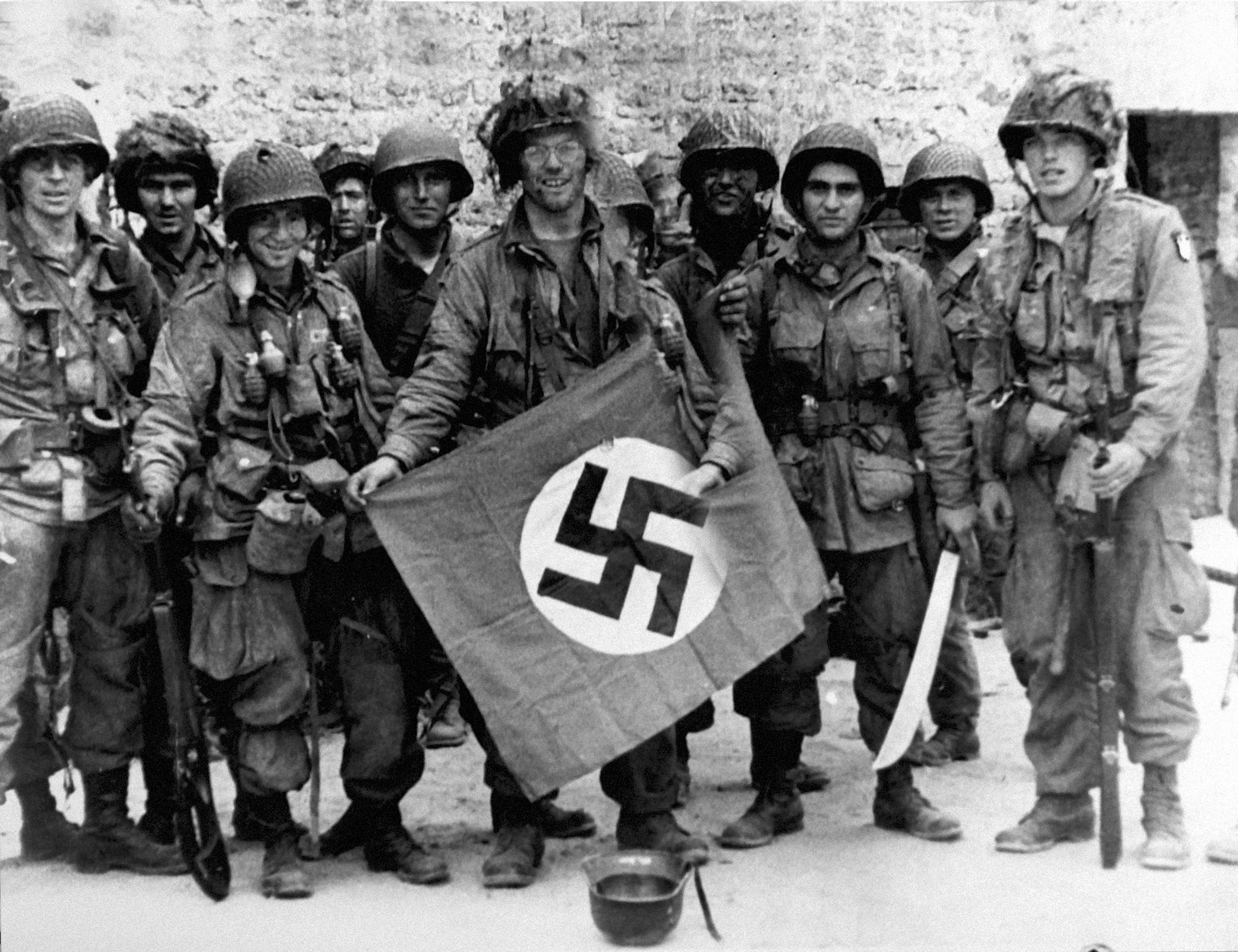
I'm sure newspapers, blogs and other media will be full of the anniversary, but nevertheless, it's worth remembering that sixty-four years ago, on what's become popularly known as D-Day, our forefathers stormed ashore at five points on the Normandy coast to begin the liberation of Western Europe from Nazi tyranny. (Click the map and photographs for a larger view.)


6,939 vessels were involved: 1,213 warships, 4,126 transport vessels (landing ships and landing craft), 736 ancillary craft, and 864 merchant vessels. Over 130,000 troops were landed that day, as well as 12,000 vehicles (including 2,000 tanks) and 10,000 tons of supplies. Landing operations were supported by almost 200,000 Navy and merchant fleet personnel, plus thousands of airmen flying in support of land and naval forces. It was the largest amphibious operation of all time, approached (but not surpassed) only by the Okinawa invasion of 1945.


Resistance was light in some areas, very heavy in others: but by the end of the day, Hitler's Atlantic Wall, a line of fortifications that had cost Germany untold billions of marks and stretched from the Franco-Spanish border into Norway, had been breached. The gap would be slowly but steadily widened, leading to the break-out from the beachhead two months later, and the defeat of Germany within a year.


President Roosevelt spoke to the American people that day. His words, and his prayer, are perhaps appropriate for our times as well.


To all those who took part in the D-Day invasion of France, my thanks and salute. We shall not forget you, nor those who died.

Peter

Wednesday, June 4, 2008

Doofus Of The Day #31


Oh, dear.

A tourist in Australia is lucky to be alive after being bitten on the penis by one of the world’s most venomous snakes.

The man was having a roadside toilet stop when the deadly brown snake emerged from the bush and lunged at his crotch.

It bit him on the end of the penis but did not release a significant amount of toxin through its fangs.

Paramedics rushed to the aid of the tourist, who was on a road near the town of Laura, on the wild and rugged Cape York Peninsula of Queensland.

"It certainly had a swipe at him," an ambulance spokesman told the Cairns Post. "But it didn’t envenomate him. As it came through it must have got a bit of a shock."


Just 'a bit of a shock', eh? Yeah, I'll buy that!

In Africa, such hazards are not unknown. Most kids are brought up to 'look before they leak', in order to spot such dangers before exposing themselves to them (so to speak). Clearly, tourists in Australia aren't being given the right sort of briefing!


Peter

Weird, but funny!


I was amused by a review of a men's singing group from Australia.

The first thing you think upon hearing the Spooky Men's Chorale is: how can men so hairy produce sounds so wonderful?

"We stand and deliver with unaffected masculine brouhaha," frontman Steve Taberner asserts. "But we also have a warmth to the harmonies that seems to strike a chord."

Having blown away audiences at folk festivals across Britain and Australia, the 15-bloke a cappella choir are charging like a wounded mastodon into popular consciousness, bearing a new CD (Stop Scratching It) and a Ghengis Khan-like vision.

"Our stated ambition is to make women weep, small children quail and insurance salesmen vaguely aware that somewhere out there is a whole world they have never experienced," Taberner says.

A bass player and teacher of choir workshops, Taberner founded the group in 2001 in the Blue Mountains, mainly as an answer to what he calls "the blind alley" that men's singing has found itself in.

"Men's singing has become stuck between barber shop crooning and the ponciness of the King's College Choir," he explains. "We were looking for a way to get men singing together and getting a nice warm sound that was also very virile."

Supported by little more than their booming voices and robust facial hair, the band performs a selection of folk standards, idiosyncratic renditions of rock classics and original material like Don't Stand Between A Man And His Tool, which Taberner describes as being "about man's deep need to influence reality by hitting things with other things".

"Our sound is based in Georgian choral music," he says. "Georgia is a country in the Caucasus Mountains, a place where men live in stone towers, drink homebrewed vodka, ride bareback and kill one another with swords. They have a grandiose way of singing that applies to every part of their lives: they have love songs and songs about horse riding and songs for when you accidentally kill your brother by throwing him off a cliff."

The Chorale ladle in a good dose of irony. "We're all about what it's like to be a modern man - dreaming of hunting mastodon on the prairie and the reality of waking up in the morning and stepping on Lego."


Intrigued, I investigated further. The group has their own Web site, on which they describe themselves as follows:

The Spooky Men come down from the Mountains like a wolf on the fold. Forged in the red-hot cauldron of Georgian table singing, where anvil strikes bread and like their brothers of old they raise the morning sun with uplifted arms, their ecumenical embrace now extends to songs Paulian and Johnian. They sing paeans in praise of hardware yet are unafraid to face the existential angst that stares up at them from the debris of breakfast. In confronting the big questions facing men today (are they not pretty enough?), the Spooky Men strike while the irony is hot.


I did a quick search on YouTube, and found a number of their compositions. They certainly are different! Three, in particular, made me laugh. First, their 'theme song':


Next, 'Don't Stand Between A Man And His Tool':


And finally, they really are 'Magnificent':


Peter

China's all-seeing eye - coming to America?


There's a very interesting - and very worrying - article in Rolling Stone about China's surveillance of everyone in its society.

American commentators like CNN's Jack Cafferty dismiss the Chinese as "the same bunch of goons and thugs they've been for the last 50 years." But nobody told the people of Shenzhen, who are busily putting on a 24-hour-a-day show called "America" — a pirated version of the original, only with flashier design, higher profits and less complaining. This has not happened by accident. China today, epitomized by Shenzhen's transition from mud to megacity in 30 years, represents a new way to organize society. Sometimes called "market Stalinism," it is a potent hybrid of the most powerful political tools of authoritarian communism — central planning, merciless repression, constant surveillance — harnessed to advance the goals of global capitalism.

Now, as China prepares to showcase its economic advances during the upcoming Olympics in Beijing, Shenzhen is once again serving as a laboratory, a testing ground for the next phase of this vast social experiment. Over the past two years, some 200,000 surveillance cameras have been installed throughout the city. Many are in public spaces, disguised as lampposts. The closed-circuit TV cameras will soon be connected to a single, nationwide network, an all-seeing system that will be capable of tracking and identifying anyone who comes within its range — a project driven in part by U.S. technology and investment. Over the next three years, Chinese security executives predict they will install as many as 2 million CCTVs in Shenzhen, which would make it the most watched city in the world. (Security-crazy London boasts only half a million surveillance cameras.)

The security cameras are just one part of a much broader high-tech surveillance and censorship program known in China as "Golden Shield." The end goal is to use the latest people-tracking technology — thoughtfully supplied by American giants like IBM, Honeywell and General Electric — to create an airtight consumer cocoon: a place where Visa cards, Adidas sneakers, China Mobile cellphones, McDonald's Happy Meals, Tsingtao beer and UPS delivery (to name just a few of the official sponsors of the Beijing Olympics) can be enjoyed under the unblinking eye of the state, without the threat of democracy breaking out. With political unrest on the rise across China, the government hopes to use the surveillance shield to identify and counteract dissent before it explodes into a mass movement like the one that grabbed the world's attention at Tiananmen Square.

Remember how we've always been told that free markets and free people go hand in hand? That was a lie. It turns out that the most efficient delivery system for capitalism is actually a communist-style police state, fortressed with American "homeland security" technologies, pumped up with "war on terror" rhetoric. And the global corporations currently earning superprofits from this social experiment are unlikely to be content if the lucrative new market remains confined to cities such as Shenzhen. Like everything else assembled in China with American parts, Police State 2.0 is ready for export to a neighborhood near you.


This seriously concerns me. I've no doubt at all that the 'securocrats' in our Government would like nothing better than to implement similar technologies in the USA. I can't take the thought of our Government riding roughshod over our right to privacy in the name of some nebulous, never-to-be-attained 'security interest'.

It's already happening in England to an immense extent. This very day I read about this sort of thing over there:

Town hall snoopers used controversial anti-terror powers to delve into the phone and email records of thousands of people last year.

They wanted to check for evidence of dog smuggling and storing petrol without permission - and even to trace a suspected bogus faith healer.

In one case they were inquiring into unburied animal carcasses.

Some councils are allowing middle-ranking staff to authorise covert operations under the controversial Regulation of Investigatory Powers Act, which is intended for use 'in the interests of national security'.

Many of those spied upon will have no idea they have been subjected to surveillance, as those who are innocent have no right to know.

Last night Shadow Home Secretary David Davis said: 'This is a stark demonstration of how the surveillance society has got out of control with the improper use of very broad powers - powers that the public would expect to be used only for serious crime and security threats.'


Friends, we need to educate ourselves about what's happening overseas, because as sure as night follows day, it's likely to come here too. Only by speaking out, loudly and frequently, can we challenge the otherwise-inevitable 'mission creep' of security agencies and preserve what little privacy we have left. To show you how important this is, read an article from the Electronic Frontier Foundation:

February 7th, 2008

Civil Liberties Groups Sue Homeland Security for Records on Intrusive Questioning and Searches of U.S. Travelers

Information Sought in Response to Growing Complaints of Harassment at U.S. Borders

San Francisco - The Asian Law Caucus (ALC) and Electronic Frontier Foundation (EFF) filed suit today against the U.S. Department of Homeland Security (DHS) for denying access to public records on the questioning and searches of travelers at U.S. borders. Filed under the Freedom of Information Act, the suit responds to growing complaints by U.S. citizens and immigrants of excessive or repeated screenings by U.S. Customs and Border Protection agents.

ALC, a San Francisco-based civil rights organization, received more than 20 complaints from Northern California residents last year who said they were grilled about their families, religious practices, volunteer activities, political beliefs, or associations when returning to the United States from travels abroad. In addition, customs agents examined travelers' books, business cards collected from friends and colleagues, handwritten notes, personal photos, laptop computer files, and cell phone directories, and sometimes made copies of this information. When individuals complained, they were told, "This is the border, and you have no rights."

"When the government searches your books, peers into your computer, and demands to know your political views, it sends the message that free expression and privacy disappear at our nation's doorstep," said Shirin Sinnar, staff attorney at ALC. "The fact that so many people face these searches and questioning every time they return to the United States, not knowing why and unable to clear their names, violates basic notions of fairness and due process."


I could cite many more articles like this as evidence of the growing 'police state' security mentality in the USA. It's absolutely unacceptable, and we need to stop it now.

As the Rolling Stone article concludes:

When I leave China, I feel a powerful relief: I have escaped. I am home safe. But the feeling starts to fade as soon as I get to the customs line at JFK, watching hundreds of visitors line up to have their pictures taken and fingers scanned. In the terminal, someone hands me a brochure for "Fly Clear." All I need to do is have my fingerprints and irises scanned, and I can get a Clear card with a biometric chip that will let me sail through security.


Makes you think, doesn't it? Big Brother and Orwell's '1984' world may not be so far-fetched as we might like to imagine.

Peter

Are you on the list?


Shamelessly stolen from Indigenous Geek (who's now added to my Reciprocal Blogroll too):


Hmm. I qualify in a few of those categories - and I'm a retired pastor!

Methinks those who compiled the categories might want to take a look in the mirror. Have they never over-indulged in alcohol, even once, as a teenager experimenting with 'forbidden fruit'? Never indulged in even a single instance of masturbation? Never tried pot? Never . . . well, you get the idea. Basically, according to such narrow-mindedness, one slip and you're goin' down, buddy!

Not my concept of either God or religion, thank you very much.

Peter

Tuesday, June 3, 2008

Doofus Of The Day #30


Here's a tip.

When you get the urge to moon something or someone . . .

Pick your targets carefully.

Utrecht police say a 21-year-old Dutch man is recovering after a "mooning" that went horribly wrong.

A police statement says the man and two others had run down a street in Utrecht with their pants pulled down in the back "for a joke".

It says that at one point the 21-year-old "pushed his behind against the window of a restaurant" that broke and resulted in "deep wounds to his derriere".

The statement says police detained the three men after the incident Sunday morning. But the cafe owner decided not to press charges after the men agreed to pay for the broken window.

The injured man was treated for his injuries at a nearby hospital.


Peter

Dentists and hypnosis and lasers . . . oh, my!


There are two interesting reports for those interested in things toothsome.

First, a patient had two teeth removed under hypnosis, without the use of anesthetic.


Mr Mason's last visit to a dentist before the recent check-up had been in 1998.

During the operation on May 20 he had two upper right molars removed along with their roots, plus two roots from teeth which had been pulled in the 1980s.

Mr Ridlington spent 45 minutes getting him into a relaxed state of mind beforehand by making him visualise his favourite subject - historic battle reenactments - to distract his mind from the pain.

Mr Mason also had to imagine a dial numbered one to ten, one representing no pain and ten pure agony. Whenever he felt a twinge, he mentally turned the dial back to one.

Mr Ridlington, 59, from Dunmow, Essex, said: 'We all have the ability to control pain with our brains. They control everything about our bodies and our subconscious is the most powerful part - it controls our breathing and the blood pumping through our veins.

'Hypnosis taps into the subconscious mind. It's all about mind over matter.'

The operation was performed by Dr Bhavin Bhatt, who runs the Smile and Wellbeing dental practice in Bishop's Stortford, Hertfordshire.

He said: 'The hypnosis was 100 per cent effective. We're now exploring the possibility of offering tooth transplants under hypnosis.'


The second report states that lasers are now a viable alternative to dentists' drills to remove decay and clean out cavities.

Dentists have been using lasers for years for delicate procedures such as removing small growths from the gum.

However, until recently laser machines haven't been powerful enough to cut through hard tissue such as enamel and bone and also decayed tissue.

Now a new machine developed in Europe means dentists can use lasers in almost every procedure.

And with a laser, many patients don't need an injection of painkilling anaesthetic - the dentist doesn't need to apply pressure on the tooth in the same way as with a drill, which is what causes most of the pain.

Dental lasers don't heat up like the drill - nor do they make the whine of a drill which many people find so off-putting.

. . .

Lasers work by exploding each individual molecule they are aimed at - this helps them to cut through and remove bone and enamel.

The new lasers are more efficient because they can accurately focus the high energy light waves that make up the laser beam in such a way that this is absorbed by the tissue or plaque only where required, and does not damage the surrounding tissue or bone.

The first laser on the machine automatically increases power when it is zapping decayed tissue, and slows down when it detects healthy tissue.

The second laser is used for more delicate work on gums and soft tissues, and is similar to those used by beauticians and dermatologists to smooth wrinkles or remove unsightly spider veins. It is able to do this gentler work because it's not beamed at such high-energy levels.


I'm not sure about the hypnosis bit, but I wish dental lasers had been around when I was a kid. I absolutely hated the dentist's drill. This might make tooth repair a lot more tolerable for youngsters, who won't grow up with a phobia about it.

Peter

Imaging radar coming of age?


We've looked at high-resolution imaging sonars in a previous article. They can produce almost photographic-quality images of shipwrecks underwater. (Click the pictures to enlarge them.)


Now it seems that airborne radars are evolving along similar lines. The USAF's Multi-Platform Radar Technology Insertion Program, or MP-RTIP has been under development since 2000. So far about $1.2 billion has been spent on the program, and it's producing some pretty startling results.

Here are three images recently provided by the USAF to Aviation Week. The first, below, shows a picture of a landscape using what is described as the 'Swath SAR' (SAR = Synthetic Aperture Radar) mode of the MP-RTIP sensor.


You'll note that there are black shadows across the picture. That's because the radar transmitter is clearly located over to the left side somewhere. The observing station is at a different angle, and can thus capture the image portrayed by the radar, but not see into the 'shadows' cast by obstacles to the radar beams.

The second picture (unfortunately only available in small scale) shows the sensor's GMTI (Ground Moving Target Indicator) mode. The lines and strong colors show where many moving targets - in this case, motor vehicles - have been tracked by the radar. A complete picture of traffic in an area can be built up in this way, and with a high-resolution image of a small area, combining GMTI with the SAR image, it's possible that a given vehicle might be precisely imaged and identified.


The third picture, below, shows something of this zoom capability. The radar has zoomed in on one particular target and created an almost photographic-quality image of it, using only radar returns.


This is pretty spectacular stuff, particularly considering that the program is still in its early stages, and the test installation is only a small sensor. The version now being flight-tested beneath a Scaled Composites Proteus aircraft (shown below) has an antenna measuring only 1.5 feet tall by 5 feet long.


When fully developed, this sensor will be fitted to the RQ-4 Global Hawk surveillance UAV, specifically the RQ-4B Block 40 development, which will be larger, carry 50% more payload, and have enhanced electrical generation capability.


The larger version of MP-RTIP intended for the now-canceled E-10A surveillance aircraft would have had an antenna 4 feet tall by 20 feet long. A modified version of the latter was also being studied for possible retrofit to the USAF's E-8 JSTARS surveillance aircraft, shown below.


However, budgetary constraints appear to be threatening this aspect of the program - to the ire of many commentators, such as Loren Thompson of the Lexington Institute for one:

What's wrong with this picture? The Air Force plans to spend over a hundred billion dollars to buy 2,000 new fighters, but it can't find the money to upgrade a handful of radar planes with better technology for tracking insurgents. Even though it has already spent a billion dollars to develop the new technology it now says it can't afford to install, even though warfighters in Iraq have identified an urgent operational need for the new capability.

What's wrong with the picture is that the Air Force is in such a budgetary bind over replacement of its decrepit cold war aircraft fleet that it is being forced to make bad choices -- choices that put the lives of soldiers at risk to save modest amounts of money.

. . .

Both the target tracks and the pictures of a vehicle can be transmitted instantaneously to forces on the ground. But the Air Force says it only has money to install the new technology on unmanned aircraft, not on the bigger JSTARS. Unfortunately, the quality of target tracks and pictures is proportional to the size of the radar's antenna, so there are many objects that can't be seen by the small antenna on the unmanned aircraft that could be seen by the much bigger antenna on a JSTARS plane.


The original JSTARS radar could reportedly resolve ground objects that were 10-15 feet in size. Even the small MP-RTIP sensor currently being tested has reportedly shown the ability to resolve objects only one foot across. The larger one proposed for the E-10A, and considered for JSTARS retrofit, could probably reduce this by an order of magnitude. What's more, both radars appear to offer very strong jamming capability. By focusing their beams onto, say, a cruise missile's sensors from many miles away, they could theoretically prevent it from locking on to its target. I'll examine this in more detail, along with other directed-energy weapons, in another article soon.

It's fascinating to think of a radar device that can track very small objects from a great distance, using multiple platforms (one to transmit the signal, one to receive the resulting image and either refine it itself, or re-transmit it to operators on the other side of the globe), and which is also capable of detecting enemy missiles (even stealthy ones) and jamming their guidance systems. What's more, it looks as if it may be capable of producing not just a blip on a screen, as current radars do, but a photo-realistic image of a potential target, allowing visual identification by operators a long way away, and permitting real-time targeting decisions to be made.

Hmm. Sonars that can image their targets underwater with photographic accuracy; and now radars that can do the same from great distances. One does wonder what the next generation of military sonars and radars will be capable of doing. Will operators be able to recognize the type of submarine they're picking up on sonar by visual recognition? Will they be able to identify individual vehicles - or even their operators - by a radar signal that's good enough to show number-plates?

We've already seen how present-generation UAV's such as the Predator and Reaper can target terrorists. One hopes that this new technology won't get swallowed up in the Air Force's budgetary boondoggles, and will be developed to its full potential. If I were Abdul Bin Terrorist, in the mountains of Afghanistan, and I read about the capabilities of the next generation of these systems, I'd be getting a little worried, right about now. As for the implications of this technology in a full-scale battle, it'll probably mean a wholesale re-evaluation of what will be effective in combat, and what won't. Nations without access to such technology (or countermeasures against it), fighting an opponent that does . . . it'll be like a Stone Age community versus a World War II armored division in open country. No contest.

I've commented before on the dwindling cost-effectiveness of military aircraft acquisition. I hope the USAF will come to its senses, cancel a few gold-plated fighter aircraft, and invest the money saved in some larger MP-RTIP systems for its JSTARS aircraft. I reckon the return on investment (and the improved safety of our troops) would be significantly better over time.

Peter

EDITED TO ADD: Thanks to Lyman L. for forwarding a link to NASA's Imaging Radar Web site. It focuses more on the use of such radar from space, but contains some good definitions and background information. Worth visiting, if the subject interests you.

Monday, June 2, 2008

Marriage annulled on the grounds of non-virginity


There's a legal storm brewing in France.

The French government said it will appeal a court decision to grant a marriage annulment to a Muslim on the grounds his wife lied about her virginity, after the verdict sparked a public uproar.

Justice Minister Rachida Dati has asked state prosecutors to file an appeal against the ruling handed down in Lille in northern France, the justice ministry said in a statement.

"The annulment of a marriage by the high court in Lille has sparked a heated social debate. This private affair reached beyond the scope of two people and concerns all citizens in our country, particularly women," it said.

News of the ruling, which was handed down in April but revealed last week, sparked an uproar among French politicians and women's rights campaigners, but also French Muslim figures.

French Urban Affairs Fadela Amara, a practising Muslim and women's rights activist, called it "a fatwa against women's emancipation".

The man suspected that his new bride, also a Muslim, was not a virgin on their wedding night in July 2006 because the bedsheets were not stained with blood. The woman later admitted to him she had had sex before their marriage.

The court granted the request after ruling the man had been "mistaken about the essential qualities" of his wife-to-be.


The big problem is, the wedding was conducted according to French civil law - not according to Muslim religious law. If the annulment is allowed to stand, it effectively means that any man in France - not only Muslims - could use his wife's non-virgin status as grounds to annul his marriage. That would lead to legal turmoil.

Shows what happens when courts try to be sensitive to religious principles. A court should uphold the law of the land, and ignore specific religious principles. Those are for the religion itself to decide, not the courts. If a person of faith tries to make the court support his faith, then the law itself is at risk.

Peter

More fun with Lolcats


Peter

Another famous ship's grave discovered


This year has seen a bumper harvest of famous warships rediscovered. We've already looked at HMS Hunter and HMAS Sydney in these pages, and seen how modern imaging sonar can reveal hitherto unforeseen details of ships at the bottom of the sea.

The latest discoveries are of HMS Exeter, a York-class heavy cruiser:


and HMS Encounter, an E-class destroyer.


Both Royal Navy vessels were sunk by Japanese forces in 1942 during the Second Battle of the Java Sea.

HMS Exeter is famous for her role in the Battle of the River Plate in 1939, the first major naval action of the Second World War, in which she and two Leander-class light cruisers, HMS Ajax and HMS (later HMNZS) Achilles, took on the German pocket battleship Admiral Graf Spee. Exeter drew the brunt of the German ship's fire, sustaining heavy damage from the enemy's much superior armament of 11-inch guns (versus her 8-inch and the Leander cruisers' 6-inch guns). Her damage is shown below.


Nevertheless, Exeter, Ajax and Achilles forced the German ship to retreat to neutral waters, where she was later scuttled. The squadron commander, Commodore Harwood, was promoted to Rear-Admiral. There's an excellent BBC program on the battle, available on YouTube in five parts. Click each to view: Part One; Part Two; Part Three; Part Four; and Part Five. Together they're 47 minutes long.

After an extensive refit, Exeter served briefly in the European theater before being sent to the Far East. Upon the Japanese initiation of hostilities, she was assigned to ABDACOM to defend the Dutch colonies in South-East Asia, serving with US, Australian and Dutch vessels. She was heavily damaged in the First Battle of the Java Sea, when ABDACOM attempted to intercept a Japanese invasion convoy, and forced to retire to Surabaya for temporary repairs.

Two days later Exeter, escorted by Encounter and a US destroyer, USS Pope, tried to reach the Sunda Strait. They were intercepted by a vastly superior Japanese force of four heavy cruisers and five destroyers, leading to the Second Battle of the Java Sea. After a brief but unequal fight, all three Allied ships were sunk. Most of Exeter's crew survived, to be taken prisoner by the Japanese. The photograph below, showing Exeter sinking, was taken by a Japanese spotting plane. Her bow, at the bottom of the picture, shows the damage caused by a Japanese torpedo, which had nearly severed it.


The Telegraph reports:

The two warships were found in Indonesian waters, at a depth of about 200ft, 90 miles north of Bawean Island, and 60 miles from the sinking position given by Exeter's captain, Oliver Gordon, in a book written after the war.

Exeter's discovery follows a six-year search and means the last of the Second World War's most celebrated warships sunk in the conflict has now been located.

Examinations of the wreck have provided historians with vital new insights into the ship's final battle, one of the war's least known naval encounters.

The divers, for instance, found many of its guns were at low elevation, indicating how close in the Japanese ships had got, and the extent to which Exeter was encircled and outgunned.

They also discovered the extent of the damage to the ship, testimony not only to the ferocity of fire it faced in its final moments but also to its remarkable resilience and ability to withstand enemy attacks that had served it well in its monumental battle against the Graf Spee earlier in the war.


Underwater photographs of the wreck of HMS Exeter may be found at this Web site. In tribute to those who died aboard her, a Royal Navy ensign was fastened to her torpedo tubes, to fly underwater.


The name of the ship is continued today by the present HMS Exeter, a Type 42 destroyer of the Royal Navy.


I think that present and former US Marines will be particularly interested in this discovery, as the ships share their motto: Semper Fidelis.

Peter

Sunday, June 1, 2008

What would you do?


There's a very disturbing and violent video on YouTube depicting an actual assault in a pizza parlor. Embedding is disabled, so I can't put it up on my blog, but you can view it here.

I'd like to ask readers to view it, then answer this question:

If you were a bystander in that shop, and this went down in front of you, what would you do?

I'll post my own answer later. I'll be interested to see your comments.

Peter


MY COMMENTS

Having given everyone a chance to respond, here's my take on the matter. I'll do it in point form.


1. 'Respect'.

There's a culture among the criminal underclass in America (in which category I'd unquestionably place the 'lady' and her 'friend'). They demand to be treated with what they consider as 'respect' - even though they deserve nothing of the kind. The man on the cellphone 'disrespected' the woman by commenting about her, audibly. She reacted to that, and when he disrespected her further by turning his back on her, she called her friend to deal with the situation. The man on the cellphone further 'disrespected' him by ignoring his approach, trying to treat him as if he didn't matter, etc. From that point on, the result was inevitable.

Now, you and I may see clearly the fallacies in this approach: but the gutter trash in our society don't see things from our perspective. They insist on, demand, the 'respect' to which they believe (erroneously) that they're entitled. If they don't get it, things can turn nasty, very quickly. We need to take that into account in our interactions with them.

That doesn't mean we need to be afraid of them. Rather, it means that we should treat them with the same politeness and courtesy that we expect from others. 'Do unto others as we would have them do unto us'. The man on the cellphone didn't speak directly to the woman about her behavior: he commented (audibly) to the person he was talking to, then compounded his error by turning his back on the woman when she approached him. By doing that, he precipitated what would follow.


2. Preparedness.

If you start something, you'd better be ready to take it all the way to its conclusion - and you may not foresee the conclusion! The man on the cellphone could have chosen to either ignore the woman's actions, or complain to the person behind the counter if she cut in front of him. By doing the latter, he would have passed the initiative for action to the 'authority figure' in the store. However, he chose to make a rude remark, then ignore the woman when she tried to approach him. That started the cycle that led to violence.

We need to be aware that there are many in our society whose instinctive response to what they consider 'disrespect', or anything that appears to demean them, is violence. This isn't a new development. Consider the reactions of 'gentlemen' in previous centuries, where a perceived slight might lead to pistols at dawn! This is simply the latest incarnation of 'macho' behavior to afflict our society. We need to remember that our actions and/or words may lead to such violence, whether we intended that response or not.


3. Communal support.

Many respondents commented on the lack of action by the onlookers. Friends, why are you surprised? There are far more sheep out there than shepherds or sheep-dogs. I'm sure that the reaction of the onlookers was a blend of fear of present pain, fear of future consequences (as in, "What will the cops do to me if I get into a fight?" or "What will this guy's gang-banger buddies do to me if I help his victim?"), and the 'herd' reaction of 'it's not my problem'.

We need to take this into account. If we ourselves intervene in such a situation, the odds are very good that we won't receive much (if any) assistance from those around us. They don't have the mentality that is prepared to act in our own defense, or the defense of innocent life.


4. Level of response.

A number of respondents mentioned the use of a firearm to stop the attacker. People, you're treading on very, very thin ice, legally speaking! The use of force in any encounter is usually required to be proportional to the opposing force. If there's disparity of force (e.g. the attacker is much bigger/stronger/faster than you, or you're disabled, or something like that) that's a different story: but in this situation, where no attack has been directed at you, and the victim isn't a member of your immediate family, you stand a good chance of getting into serious legal trouble if you draw a firearm and intervene (even if you don't fire a shot). There are some jurisdictions (such as my own) where your conduct will likely earn you a pat on the back from the police, and you'll have no further trouble. However, do the same thing in Chicago, or New York, or New Orleans, or dozens of other jurisdictions, and you're likely to be facing charges yourself.

This is something we have to take into account. I agree, my instinct would be to intervene: and in my own jurisdiction, I'd do so in a heartbeat, because I know I'd be given judicial support. However, outside my jurisdiction, I might be in a world of hurt if I did so.


5. Use of deadly force.

If you pull a gun and try to stop the attacker, consider this. You've injected a weapon of lethal force into a situation where previously no such weapon existed. (Oh, sure, I understand that a trained fighter can legitimately call his fists 'weapons of lethal force' - but you have no prior knowledge that the attacker is such a person! In law, you don't have a leg to stand on.) If you tell him to stop, and he doesn't, what are you going to do? Shoot an unarmed man? What if he turns on you and moves towards you, and you shoot him? If he survives, he can (and if he doesn't, his girlfriend and/or his family can) claim that he was trying to defend himself against the unwarranted, illegal and unjustifiable threat of lethal force. How will you respond?


To sum up, I'd have to say that in this situation, there are no easy answers and no easy solutions. The lessons to be learned are fairly simple.

  • Don't behave in such a way as to draw retaliation from others, whether justified or not.
  • Don't behave in such a way that the criminal underclass might interpret it as 'disrespect' - because they only know one way to respond.
  • Keep out of places where such incidents are likely to happen. They may occur anyway, but you'll have a lot less of them to deal with if you stay in more salubrious environs.
  • Don't be too willing to intervene unless there's a direct, immediate and otherwise unavoidable threat to your own safety or that of your loved ones. If you try to play the hero, you'll likely end up in a whole lot more trouble than would otherwise be the case.
  • If you decide to play the hero anyway, understand very clearly the implications of your actions, and be prepared to take the consequences. They may not be pretty.
  • Remember that you'll likely be on your own. The odds of others backing you up are relatively small. You'd better be strong enough to cope on your own - or else!

I'll close with something said to a class by Clint Smith of Thunder Ranch, one of the great teachers of armed self-defense. Speaking to us about the reality of using a gun for defensive purposes, he pointed out that even if we fired in full compliance with the law, and our actions were fully justified, and the prosecuting authorities agreed - we'd still spend the price of a new Chevy Surburban that we'd never drive. That's what lawyers, lawsuits from the person we'd shot and/or his/her survivors, and their lawyers' fees, and so on, would cost us.

It might be worth considering that fact before deciding to take action. I'm not saying that I wouldn't act under the circumstances: but it's something I'd better have thought through ahead of time, and counted the cost, and decided that the cost was both worth paying, and within my means. Furthermore, what I could do in my present location is not what I could necessarily do in any other location - so I'd better keep that firmly in mind when I travel!

Food for thought, no?

Peter

Weekend Wings is delayed


I was all set to post the latest Weekend Wings when a correspondent in England sent me material on a couple of relevant matters that I didn't know about and hadn't included. I'll be following up on them and adding new material, and I'll post the latest WW next weekend.

Peter