Sunday, March 15, 2015

Currency wars


On Thursday we looked at the impact that the dollar's strength was having on the rest of the world.  Liam Halligan adds to that analysis with a very trenchant observation.

The reality, of course, is that the Fed’s successive doses of QE since late 2008 have been designed to keep the lid on the dollar, deliberately reining in the greenback in a bid to boost US competitiveness and limit the value of the vast debts America now owes its foreign creditors – not least China.

. . .

The perpetually moribund eurozone economy of recent years ... to say nothing of a currency union that stumbles from crisis to systemic crisis, means euro-QE is now, apparently, OK. In other words, the eurozone can finally get its own back on the US and Britain by attempting to print its way to a cheaper currency, winning back some competitiveness. That’s the theory, anyway.

What we’re seeing, then, is the West’s very own version of “currency wars”. For almost half a decade, the big emerging markets have complained bitterly – and often publicly–- about mass money-printing by the world’s “leading economies”. The likes of Brazil and China have highlighted, rightly, that Western QE has lowered the relative value of their carefully accumulated dollar and sterling reserves (and debts) against local, emergent currencies such as the yuan and the real.

Now, with eurozone leaders engaging in fully blown QE, and rejoicing at the euro’s fall against the dollar, currency wars are taking place not just between the developed world and the emerging markets but between the developed nations themselves. Japan, of course, is also part of this intra-G7 currency conflict, having lately launched an astonishingly extreme QE programme designed to pump up the Bank of Japan’s balance sheet from just over 20pc to no less than 75pc of annual output within three years.

As such, the world’s leading economies have reduced themselves to blatantly competing less on the quality of what they produce, than on the speed with which they can depreciate their currencies against one another.

There's more at the link.  It's worth your time to read it in full.

Do note the last line of the excerpt above.  It's true.  The question is, what happens when everyone finds out that in a race to the bottom, it's very hard to stop the decline and climb back up again?

Peter

"Boys and their toys" indeed!


Ever wanted to fly a snowmobile?


What was that about some people having way too much time on their hands?


Peter

A needless, pointless tragedy


I've written before about the need to use a pocket holster if you decide to carry a gun in your pocket.  It's too easy for something to get caught up in the trigger guard and fire the gun when you don't want that to happen.

Now that lesson has been tragically reinforced, yet again.

Troy Earl Smith was found with a gunshot wound to the chest at 1pm on Thursday in the coastal city of St Petersburg.

The 25-year-old was pronounced dead later in hospital.

Detectives believe a handgun in his jacket pocket discharged as he rode his bike.

There's more at the link.

Folks, the rules are simple.
  1. If you carry a gun in your pocket, use a pocket holster that covers the trigger guard.  ALWAYS.
  2. Remove everything else from that pocket, so that even if the gun slips out of the holster, partially or fully, there's nothing else in there that can get into the trigger guard.
  3. Don't fiddle with the gun, even by putting your hand into that pocket for other reasons.  Leave it severely alone unless and until you need it.
Do those things, and you're likely to be fine.  I've carried a gun in my pocket for years by following those rules, and never (yet) had a problem.  However, ignore even one of them, and that can't be guaranteed.

Peter

Saturday, March 14, 2015

Awwww!


Dog comes home after 10 days away.  Cat is happy.


All together, now:  Awwww!


Peter

Doofus Of The Day #822


Today's award goes to a British motorist and animal lover who was the cause of her own vehicle's downfall.  A tip o' the hat to reader Murray C. for sending me the link.

For UK mechanic David Evans it was definitely not a hard nut to crack. A client called his shop in Poole Keynes complaining that her Honda Civic wouldn't accelerate past 60 km/h. When he popped the hood and removed the air filter he found the engine was full of nuts.

"We brought her the bag of nuts and told her, 'This is the problem with your car.' She was gobsmacked."

Evans says the driver recognized the nuts. They were the same ones she was leaving out for animals in her back garden.


Evans used a vacuum at his shop to suck the nuts out of the engine. He ended up filling a grocery bag with the squirrel's quarry.

There's more at the link.

So she put out for the squirrels both the nuts they eat, and the nooks and crannies they needed to store them.  Sounds like a true animal lover to me!

(Good thing she wasn't in Africa, and putting out elephant food . . . )


Peter

Friday, March 13, 2015

How to give DaddyBear a heart attack


Be his daughter and make a remark that starts him wondering.


Peter

Doofus Of The Day #821


Today's award goes to Zhu Weiqun, a Chinese government official who clearly has an over-inflated opinion of bureaucratic authority.

Tensions over what will happen when the 14th Dalai Lama, who is 79, dies, and particularly over who decides who will succeed him as the most prominent leader in Tibetan Buddhism, have ignited at the annual gathering of China’s legislators in Beijing.

Officials have amplified their argument that the Communist government is the proper guardian of the Dalai Lama’s succession through an intricate process of reincarnation that has involved lamas, or senior monks, visiting a sacred lake and divining dreams.

Party functionaries were incensed by the exiled Dalai Lama’s recent speculation that he might end his spiritual lineage and not reincarnate. That would confound the Chinese government’s plans to engineer a succession that would produce a putative 15th Dalai Lama who accepts China’s presence and policies in Tibet. Their anger welled up on Wednesday, as it had a day earlier.

Zhu Weiqun, a Communist Party official who has long dealt with Tibetan issues, told reporters in Beijing on Wednesday that the Dalai Lama had, essentially, no say over whether he was reincarnated. That was ultimately for the Chinese government to decide, he said, according to a transcript of his comments on the website of People’s Daily, the party’s main newspaper.

. . .

The idea of Communist Party officials defending the precepts of reincarnation and hurling accusations of heresy at the Dalai Lama might have Marx turning in his grave.

There's more at the link.

A Government department deciding who may, or may not, reincarnate.  Sounds like a bureaucrat's wet dream!


Peter

"Lessons learned from a book launch"


That's the title of a guest article I wrote over at Mad Genius Club this morning.  Those of you who are interested in books, writing and related subjects might find it useful.  It looks at the launch of my latest novel last month, and what I've learned from it (so far).  It's probably raised more questions than I've got answers at the moment, but hey - it's an ongoing process.

While on the subject of books, my friend Cedar Sanderson has the opening volume of one of her fantasy series, 'Pixie Noir', on promotion at Amazon.com at present.


For today only, you can buy the Kindle edition for just 99c.  Tomorrow it goes up to $2.99, and in a few days it'll revert to its regular price of $4.99.  I recommend it, and at 99c I think it's a steal.  Head on over to the book's Amazon page for a good deal.

Peter

Thursday, March 12, 2015

The global economy and the "dollar stress test"


Ambrose Evans-Pritchard brings his usual incisive insight to the state of the world economy.

Sitting on the desks of central bank governors and regulators across the world is a scholarly report that spells out the vertiginous scale of global debt in US dollars, and gently hints at the horrors in store as the US Federal Reserve turns off the liquidity spigot.

This dry paper is the talk of the hedge fund village in Mayfair, and the stuff of nightmares for those in Singapore or Hong Kong already caught on the wrong side of the biggest currency margin call in financial history. "Everybody is reading it," said one ex-veteran from the New York Fed.

The report - "Global dollar credit: links to US monetary policy and leverage" - was first published by the Bank for International Settlements in January, but its biting relevance is growing by the day.

It shows how the Fed's zero rates and quantitative easing flooded the emerging world with dollar liquidity in the boom years, overwhelming all defences.

This abundance enticed Asian and Latin American companies to borrow like never before in dollars - at real rates near 1pc - storing up a reckoning for the day when the US monetary cycle should turn, as it is now doing with a vengeance.

Contrary to popular belief, the world is today more dollarized than ever before. Foreigners have borrowed $9 trillion in US currency outside American jurisdiction, and therefore without the protection of a lender-of-last-resort able to issue unlimited dollars in extremis. This is up from $2 trillion in 2000.

The emerging market share - mostly Asian - has doubled to $4.5 trillion since the Lehman crisis, including camouflaged lending through banks registered in London, Zurich or the Cayman Islands.

The result is that the world credit system is acutely sensitive to any shift by the Fed.

. . .

Powerful undercurrents in the world's financial system are swirling beneath the surface. Some hope that the European Central Bank's €60bn blast of QE each month will keep the asset boom going as the Fed pulls back, but this is a double-edged effect for the world as a whole. It pushes the dollar yet higher. That may matter more in the end.

. . .

Nobody should count on a Fed reprieve this time. The world must take its punishment.

There's more at the link.

This is what debt on an international scale can do.  In microcosm, each of us faces the same problem as the debt of others - our neighbors, our companies, our local, state and national governments - impinges on our own economic circumstances and future.

It's not looking healthy right now.

Peter

Still one of the most beautiful - and deadly - aircraft in history


Here's a great video news report about the restoration of a Supermarine Seafire Mk. XV - the carrier-borne version of the Spitfire fighter.  I suggest watching it in full-screen mode.


Just beautiful, isn't she?

Peter

Wednesday, March 11, 2015

A hungry bird almost drowns


Courtesy of Glenn B., here's a video clip of an ice fisherman in Pennsylvania who has to rescue a duck from his hook after the bird went beneath the ice in search of fish.


That's a lucky bird!  If the fisherman hadn't been looking for a disturbance on his line, it would have drowned for sure.

Peter

Even the Brits are getting into the Chuck Norris meme


Apparently yesterday marked Chuck Norris' 75th birthday (a fact that makes me feel old, right there . . . )  I was amused to see the London Telegraph getting in on the act with 'The 20 best Chuck Norris facts'.

In 2005, a series of jokes starting circulating online, possibly inspired by the American comedian and broadcaster Conan O'Brien. Deliberately absurd, and focussing on Norris's virility, manliness and all-round heroism, a typical "Chuck Norris fact" runs like this: "Chuck Norris has never won an Academy Award for acting... because he's not acting." Or: "Chuck Norris can divide by zero."

The popularity of "Chuck Norris facts" mushroomed and today a Twitter account (@chuck_facts) dedicated to providing fans with a stream of facts has 270,000 followers. Norris himself has admitted to finding the jokes amusing and said that his favourite "Chuck Norris fact" is: "They wanted to put Chuck Norris's face on Mount Rushmore, but the granite wasn't hard enough for his beard."

. . .

So without further ado, I'd better get on and pick some of the best "Chuck Norris facts" – before a roundhouse kick greets me on the way out of the office.

3) The easiest way to determine Chuck Norris's age is to cut him in half and count the rings. (Norris commented: "Three years ago, at the end of a Nightline interview, ABC host Bill Weir asked me my age and I told him 66. Then I added with a smile, 'I like to say I'm 39, with 27 years of experience.'")

4) Chuck Norris is currently suing NBC, claiming Law and Order are trademarked names for his left and right legs.

6) Chuck Norris knows Victoria's secret.

7) If Chuck Norris was a Spartan in the movie 300, the movie would be called 1.

11) Chuck Norris once kicked a horse in the chin. Its descendants today are known as giraffes.

13) Chuck Norris can delete the Recycling Bin.

14) Chuck Norris has already been to Mars. That's why there are no signs of life.

There's more at the link.  Good for a giggle.

Peter

So much for gun ownership surveys


Hear ye!  Hear ye!  The most recent 'wisdom' from 'the latest General Social Survey':

The number of Americans who live in a household with at least one gun is lower than it's ever been, according to a major American trend survey that finds the decline in gun ownership is paralleled by a reduction in the number of Americans who hunt.

According to the latest General Social Survey, 32 percent of Americans either own a firearm themselves or live with someone who does, which ties a record low set in 2010. That's a significant decline since the late 1970s and early 1980s, when about half of Americans told researchers there was a gun in their household.

The General Social Survey is conducted by NORC, an independent research organization based at the University of Chicago, with money from the National Science Foundation. Because of its long-running and comprehensive set of questions about the demographics, behaviors and attitudes of the American public, it is a highly regarded source of data about social trends.

There's more at the link.

Sounds like bullshit on a stick, if you ask me.  For a start, if I get a phone call from someone I've never heard of, claiming to represent an allegedly 'respectable' research organization and asking whether I've got items in my house that are highly desirable to thieves, how do you think I'm going to answer them?  They can forget about getting honest feedback from me, right there and then!  I daresay I'm far from the only person with such a reaction.  Furthermore, here are three easily-confirmed observations:

  1. The number of background checks on firearms sales isn't exactly evidence of any 'decline' in firearms ownership. Since President Obama took office, the increase has been mind-boggling (link is to an official US Government chart in Adobe Acrobat .PDF format).  Furthermore, they refer only to purchases in gun shops or at gun shows that require a background check.  (Such checks aren't exactly effective at 'stopping gun violence', either.)
  2. Background checks aren't conducted or required in most states for face-to-face private transfers of firearms.  To mention just one example, check out Armslist for your state (or, if yours requires background checks on private transfers, for another state that doesn't).  See for yourself how many firearms are being advertised by private citizens like you and I.  The last several firearms I've bought and sold have all been through private, 'off-paper' deals (the last one was only four days ago).  I intend to do more such deals in future.  I can get better prices that way, whether selling, buying or swapping.  (I'm looking to swap a couple of Glocks right now for different models, and already have someone interested in one of them.)  Does it bother me that no-one is undergoing background checks for such purchases?  No.  Why should it?  I don't assume that anyone buying a gun privately is automatically a criminal, and neither should anyone else in the absence of evidence to the contrary.
  3. I've been training others to shoot for many years.  Without exception, every year has seen an increase in the number of those seeking training or advice.  "What gun should I buy?"  "How should I train?"  "What and how much ammo should I keep in the house?"  These and other questions have been addressed in articles here (see the list in the sidebar).  I take the time to do that because there are more and more people looking for answers.  That hardly squares with a decline in gun ownership, does it?

Nope.  I'll take this story with a pinch of salt and several pinches of gunpowder.  Makes the salt taste better, you know . . . almost like the bitter tears of lamenting, lying gun-grabbers.  Aaaahh!  Savor the flavor!

Peter

Tuesday, March 10, 2015

The ultimate running accessory???


OK, this is officially weird!

If you’re like me, halfway through a typical long run you get a yearning that’s both thirst and hunger. The only thing that can satisfy it? An ice-cold...tomato? That's what Japanese food producer Kagome is banking on with its new Wearable Tomato machine.

The Wearable Tomato resembles a mechanical backpack that, with the push of a button, dispenses one of seven medium-sized tomatoes in its reserve. Weighing a hefty 17.6 pounds, it’s not suited for lithe runners, which is why Kagome also created a mini version that tips the scales at six pounds and dispenses 12 cherry-sized tomatoes.

There's more at the link.  Here's a video clip of the product in action.


Only in Japan . . .


Peter

So much for the pension crisis


Fellow blogger 'JoeMama' has a very interesting article about how a seemingly harmless development in pension regulations is, in fact, a grave danger to everyone relying on their pensions.  If you might be in that position soon, I urge you to go read it in full.  It's sobering stuff.

Peter

"The end of cash as we know it?"


That's the title of an article in the Telegraph.  It refers to payment habits in the UK, but I'm sure it's pretty similar on this side of the Atlantic.  Two graphs in particular jumped out at me.  First, the number (i.e. quantity) of transactions in cash and via automated credit:


And then the actual value, in British pounds, of those transactions:


There's more at the link.

Those graphics put a very different perspective on the situation, don't they?  They help to explain why some businesses are now refusing to take cash at all.  The value of the transactions that they execute in cash is so small that it's literally more trouble than it's worth to keep cash on hand for those customers.  They'd rather do business electronically;  and if you're not prepared to do that, they'd rather you took your business elsewhere.

I can only say that such an approach is fine, as long as the electronic network is operational.  When it's not . . . not so much.  I wrote about that in my 'lessons learned' posts after Hurricane Katrina, when those who relied on banks whose networks were literally underwater couldn't access their accounts at all.  I daresay the routine reliance on electronic financial transactions, rather than cash, has only become greater since then;  and when it goes down (as happened with the national EBT network in 2013), the results can be dangerous in more ways than one (such as, in the example cited, threats of rioting by frustrated EBT recipients and attempts to defraud supermarkets that tried to help them).

Personally, I make sure to keep a minimum of one month's expenditure (including all automated or check-based bill payments) available in cash at any time.  Having "been there and done that" when things went to hell in a hand basket, I have no intention of being caught short like that again.  If I need to buy essentials when the electronic payment network is down, I want to be able to wave folding green pieces of paper at the cashier.  I'm willing to bet I'll be served, while those waving pieces of plastic will be SOL.  BTDT.

Peter

Monday, March 9, 2015

Charge them, convict them, and lock them all up!


I'm infuriated by news that a host of lying, perjuring 'witnesses' during the Michael Brown shooting inquiry are likely to get away with their criminal conduct.

In its report detailing why Officer Darren Wilson will not face federal civil rights charges for the killing of Michael Brown, the Department of Justice recounts an investigation that was marred by lying witnesses, none of whom apparently will face charges for their perjurious conduct.

The parallel state and federal investigations into the August 2014 death of the 18-year-old Brown became Perjuryfest ’14, a free-for-all of fabricated claims, exaggerated accounts, and delusional tales.

According to the DoJ report, federal investigators dismissed versions of the Brown-Wilson confrontation provided by 24 separate witnesses, who are identified in the document by a witness number and their respective ages, sex, and race. However, despite that limited information, some of the discredited witnesses are easy to identify.

The testimony from these witnesses was alternately branded inconsistent, not credible, unreliable, incoherent, and based on rumor and hearsay.

There's more at the link.

Perjury is a crime.  Why are these perjurers not being tried, convicted and punished?


Peter

The next book's taking shape


I haven't been resting on my writing laurels.  It's not yet three weeks since the publication of my latest novel, 'Stand Against The Storm', but I've already written 75% of the second volume of the Laredo Trilogy, 'Forge A New Blade'.

It's a lot of fun having to switch mental gears, reverting to the setting of 'War To The Knife' and working out how the Laredo Resistance is going to establish a meaningful space-based combat capability.  Steve Maxwell, my protagonist from the Maxwell Saga series, makes a couple of appearances and contributes some good ideas (of course).  Readers of earlier Maxwell books will recognize some familiar names and places that reappear, as they will in future books as well.

I hope to have the latest book out to beta readers within a couple of weeks;  then I'll be taking a couple of weeks off from writing while they send back their comments.  I'll use the time to sort out our storage unit, which still contains boxes and bits and pieces from our move last year.  The idea is to get rid of as much as possible, and keep only what can fit into our present small duplex.  Over the course of the year we'll be deciding whether we'd like to stay in our present area, or move to be closer to our writing 'center of gravity'.  Once that decision is made, we'll start looking for a home of our own.  There's no hurry - I have to sell a lot more books before we can afford it!

I've been very encouraged by sales of 'Stand Against The Storm' so far.  I'll be writing about its first three weeks on the market over at Mad Genius Club this Friday (I'm one of the guest bloggers there).  This is my first book launch after Amazon.com launched its 'Kindle Unlimited' subscription library service.  I've certainly lost sales to KU readers, and because KU pays authors only about half what they'd earn from a sale at my price point, it's cost me money to participate in the program.  On the other hand, the volume of KU readers boosts one's sales rank in the Kindle Bookstore.  In this case, it's pushed me more than 300 positions higher than I've ever been with previous books (the highest rank I reached, last week, was 503).  That translates into higher visibility for the book, and greater sales . . . so what I've lost on the swings, I seem to have regained on the roundabouts, so to speak.  It's a very interesting study in marketing data, and Miss D. will have more to say about it on Friday too.

Thanks again to everyone for your support.

Peter

Brothel investigation is clearly a hard job . . .


Readers will remember our threefold mention of brothel investigators in Australia over the past few months.  It seems their job may be more complicated than one might have thought.  Thanks to a tip from Snoggeramus, an Australian reader of this blog, we learn more.

A Sydney council has lost a landmark legal battle against a massage parlour it alleged was operating as an illegal brothel, after a court ruled the council failed to prove there was enough sex being provided on the premises.

. . .

... in a benchmark decision, a judge has dismissed the case, ruling that council's evidence of sex being sold on the premises fell short of the NSW's specific definition of the term "brothel" - which requires more than one prostitute to be providing services onsite. The outcome means both Hornsby - and other councils - would have to fund multiple trips inside suspect premises to have any chance of a result.

. . .

The Sun-Herald has previously identified at least 34 illegal premises operating within a five-kilometre radius on the north shore. Last year, it revealed that least 10 metropolitan Sydney councils had hired a small band of middle-aged, male private investigators to have undercover sex, as a last resort to gain the necessary evidence that will convince a judge to close an illegal establishment down.

But according to the letter of the law, it now appears that is not enough.

. . .

While it had demonstrated that one worker was providing sex, the court found that the legal definition of a brothel involves more than one prostitute using the premises at any one time.

Hornsby Council confirmed last week its Planning Division is to lobby the NSW Department of Planning and Environment for an "urgent review" of the "legislative definitions" of a brothel.

There's more at the link.

They may, of course, be hiring the wrong type of investigator.  Maybe 'middle-aged' men are the wrong demographic.  Perhaps they need more fine upstanding young men . . .


Peter

Sunday, March 8, 2015

Survival lessons from Ukraine's civil war


Many readers will be familiar with Ferfal, who's the author of the blog 'Surviving In Argentina' and two books on that and related subjects.  Now he's distilled lessons being shared by those who've survived the bitter, savage civil war in the Ukraine.  Here's an excerpt.

The war in Ukraine is a tragic event but it’s one that we can all learn from. Nothing provides as much valuable information as real world situations where ordinary people are forced to deal with extraordinary events. At the end of the day, the war in Ukraine gives us plenty of examples of what works and what doesn’t, and while personal experience is important, the wise person learns from other people’s mistakes so as to not repeat them himself.

There are several articles explaining what people are going through in eastern Ukraine right now ... Using this information, here are twelve important lessons based what has happened so far in Ukraine:

. . .

2)  Cover the basics. Food, water, shelter and medicines.

In various parts of eastern Ukraine, People are suffering the lack of water, electricity and food shortages. You need to store food, food that requires no refrigeration and little or no cooking. You need water, not just a water filter (which you should have as well) but actual jugs of water. For true emergencies and survival situations, just like you can’t have too much food you can’t have too much water. Have a well, have a river, if nothing else keep an eye out for large barrels on sale and keep some full of water. Even the jugs for carrying water become valuable. Have a good supply of medicines: ibuprofen, vomit and diarrhea medicine, liquid ibuprofen for children, bandages, diapers, formula and antibiotics. Antibiotics are the difference between life and death when you need them. Have lanterns, flashlights and lots of batteries. Get and emergency crank radio. Get a solar charger for your phone and batteries. Have alternative means of cooking and heating. A wood burning stove may do the trick, but make sure you always keep extra wood stored for emergencies. Maybe you’re lucky enough to still have power, if so an electric burner can be put to good use then, saving other fuels for when power goes out. Have extra fuel in storage for your vehicle, enough to make it to your potential bug out location in case you have to leave in a hurry. Have a tent and sleeping bags. These can be used not only for sleeping in tents, but also if you happen to find yourself in a refugee camp during winter or in an unfurnished flat after evacuation or if you’re staying with friends or family.

In a shelled city, underground is the only safe place to be, to some extent at least. An actual bunker would be ideal, but people try finding shelter anywhere underground. In buildings, windows and doors are covered with sandbags and people sleep in the interior room away from exterior walls and windows. Windows never survive shelling. The broken glass makes it impossible to stay warm in winter. Plastic sheeting can sometimes be used to close openings and still allow light in, but this is far from an ideal solution and he loss of heat is substantial.

. . .

6)  Guns can save you, but they can also get you killed.

Are you fighting along with one of the factions involved? If not, then make sure you’re not confused with one. If you just want to be left alone, then don’t openly carry a gun. Openly carrying a weapon means you are a fighter on either side of the conflict. If you’re not with either one, BOTH will consider you an armed enemy. At the end of the day a gun can save your life, but in a world of no easy black and white answers a gun can also get you killed. Keep any weapons concealed, and be ready to ditch them, sell them or cache them depending on the situation you are involved in. Just going gun-ho is not the one and only answer to all problems.


There's much more at the link, and in the second article in the series.  Both are highly recommended reading.

Peter

A monument to a . . . truck???


I could hardly believe my eyes when I came across this video.


A (very rich) boy and his (very big) toy, indeed!


Peter

Saturday, March 7, 2015

Thermonuclear cuteness


Kili, our cat, this morning.  (Click it to embiggenate.)


All together, now:  Awwwww!


Peter

Doofus Of The Day #820


Courtesy of a link provided by reader Christopher C., we meet a San Diego man whose friends now doubtless want to discuss his phone habits with him.

An Alpine man who didn’t realize he’d called 911 on his cellphone let a sheriff’s dispatcher in on his conversation about a drug lab and plans to lure a deputy into a fight or a pursuit, authorities said Tuesday.

Deputies traced the call to a home on Lobelia Road and found 93 marijuana plants inside and outdoors, sheriff’s Sgt. Kirk Thomson said. Three men there were arrested.

“They vehemently denied calling 911 until we called his phone back, and showed him on his phone where he had called us,” Thomson said. “Then the expletives flew.”

. . .

... one of the men pushed a programmed button on his cellphone that called 911 without him knowing it. A dispatcher overheard men talking about narcotics and items used to make “honey oil,” slang for hash oil extracted from marijuana. They also talked about returning to the deputy to get him into a fight or a 100 mph chase, Thomson said.

. . .

“In my 31 1/2 years in law enforcement, I’ve never heard of this before,” Thomson said. “It’s rare for people to call us and say, ‘come arrest us.’ It’s a new one on me.”

There's more at the link.

I'm sure the police were absolutely delighted at this degree of cooperation from the public . . . even if the public in question didn't know they were cooperating!


Peter

Friday, March 6, 2015

"How to get past the robots that are reading your résumé"


That's the title of a useful article and infographic in Business Insider.  I don't have much experience of automated systems processing job applications - they came after my time in business - but the infographic offers useful tips to structure your application in such a way that it stands a decent chance of getting through the automated 'gatekeepers' and landing up in the hands of a human being.  That gives you at least a fighting chance of getting to the interview stage.

It looks like worthwhile reading if you, or family, or friends, are looking for a job.

Peter

Where are the handcuffs?


The New York Observer reports on an utterly outrageous case of prosecutorial misconduct.

... here’s another doozy: The People (of California) v. Efrain Velasco-Palacios ... Kern County prosecutor Robert Murray committed “outrageous government misconduct.” [Attorney General of California] Ms. Harris and her staff defended the indefensible—California State prosecutor Murray flat out falsified a transcript of a defendant’s confession.

Kern County prosecutor Robert Murray added two lines of transcript to “evidence” that the defendant confessed to an even more egregious offense than that with which he had been charged—the already hideous offense of molesting a child. With the two sentences that state’s attorney Murray perjuriously added, Murray was able to threaten charges that carried a term of life in prison.

Capitalizing to the maximum on his outright fabrication, state’s attorney Robert Murray committed his own crime against the defendant at the crucial time when defense counsel was consulting with the defendant on a possible plea.

Prosecutor Murray had ample time and opportunity to correct his lies and his falsification of the transcript, but instead, he let it go until defense counsel had encouraged his client to plead guilty based on this fabricated evidence. Not until after defense counsel requested the original tape recording from which the transcript was made did Mr. Murray admit that he had added the most incriminating statements to the transcript.

. . .

California Judge H.A. Staley got it right. He found that Mr. Murray’s fabrication of “evidence”—falsifying the transcript of a confession during discovery and plea negotiations—was “egregious, outrageous, and . . . shocked the conscience.”

The trial judge saw no laughing matter—and neither should the rest of us. He dismissed the indictment completely, and in a scathing opinion, also quoted by the appellate court, wrote that the prosecutor’s actions “diluted the protections accompanying the right to counsel and ran the risk of fraudulently inducing defendant to enter a plea and forfeit his right to a jury trial.” The court refused to “tolerate such outrageous conduct that results in the depravation of basic fundamental constitutional rights that are designed to provide basic fairness.”

Undaunted by the criminal conduct of a state prosecutor, or the district court’s opinion, Ms. Harris appealed the decision dismissing the indictment. According to the California attorney general, only abject physical brutality would warrant a finding of prosecutorial misconduct and the dismissal of an indictment. Fortunately for all of us—and the Constitution—she lost again.

There's more at the link.

Why is Mr. Murray still employed as a prosecutor?  Why is he not behind bars himself?  And why did the Attorney General of California try to defend his utterly outrageous, egregious, indefensible actions?

Quite frankly, this is the sort of outrage that can spawn community action against the individuals concerned when the law fails to act.  Think I'm joking?  I'm not.  I've seen it happen in other parts of the world, when citizens realize that 'the system' is so busy defending itself and its own interests and its members that it's lost sight that it exists to serve the people.  The result can be bloody - 'lynch law'.  It's not uncommon in parts of Africa, and I'm informed it happens to this day in parts of Latin America as well.  I can only hope and pray that we never see it here . . . but violations like this don't give me any great confidence that it won't.

By allowing Mr. Murray to get off scot-free, and leaving him in a position to abuse his authority again in future, the authorities in California are sowing the wind.  They may yet reap the whirlwind.

Peter

Thursday, March 5, 2015

The bleeding edge of America's race war


As a former prison chaplain, I've long argued that the real racial problem in America isn't white-versus-black or vice versa:  it's Black-versus-Hispanic or Hispanic-versus-Black. Now an article in Taki's Magazine begins to tell it like it is.

I can only guess that the reason you don’t hear much about black-versus-Hispanic violence in America is that you’re not supposed to hear much about it. It’s the sort of thing that swims upstream against the dominant narrative with the tenacity of a thuggish, heavily tattooed salmon. In the nation’s fevered movie dreams about racial violence, it’s white people (and only white people) who go about thrashing nonwhites (and only nonwhites). But in cities across the country—most notably, Los Angeles—one group of nonwhites is engaged in a prolonged, grinding, violent turf war with another group of nonwhites—and that’s something which is clearly NOT in the script. So it’s best for the crafty screenwriters to convince the dimwitted moviegoers that it’s not happening; failing that, they’ll squirm for a way to blame white people, anyway.

. . .

The sinister-looking Lee Baca has been the LA County Sheriff since 1998. In 2008, he wrote an editorial for the LA Times called “In L.A., race kills”:

We have a serious interracial violence problem in this county involving blacks and Latinos. The truth is that, in many cases, race is at the heart of the problem. Latino gang members shoot blacks not because they’re members of a rival gang but because of their skin color. Likewise, black gang members shoot Latinos because they are brown ... Gang affiliation does not matter. Only the color of the victim’s skin matters ... I would even take this a step further and suggest that some of L.A.‘s so-called gangs are really no more than loose-knit bands of blacks or Latinos roaming the streets looking for people of the other color to shoot.

There's more at the link.

The article's collection of facts and incidents speaks for itself.  Things really are that bad in certain sections of our major cities.  Ask the cops who work there.  If they're allowed to talk about it by their superiors (some of them aren't), they'll confirm what the article states.

Things are going to get interesting in America's inner cities as Hispanic gangs threaten the dominance of Black gangs by sheer weight of numbers.  The Black gangs aren't going to go quietly.  The struggle between them is likely to spill over into local communities, terrorizing residents and spreading crime to areas previously thought peaceful and law-abiding.

Peter

Doofus Of The Day #819


Courtesy of Miss K.


Rednecks . . . *Sigh*

Peter

When someone else's debt means losing YOUR money


I've been writing about the problem of debt for some time, and I'll continue to do so, because it's the single most important economic issue of our day.  It makes our present government spending unsustainable, and it holds out the promise of misery for most of us in the not too distant future, because our feckless politicians are simply too scared of the consequences to do anything about it.  They're the ones who let things get this bad (aided and abetted by us, the voters, of course).  Now they're riding the tiger, knowing they're going to get eaten if they lose their grip or try to dismount.

The problem is, most people don't realize that the debt of others is going to affect them, personally.  They think that as long as they have their own financial house in order, they're OK.  I'm afraid that's not true.  The bond- and account-holders of an Austrian regional bank are the latest to learn that lesson the hard way.

The Alpine region of Carinthia faces probable bankruptcy after Austria’s central government refused to vouch for debts left by a disastrous banking expansion in eastern Europe and the Balkans.

It would be the first sub-sovereign default in Europe since the Lehman Brothers crisis, comparable in some respects to the bankruptcy of California's Orange County in 1994 or the city of Detroit in 2013.

. . .

Sources in Vienna suggested that even senior bondholders are likely to face a 50pc writedown, becoming the first victims of the eurozone’s tough new “bail-in” rules for creditors. These rules are already in force in Germany and Austria, and will be mandatory everywhere next year.

“We are at a very delicate phase when Europe’s banking system switches from a bail-out regime into a much tougher bail-in regime, and Austria has just thrown this into sharp relief,” said sovereign bond strategist Nicholas Spiro. The biggest bondholders are Deutsche Bank’s DWS Investment, Pimco, Kepler-Fonds and BlackRock. The World Bank also owns €150bn of Hypo debt.

. . .

William Jackson, from Capital Economics, said Austrian banks face a double squeeze as borrowers in Hungary and the Balkans struggle with both deep property slumps and a slide in their local currencies. “These foreign currency debts are a slow-burn issue. The non-performing loans emerge over time,” he said.

The International Monetary Fund said in its latest healthcheck on Austria that three large banks – Raiffeisen, Erste and Volksbanken – are vulnerable to any shocks. “Risks remain elevated. Bank profitability suffers from rising non-performing loans, risk costs and write-offs,” it said.

There's more at the link.

How does this affect individuals, you ask?  Simple.  You have a bank account.  Your bank invests its money (i.e. your deposits) in bonds, in order to earn a return on its investments.  When it repays your money (i.e. you withdraw it from your account), it's hopefully made a profit on it which it puts in its own back pocket.  If the bonds in which it's invested don't pay a return, it doesn't make a profit.  Even worse, if the issuer of those bonds defaults and doesn't repay them, it doesn't get its (i.e. your) money back at all.  Therefore, the 'knock-on' effect from a regional bank default, like the one in Austria described above, will directly and immediately impact tens, possibly hundreds of thousands of account-holders in other banks and financial institutions that are bond-holders affected by the problem.  Since the government of Carinthia had issued guarantees to account-holders and investors in its regional bank, it's on the hook as well - unless, of course, it defaults too.

The European Union 'bail-in' rules explicitly require that bondholders (and those who invest in the bondholders, which is exactly what you're doing if you have a bank account with a bank that directly or indirectly holds the bonds of a defaulting bond issuer) 'share the pain' of a bond default by losing part or all of their investment.  It happened on a large scale in Cyprus recently.  Commentators (including yours truly) warned at the time that the same recipe would be applied more widely.  This has now happened, in the USA as well as in Europe.  Governments no longer have the money to bail out troubled banks.  Instead, investors will 'bail them in' - using your money.  Welcome to the twenty-first century, folks.

Jeremy Warner puts the problem into global perspective.

The world is sinking under a sea of debt, private as well as public, and it is increasingly hard to see how this might end, except in some form of mass default.

Greece we already know about, but the coming much wider outbreak of debt repudiation will not be confined to sovereign nations. Last week, there was another foretaste of what’s to come in developments at Austria’s failed Hypo Alpe-Adria-Bank International. Taxpayers have had enough of paying for the country’s increasingly crisis-ridden banking sector, and have determined to bail in private creditors to the remnants of this financial road crash instead - to the tune of $8.5bn in the specific case of Hypo Alpe-Adria. Finally, creditors are being made to pay for the consequences of their own folly.

You might have thought that a financial crisis as serious as that of the past seven years would have ended the world economy’s addiction to debt once and for all. It has not. If anything, the position has grown even worse since the collapse of Lehman Brothers.

According to recent analysis by McKinsey Global Institute, global debt has increased to the tune of $57 trillion, or 17pc, since 2007, with little sign of a slowdown in sight. Much of this growth has been in emerging markets, which were comparatively unaffected by the financial crisis. Yet even in the developed West, private sector deleveraging has been limited and, in any case, more than outweighed by growing public indebtedness. The combined public sector debt of the G7 economies has grown by 40pc to around 120pc of GDP since the crisis began. There has been no overall deleveraging to speak of.

Where the West left off, Asia has taken up the pace, with a credit-induced real estate bubble that makes its pre-crisis Western counterpart look tame by comparison, much of it fuelled, as in Western economies, by growth in the shadow banking sector.

. . .

Some economists claim not to be too concerned by the explosion in global credit. For them, it is merely the mirror image of rising output, asset prices and wealth ... But you can also have too much of a good thing. Today’s global economy is plainly a case of it. The world has taken on more debt than it is ever likely to be able to repay, absent of implausibly high levels of output growth or contractionary fiscal consolidation. This, in turn, makes the global economy highly vulnerable to continued financial crisis and balance sheet recession. Too much capacity and too much debt make a poisonous combination.

. . .

Traditionally, governments have dealt with big debt overhangs through inflation and financial repression. In extremis debts are monetised via central bank money printing. It’s the legal, backdoor approach to default. Creditors get progressively squeezed by low interest rates and rising prices. Regrettably, it doesn’t work so well in a deflationary environment, and it doesn’t work at all when the credit is in a foreign currency, hence the apparently intractable debt standoff that afflicts the eurozone. Southern Europe has in effect been borrowing in a hard, northern European currency.

. . .

How might the present explosion in debt end? The only thing that can be said with certainty is “badly”.

Again, more at the link.

Michael Lewitt highlighted the effects of debt on our economy in his latest newsletter, cited by John Mauldin in the latest edition of his newsletter 'Thoughts From The Frontline'.

After trillions of dollars of stimulus, U.S. GDP growth is still only 2%. People can point to the weather, lower oil prices and the strong dollar for why the economy cannot achieve escape velocity, but the primary reason is the suffocating weight of public and private sector debt. Even with low (or non-existent) interest rates, an enormous amount of financial and intellectual capital is devoted to debt service rather than more productive uses. The result is structurally slow growth ... Only 44% of healthy adult Americans are members of the work force, the lowest number since the 1970s. This is hardly the sign of an accelerating or robust economy about to take off into the wild blue whatever.

. . .

Both the McKinsey and the Geneva reports demonstrate beyond a shadow of a doubt the unsustainable and dangerous path on which the global economy is set. The question is whether global leaders will let the train run off the tracks, or whether someone will demonstrate the necessary leadership to take action. The message for investors is that they and their money are living on borrowed time. The currencies in which their financial assets are denominated are being diminished in value every minute of every day.

More at the link.  Bold, underlined text is my emphasis.

Folks, for all the favorable comments about our economy from politicians and the Fed, the underlying reality is still the same.  All the powers that be can do is paper over the cracks.  The really important numbers are ghastly, and getting worse.  Prepare yourselves accordingly.

Peter

Wednesday, March 4, 2015

Why government is like a condom


Wirecutter has the details.


Peter

When Mother Nature killed more aircraft than the enemy


I was doing some research for a forthcoming book today when I found something that reminded me of a little-known piece of history:  the eruption of Mount Vesuvius in Italy in 1944.  (Click any image except the last for a larger view.)


Among other damage, the eruption wiped out almost all the B-25 Mitchell bombers of the 340th Bombardment Group.  Here's an eyewitness account.

[On March 22, 1944] At 2 A.M. the volcano seemed to explode, mighty roaring occurred and pieces of lava as large as golf balls began to fall around me - ten miles from the foot of the mountain. They beat upon the planes setting up a racket in the black of that eventful night like hail on tin roofs. This continued for about ten or fifteen minutes. Then the mountain became quiet to remain still until about 3 A.M., when the huffing, puffing and rumbling was repeated but in greater intensity. At 4 A.M. the stones (lava) began to fall again and continued for about twenty-five minutes. From 5 A.M. to 6 A.M. the same procedure was repeated. At 8 A.M. all hell broke loose. Black stones of all sizes, some as large as a football, fell in great quantity completely covering the ground, breaking branches from the trees, smashing through the tents to break up on their floors, tearing through metal, fabric and plexi-glass of the airplanes. Soon all the tents were in tatters with much of their contents destroyed by direct hits. Radios, cots and many other effects were severely damaged. The storm of lava and rain continued throughout the morning piling up on the ground like snow and multiplying the damage. Soldiers who ventured from shelter wore steel helmets. Civilians covered their heads with pans, boxes or heavy baskets.

At about noon, March 22nd, it was decided to evacuate the entire camp. All personal belongings were gathered and amid much confusion my truck finally got off at 3 P.M. The storm still raged. Small stones fell in quantity and every fifteen minutes or so the heavens would open up with the big stuff. I say heavens instead of mountain because that is the way it seemed. The stones were not lobbed from the mountain but dropped from the clouds falling straight down with great force. As the clouds thinned out the rocks fell from them as their weight became too great to be supported. Large stones fell close to the mountain till at a great distance fine black dust was falling. We evacuated through this fine dust which was now over a foot deep.


Lava flow from the 1944 eruption of Vesuvius

About 1 A.M. on the 23rd after becoming lost several times we arrived at our new quarters. A tobacco warehouse on the field occupied by the 321st Bomb Group at Paestum, near Salerno. We unloaded our things and set up cots under the drying tobacco leaves. A colder night I never experienced and hope never to experience again. The next night was not quite so bad as I slept with all my clothes on, including a leather fur-lined cap with ear flaps pulled down. Upon arising I had only to put on my shoes to be completely dressed.

After breakfast on the 25th twenty of us were assigned to return to Poggiomarino (Pompeii Airport) to salvage what we could from the damaged aircraft.

Upon reaching the airport on the 26th we found almost complete devastation. Tents were torn to ribbons and 88 airplanes were a total loss. Eighty-eight B-25 Mitchells - $25,000,000 worth of aircraft. How Jerry gloated.


Axis Sally dedicated her program one evening to the survivors of the 340th Bomb Group. Actually a sprained wrist and a few minor cuts were the only casualties. The following night she cracked, "We got the Colonel, Vesuvius got the rest." She explained how the 340th was no longer operational. How wrong she was. Within a week the 340th was again bombing Jerry in Northern Italy. We have bombed them every day since. Each of the four squadrons now (April 15, 1944) has fifteen or more of the finest bombers ever produced. Many of our B-25's now carry thirteen cal. .50 machine guns.

. . .

Just a few words about Vesuvius and the vicinity as we found it upon our return. At Poggiomarino the lava had completely covered the ground to a depth of at least two feet. From the mountain dense smoke and a brown ash billowed profusely. We were unlucky enough to be to windward of the mountain so that the dust got into our eyes and covered our clothing. Most uncomfortable. After the dust a fine white ash fell completely covering the countryside with a snowy whiteness.

As we left the place a week later dense smoke was still billowing from the volcano. The mountain had become quiet and all danger of further eruption seemed to have passed.

So, on April 15, 1944, twenty-five days after the disaster, the 340th Bomb Group is again a complete fighting unit and still the best damned Group there is. Hitler, the self-styled 'Great Rebuilder', please note.

There's more at the link.  A great many more photographs may be found here.

Here's one of my favorite post-disaster pictures:  'nose art' from a replacement B-25 bomber named in honor of the eruption.


Here's footage of the 1944 eruption from a contemporary newsreel.


As a footnote, the eruption of Vesuvius was one of two incidents (over and above normal operational losses) giving the 340th the dubious distinction of losing more aircraft than any other medium bombardment group during World War II.  The other was a devastating German air raid on its base at Alesani, Corsica on 13 May 1944, in which more than 60 aircraft were destroyed or damaged beyond repair.

Peter

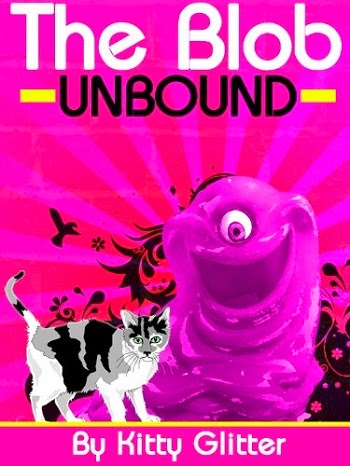
"35 hilariously bad Kindle book covers"


That's the title of a photo essay in the Telegraph.  Here are a few examples to whet your appetite.  Click on each cover to go to its page on Amazon.com and read more about it.  Some of the plot outlines are even worse than the covers!


There are many more at the link.  Search Amazon's Kindle store for their titles to learn more about them.  You can also find more hysterically bad covers at Kindle Cover Disasters.  It's worth bookmarking the site and going back from time to time for a good laugh.

I laughed out loud at some of them.  One in particular had me chuckling, because the title was so over-the-top I found it almost depressingly hilarious.  I'm not going to link to it, because it's not safe for work;  but it was called 'Now That I'm A Ghost I'm Gay'.  I'd have thought that death would be about as un-gay an experience as one could have, but clearly, what do I know?


Peter

Tuesday, March 3, 2015

Reality bites . . . just not for politicians


Read this.

Just a few days ago, it was learned that the Treasury Department gave three billion dollars to several large insurance companies to keep them afloat, because no thinking person wants to sign up for this horseshit called ObamaCare, and the insurance companies will go bankrupt giving away “free” healthcare without total taxpayer compliance. There’s just one problem; THEY CAN’T DO THAT. Only Congress can authorize the spending of taxpayer money, and when Ways and Means Chairman Paul Ryan, kind of a stickler when it comes to money, asked the Treasury about it, they basically told him to **** off.

Sweet Jesus… can you imagine the uproar if George Bush illegally ordered the Treasury to give three billion taxpayer dollars to Exxon and Halliburton, and told the Congress to piss off? The Internet would be melting down and the Democrat Congress would be drafting impeachment documents before the sun went down. Dan Rather might have suffered a stroke on-camera.

. . .

Let me repeat: This was not on the television news and in damned few newspapers. How is this not the sort of thing that puts angry people in the street, and Congress demanding (figurative) heads on platters?

If you went into work tomorrow and diverted $3,000 of company money to someone without authorization, you would be arrested and charged with theft and embezzlement. But the government just stole THREE BILLION TAXPAYER DOLLARS and gave it to huge corporations, and it doesn’t even make the news ... Where is the outrage, liberals? Where is the outrage, media? Where is the outrage, Congress? Why is no one in handcuffs? How is this not a Constitutional crisis that blows runaway llamas and dumbass “I can’t breathe” protests off the internet?

There's a lot more at the link.  You really need to read it all.

Then ask yourself:  why is it that so few people care about this at all?

What are you, personally, willing to do about it?

Let Sir Winston Churchill put it in perspective.

“If you will not fight for right when you can easily win without bloodshed;  if you will not fight when your victory is sure and not too costly; you may come to the moment when you will have to fight with all the odds against you and only a precarious chance of survival.  There may even be a worse case.  You may have to fight when there is no hope of victory, because it is better to perish than to live as slaves.”

We've allowed things to come to this pass because too few of us cared enough to take action to stop them.  This may be the last chance we have to do so.  If we allow this to continue, our children will read about the liberty Americans used to enjoy and marvel at it . . . and wonder what it must have been like, because it will have long departed this country.

Peter

Monday, March 2, 2015

Brrr!


Courtesy of Paul, who blogs at Hawsepiper, we find this time-lapse video of barge traffic on a frozen Hudson River last month.


Watching that made me curious as to how they kept the ice broken up when it's so cold.  This video of a Coast Guard cutter doing its thing on the Hudson River helps explain it.


I think I'll stick to the (hot) water that comes out of our shower head, thank you very much . . .

Peter

Quote of the day


From Wirecutter, reminiscing about a childhood visit to Neuschwanstein Castle in Germany.

The high point of that particular tour came when we were in one of the sitting rooms and the tour guide pointed out a small silver and crystal table and mentioned that it was “priceless”. ****ing priceless. It could never be replaced. I had never ****ed up anything over a hundred bucks before, much something less priceless, and a national treasure no less. As I was mulling this over in my head, Pops looked down at me and said “Don’t even think about it, Boy. These are Germans and they were gassing people for less just 20 years ago.”

There's more at the link.


Peter

Baby elephants are cute!


I've helped to feed baby elephants in the Kruger National Park when I was very much younger.  The youngsters had typically been rescued after their mothers had been killed by poachers, or collided with trucks on roads through the bush.  They were brought to Skukuza, administrative headquarters of the park, and hand-reared whenever possible.

It was a lot of fun (and sometimes rather painful) feeding them.  The usual container was a 2-liter Coke bottle, fitted with an outsize rubber nipple and filled with a heady mixture (varying according to the animal's age) of milk, ProNutro, mashed banana and a few other goodies the vet reckoned were good for itty-bitty elephants. When they saw you coming bearing this cornucopia of pachyderm goodness, they'd start trumpeting (very shrilly and childishly) and swaying furiously with excitement. They'd latch on and drink like mad (the older ones using their trunks to hold the bottle up so that everything ran down into the nipple).  When they'd finished, they'd hopefully prod you to see if you had another bottle. When you proved empty-handed, their next instinct was to play. More than once I've turned around to hand the empty bottle to an assistant, only to be flattened by a playful love-tap from a six-week-old, three-hundred-pound infant elephant.  As I picked myself up painfully from the ground it would be dancing around, daring me to turn around again so it could have another go!

With that in mind, here's a fun video from the Elephant Nature Park in Thailand.  Watch it in full-screen mode for the best results.


I think I recognize the mischievous gleam in that young brat's eye . . .  Just don't take it home with you.  Your furniture and fittings would never survive!

Peter

Sunday, March 1, 2015

Filipino puns


An online acquaintance and author, who writes under the pen name 'Shadowdancer' on various blogs and forums, has put up a fun discussion about puns about food and restaurants in the Philippines.  Not being averse to the occasional pun here and there, I found it very entertaining.  Seeing how puns work in foreign languages is always interesting.  Here's an excerpt.

Some of these are easy to understand if you’ve been exposed to the accent of English-speaking Filipinos, while some will need translating, so bear with me when I have to explain the jokes.

Bun of Brothers - a burger place. Do they break bread with strangers too, I wonder?

Nacho Fast  – a snack stall shop pulling fast ones! How cheesy, natcherally.

OBEERTIME  – what you need, clearly, after too much overtime.

PorkBarrel Grill and Restaurant  – do we have senators and governors visiting here frequently?

You Food – (burp)cast yourself  – … From the Net and back again…

Adobo Putoshop  – groooooooooooooooan Adobo, which is a Filipino stew, and puto – steamed rice cakes

Hijo de Pita – makes sense if you know a little Spanish.

There's more at the link.  You'll find Shadowdancer's books listed here.


Peter

Doofus Of The Day #818


Today's award goes to an inebriated Indian gentleman (?).

Saying an endearing 'hello brother' to an elephant nearly cost Mandiram, 40, his life. The pachyderm did not take kindly to his greeting and flung the man a few yards away. The man escaped with minor injuries to his leg.

. . .

Eye witnesses say that the man suddenly appeared in front of the elephant in an inebriated state and saluted it. He had then shouted to passersby that lord Ganesha had come to see them. The mahout told him to stop harassing the animal, but Mandiram, perhaps emboldened by the liquor he had consumed, clung to the elephant's trunk and said, `Hello brother, how are you?'

The animal, apparently agitated, lifted him with its trunk and flung him at an autorickshaw standing nearby where he fell to the ground. The animal then ran after him and attempted to trample him and prevent him from getting up. The mahout swung into action and brought the animal under control.

There's more at the link.

Definitely some very effective non-verbal communication there.  It should have been verbal, though.  I mean, after all, a trunk call was involved . . .


Peter